
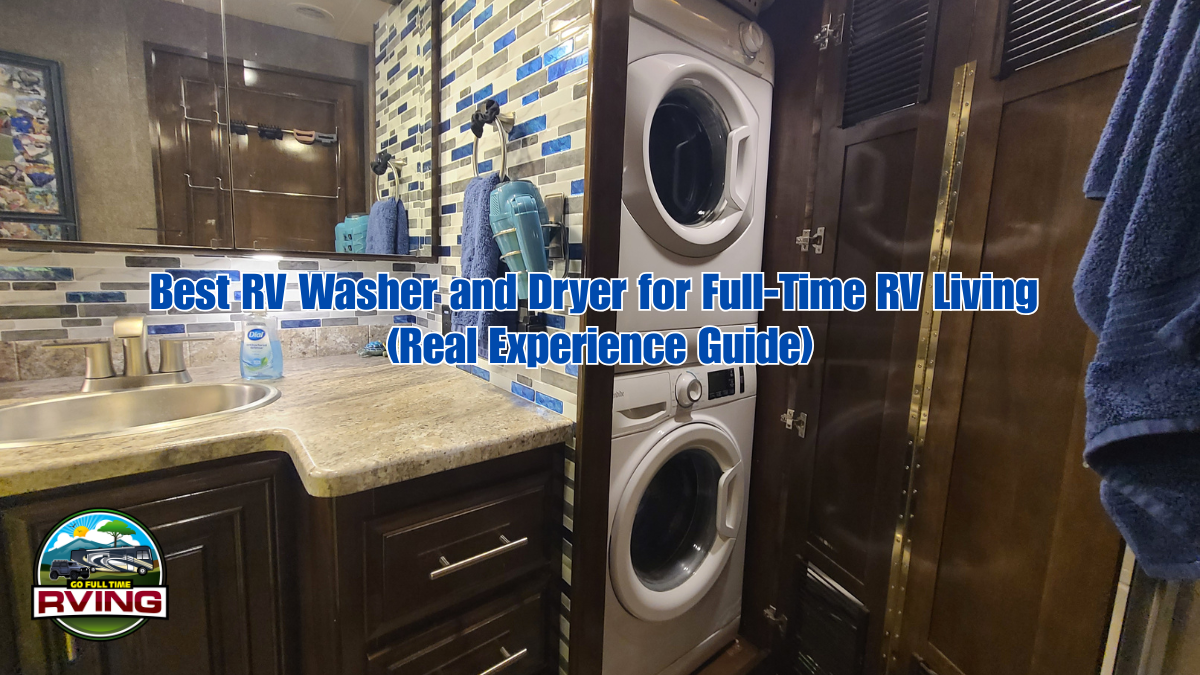
Our Real-World Experience and What We Recommend
The best RV washer and dryer setups can make a huge difference in the comfort and convenience of full-time RV living.
Doing laundry on the road is one of the biggest challenges many RV travelers face. When we first started traveling full-time, we relied on campground laundry rooms and local laundromats. While that worked at first, it often meant planning travel days around laundry stops, waiting on machines, and hauling baskets of clothes across parking lots in bad weather.
Eventually, we installed a washer and dryer in our motorhome — and it completely changed our daily routine.
- Are RV Washers and Dryers Worth It?
- Our Experience Using Laundromats While RVing
- Laundromat Cost vs Owning an RV Washer and Dryer
- Combo vs Stackable RV Washer Dryer
- RV Washer Dryer Comparison: Combo vs Stackable
- What to Look for in an RV Washer and Dryer
- Common RV Washer and Dryer Mistakes to Avoid
- Our Washer and Dryer Setup
- Realistic RV Washer and Dryer Cycle Time Expectations
- Popular RV Washer and Dryer Brand Comparison
- Alternative RV Laundry Options
- RV Washer and Dryer Frequently Asked Questions
- Our RV Washer & Dryer Recommendation at a Glance
- Final Verdict: Is an RV Washer and Dryer Worth It?
This post contains affiliate links. As a participant in Amazon Associates and various affiliate programs, we are compensated when qualifying purchases are made through our referral links at no additional cost to you. Full Disclosure
The best RV washer and dryer for full-time living is typically a compact stackable setup, which offers faster drying times and larger load capacity than most all-in-one combo units. RVers with limited space may prefer a combo washer-dryer because it fits in a single cabinet and simplifies installation. Choosing the right RV laundry setup depends on available space, electrical capacity, and how often you travel.
Are RV Washers and Dryers Worth It?
For many RVers, the answer depends on how often you travel and how long you stay in one place.
In our experience, a washer and dryer becomes far more valuable when you are:
- living in your RV full-time
- traveling with pets
- hiking, fishing, or spending lots of time outdoors
- staying in remote locations
- working seasonal jobs or gate guarding
Campground laundry facilities vary widely. Some are excellent. Others are poorly maintained, crowded, or expensive. Having your own laundry setup allows you to wash clothes whenever it fits your schedule.
We also found that it reduces the stress of planning travel days. Instead of trying to time laundry stops, we can simply run a load while relaxing at the campsite.
If you’re just getting started on the road, understanding the realities of daily RV life can help you decide which upgrades are truly worth the investment.
Our Experience Using Laundromats While RVing
Before installing a washer and dryer in our motorhome, we relied heavily on campground laundry rooms and public laundromats. While this works for many travelers, we quickly discovered that it also comes with frustrations and safety concerns.

On more than one occasion, we had people attempt to take our clothes while they were drying. In some locations, we did not feel comfortable leaving the laundromat unattended, which meant sitting around waiting for cycles to finish instead of getting out and exploring.
We were also advised by a laundromat owner, which surprised us. After rainy weather, he recommended waiting a day or two before doing laundry. He explained that some people would bring in extremely dirty or muddy clothing and place them directly into dryers without washing them first. This could leave machines dirty or transfer unpleasant odors to other loads.
Experiences like these made us appreciate the convenience and peace of mind that come with having our own washer and dryer in the RV. Being able to do laundry in a clean, controlled environment on our own schedule quickly became one of the most valuable upgrades we’ve made to our motorhome.
Laundromat Cost vs Owning an RV Washer and Dryer
One of the biggest questions RVers ask is whether installing a washer and dryer actually saves money compared to using laundromats or campground laundry facilities.
In our experience, the answer depends on how often you travel and how frequently you do laundry.
Typical Laundromat Costs
Laundry prices vary by location, but most RVers can expect to pay:
- $3 to $6 per wash load
- $2 to $4 per dryer cycle
- detergent and other supplies
- fuel costs to drive to town
- time spent waiting for machines
For full-time RV living, these expenses can add up quickly. Doing just three loads per week could easily cost $25 to $40 or more.
Over the course of a year, that can total well over $1,000 in laundry expenses alone.
Cost of Installing an RV Washer and Dryer
Installing a washer and dryer in an RV typically involves:
- purchasing the appliances
- possible cabinet or vent modifications
- installation supplies or professional labor
While the upfront investment can be significant, many full-time travelers find the convenience and long-term savings worthwhile.
Convenience Has Real Value
Beyond the financial comparison, having your own washer and dryer offers benefits that are harder to measure.
You can:
- do laundry anytime
- avoid crowded or poorly maintained facilities
- eliminate trips into town just for laundry
- reduce the risk of lost or damaged clothing
- spend more time enjoying your travel destinations
For us, the ability to manage laundry on our own schedule has been one of the biggest lifestyle improvements we’ve made since starting full-time RV living.
Laundry is just one part of the overall cost of living on the road. Understanding the full range of RV expenses can help you plan upgrades and travel budgets more effectively.
Combo vs Stackable RV Washer Dryer
One of the biggest decisions RV owners face is whether to choose an all-in-one combo unit or a stackable washer and dryer.
Combo Washer Dryer Pros
- saves space in smaller RVs
- requires only one appliance opening
- no need to transfer loads
- simpler installation
Combo Washer Dryer Cons
- longer drying times
- smaller load capacity
- less efficient for heavy laundry use
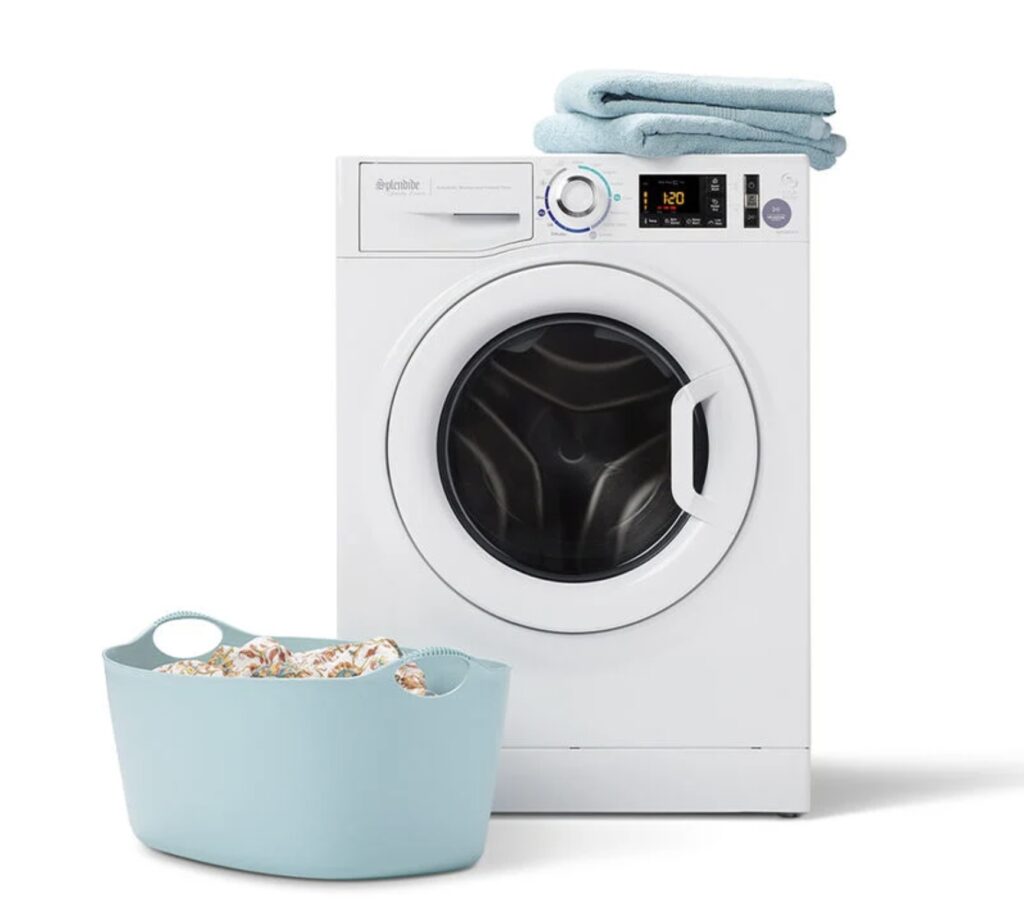
Combo units can work well for weekend travelers or smaller rigs where space is limited.
Stackable Washer Dryer Pros
- faster drying cycles
- larger load capacity
- better performance for full-time living
- more similar to a residential laundry experience
Stackable Washer Dryer Cons
- requires more vertical space
- slightly more complex installation
- higher upfront cost
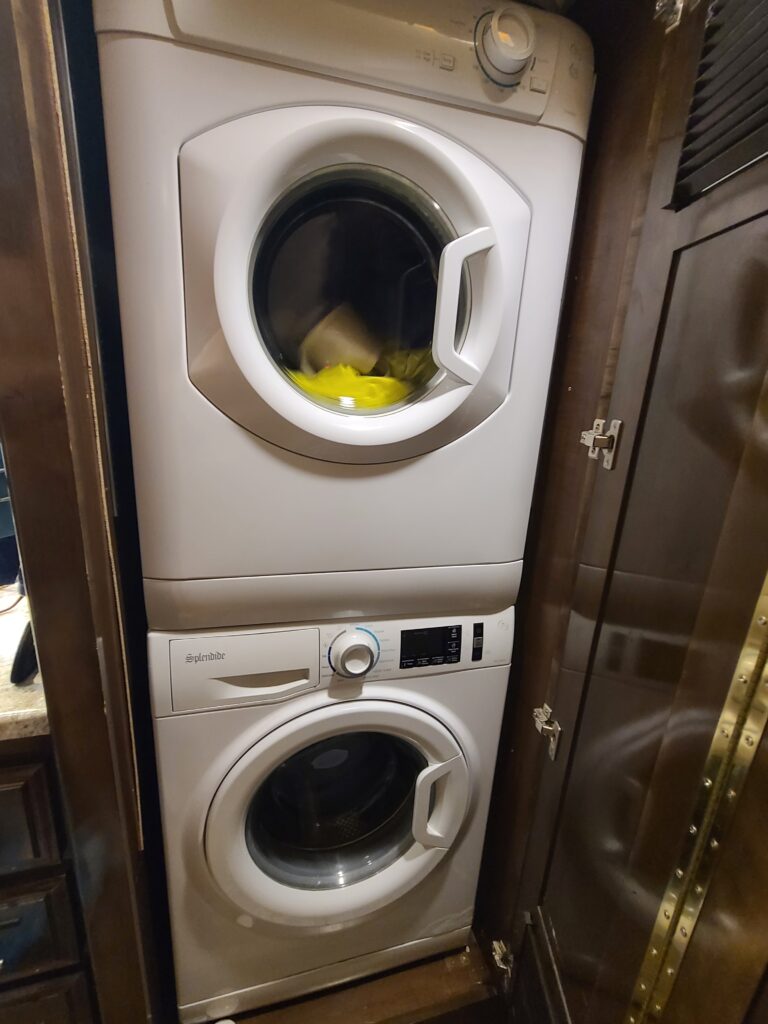
Stackable washer and dryer setups are often preferred by full-time RVers because they offer faster drying times, larger load capacity, and performance that feels closer to a residential laundry experience.
RV Washer Dryer Comparison: Combo vs Stackable
If you are trying to decide between a combo unit or a stackable washer and dryer, this quick side-by-side comparison highlights the key differences RV owners should consider.
| Feature | Washer Dryer Combo | Stackable Washer & Dryer |
|---|---|---|
| Space Required | Fits in a single cabinet and takes up less room | Requires a taller dedicated cabinet or closet |
| Installation | Simpler one-unit installation | More complex since washer and dryer are separate units |
| Load Capacity | Smaller loads | Larger loads and better for frequent laundry |
| Drying Time | Longer drying cycles | Faster and more efficient drying |
| Convenience | No need to move clothes between machines | Requires transferring clothes from washer to dryer |
| Best For | Smaller RVs, occasional travelers, and limited space | Full-time RVers, larger rigs, and heavier laundry use |
| Performance | Works well, but cycles can be long | Closer to a residential laundry experience |
| Upfront Cost | Usually lower initial cost | Usually higher upfront investment |
| Our Recommendation | A good choice if space is tight | Best option for full-time RV living |
After years of full-time RV travel, we have found that the stackable washer and dryer setup provides the best balance of performance, convenience, and long-term satisfaction.
What to Look for in an RV Washer and Dryer
Before purchasing a washer and dryer for your RV, there are several important factors to consider.
Size and Weight
RV laundry appliances are compact, but careful measuring is essential. Make sure the unit will fit through entry doors, hallways, and cabinet openings.
Weight also matters. Adding laundry appliances affects your RV’s cargo carrying capacity.
Power Requirements
Most RV washers operate on standard 120-volt power.
Dryers may be:
- 120-volt vented
- 120-volt ventless
- or occasionally 240-volt in larger, higher-end motorhomes
Understanding your RV’s electrical capabilities is critical before making a purchase.
Venting
Vented dryers generally perform better and dry clothes faster.
Ventless dryers are easier to install but typically require longer cycle times.
Capacity
RV washers have smaller drums than residential machines. This means more loads, but also reduced water and power usage.
Installation Location
Common installation areas include:
- bedroom/bathroom closets
- hallway cabinets
- dedicated laundry closets
- kitchen pantry conversions
Always confirm plumbing access and ventilation requirements before installation.
Common RV Washer and Dryer Mistakes to Avoid
Installing and using a washer and dryer in an RV can make life on the road much easier, but several common mistakes can lead to frustration or even damage to your rig.
Learning from the experience of other RVers can help you avoid costly problems and get the best performance from your laundry setup.
Not Measuring the Installation Space Carefully
One of the most common mistakes is assuming a washer or dryer will fit without verifying the exact dimensions.
It is important to measure:
- cabinet openings
- hallway and entry door clearance
- height restrictions for stackable units
- depth, including plumbing and vent connections
Even compact RV appliances can be difficult to maneuver into place once they arrive.
Ignoring Weight and Cargo Capacity
Washer and dryer units add significant weight to your RV.
Failing to account for cargo carrying capacity can lead to overloaded axles and reduced handling performance.
Always check your RV’s weight ratings before installation.
Choosing the Wrong Electrical Setup
Some RVers purchase appliances without fully understanding their electrical system.
Running multiple high-draw appliances at the same time can trip breakers or strain campground hookups. Proper power management becomes especially important when using a dryer.
Improper Dryer Vent Installation
A poorly installed dryer vent can reduce drying performance and allow moisture to build up inside cabinets or walls.
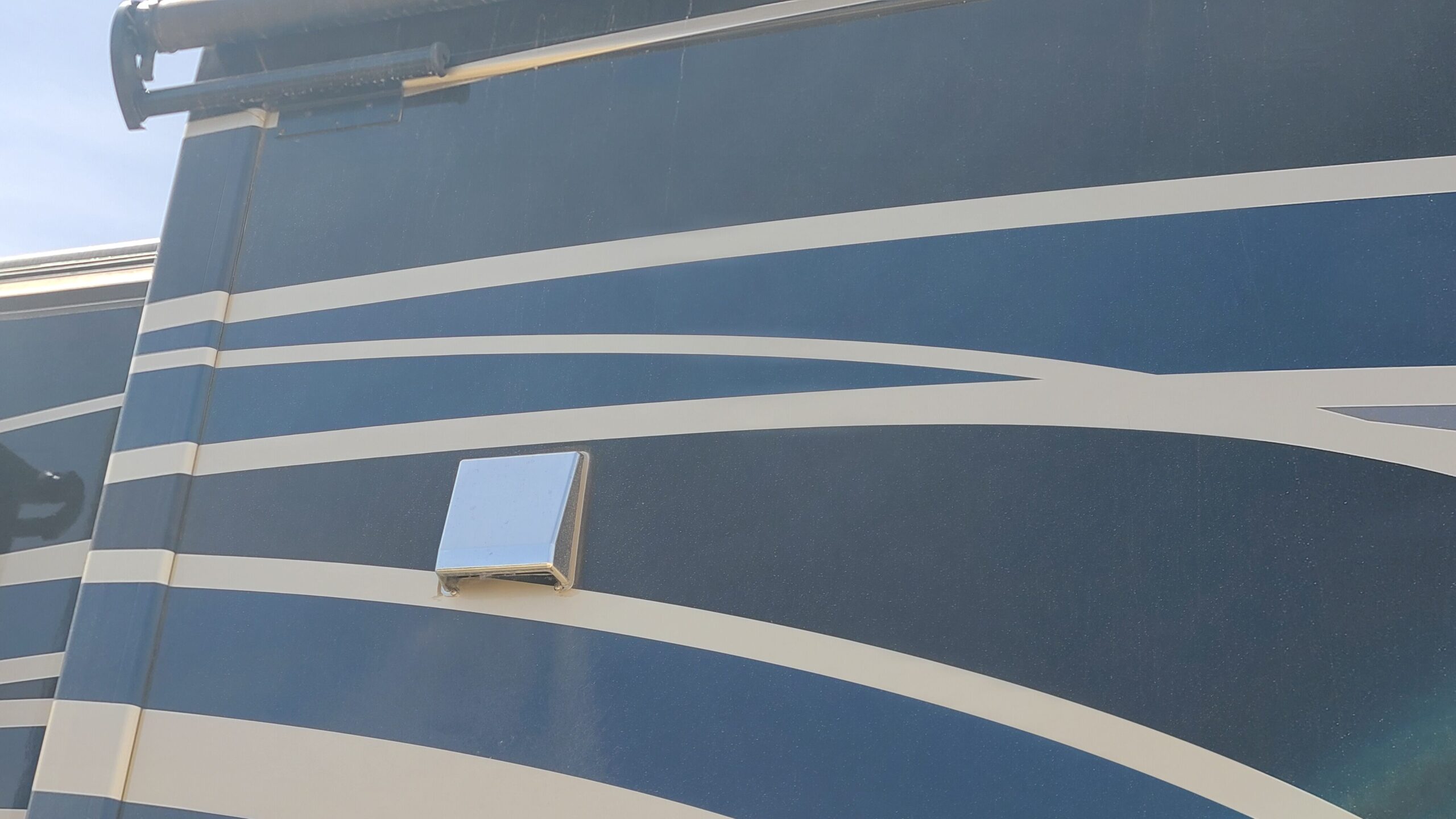
Ensuring proper vent routing and sealing helps improve efficiency and protects your RV from potential damage.
Overloading the Washer
RV washers have smaller drums than residential machines.
Trying to wash large loads can reduce cleaning performance and increase wear on the appliance.
Smaller, more frequent loads typically produce better results.
Expecting Residential Performance
While RV laundry appliances work well, they are designed for compact spaces and lower resource usage.
Understanding that cycles may take longer and loads may be smaller helps set realistic expectations.
Our Washer and Dryer Setup
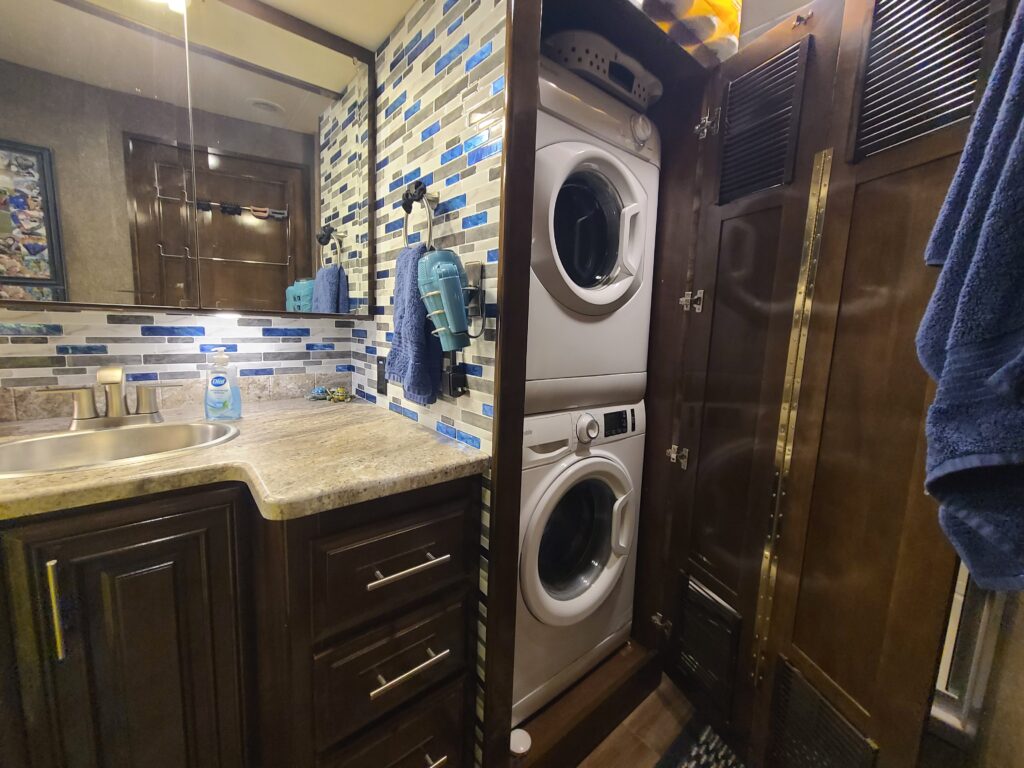
After researching multiple options, we chose a stackable setup using Splendide appliances designed specifically for RV use.
We have been very pleased with the performance and reliability of this setup.
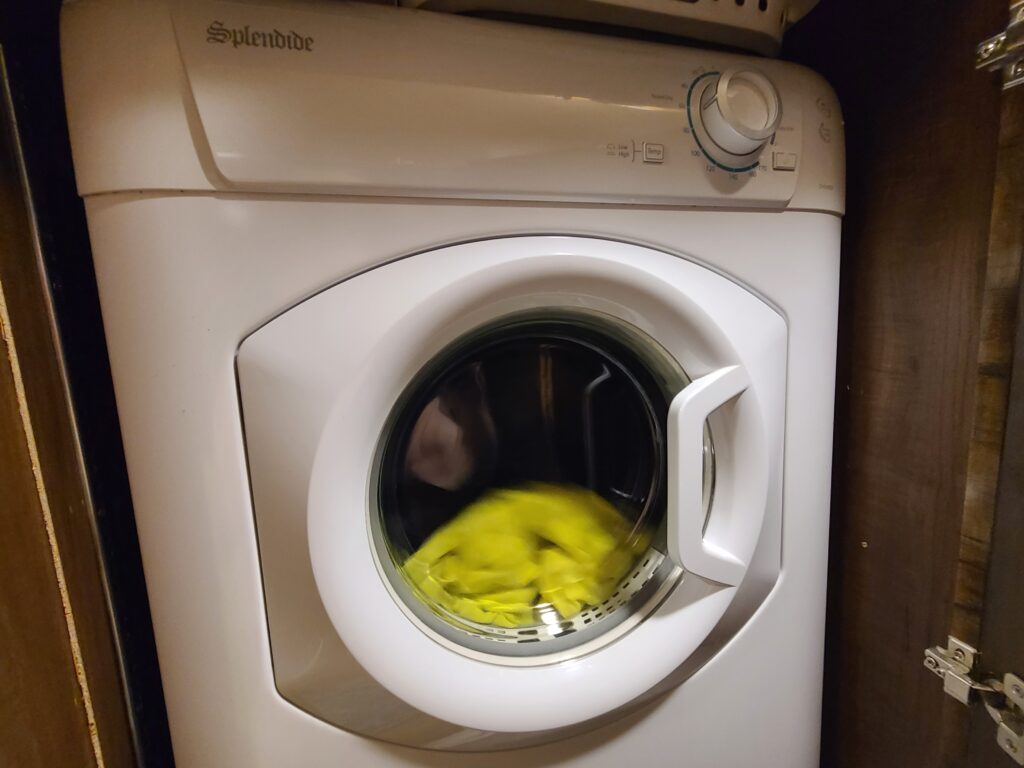
You can read our detailed reviews here:
These units fit perfectly in our motorhome’s bathroom washer/dryer cabinet and provide enough capacity to support our full-time travel lifestyle.
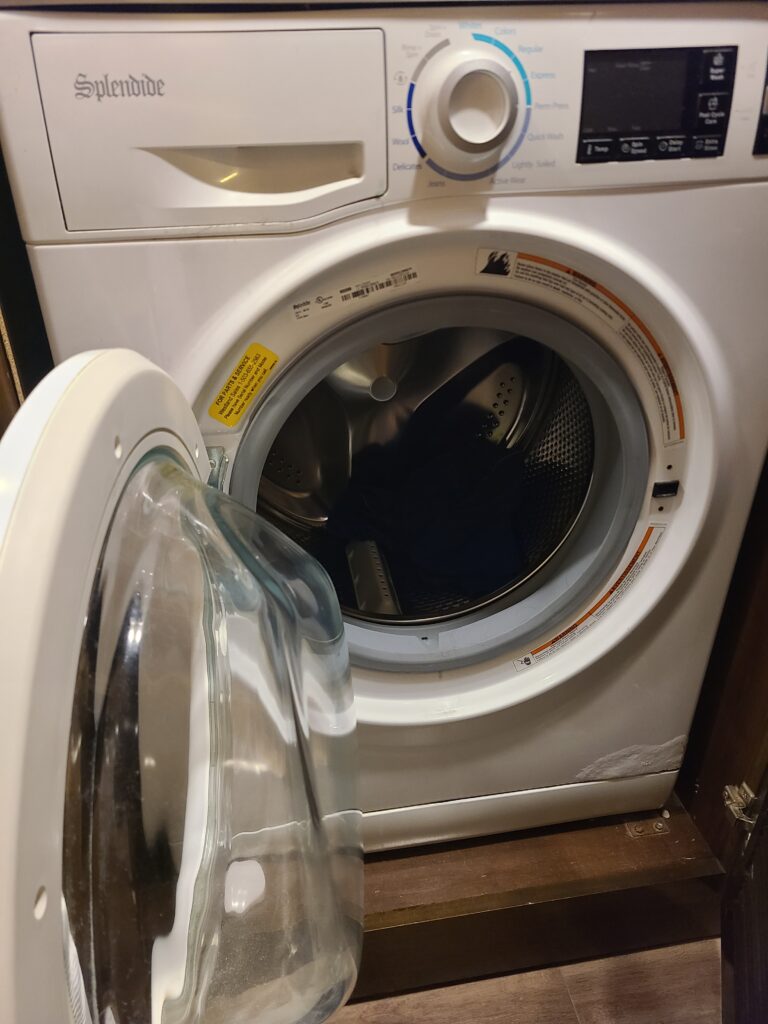
We especially appreciate:
- relatively quiet operation
- dependable wash performance
- faster drying compared to combo units
- compact design built for RV installation
Over time, this has proven to be one of the most practical and worthwhile upgrades we’ve made.
Realistic RV Washer and Dryer Cycle Time Expectations
One of the most common surprises for new RV owners is how long laundry cycles can take compared to residential machines.
While RV washers and dryers work very well, they are designed for compact spaces and lower power usage. Understanding realistic cycle times can help set proper expectations and prevent frustration.
Typical RV Washer Cycle Times
In most cases, RV washing machines run cycles similar in length to home washers.
You can generally expect:
- Quick wash cycles around 30–40 minutes
- Normal wash cycles are around 60–120 minutes
- Heavy or sanitary cycles may take longer
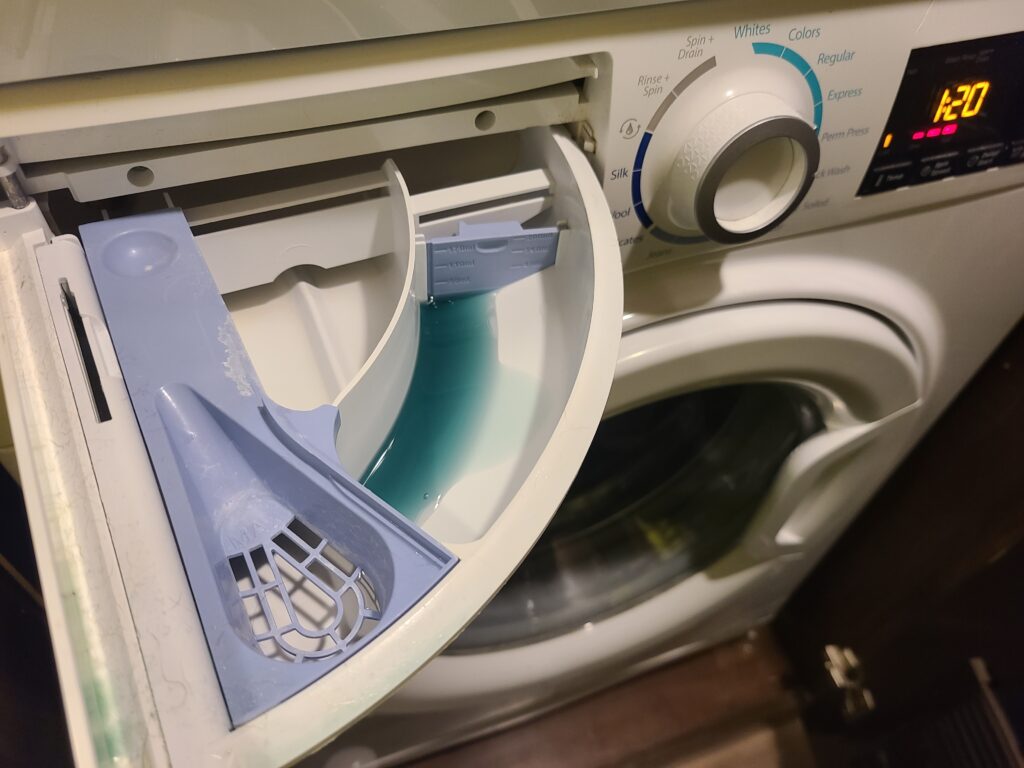
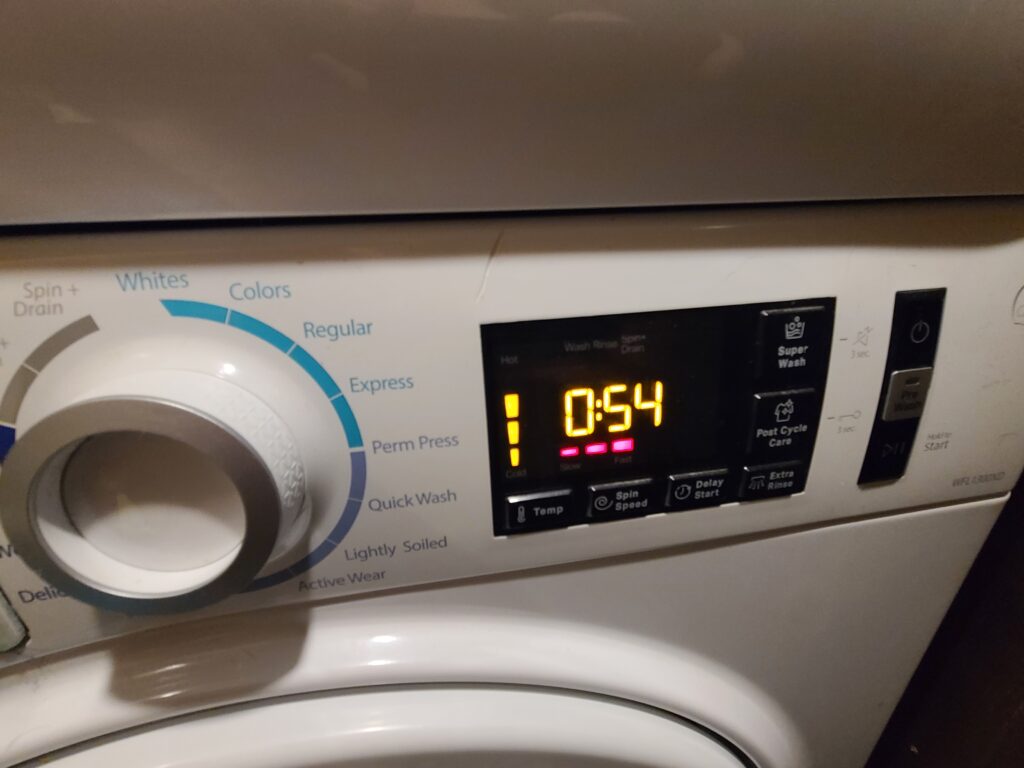
Because the drum size is smaller, many RVers find they need to run more loads than they would at home.
RV Dryer Cycle Times
Drying times vary more depending on the type of setup.
With a vented stackable dryer like ours, a typical load usually takes:
- about 70–80 minutes, depending on load size and fabric type
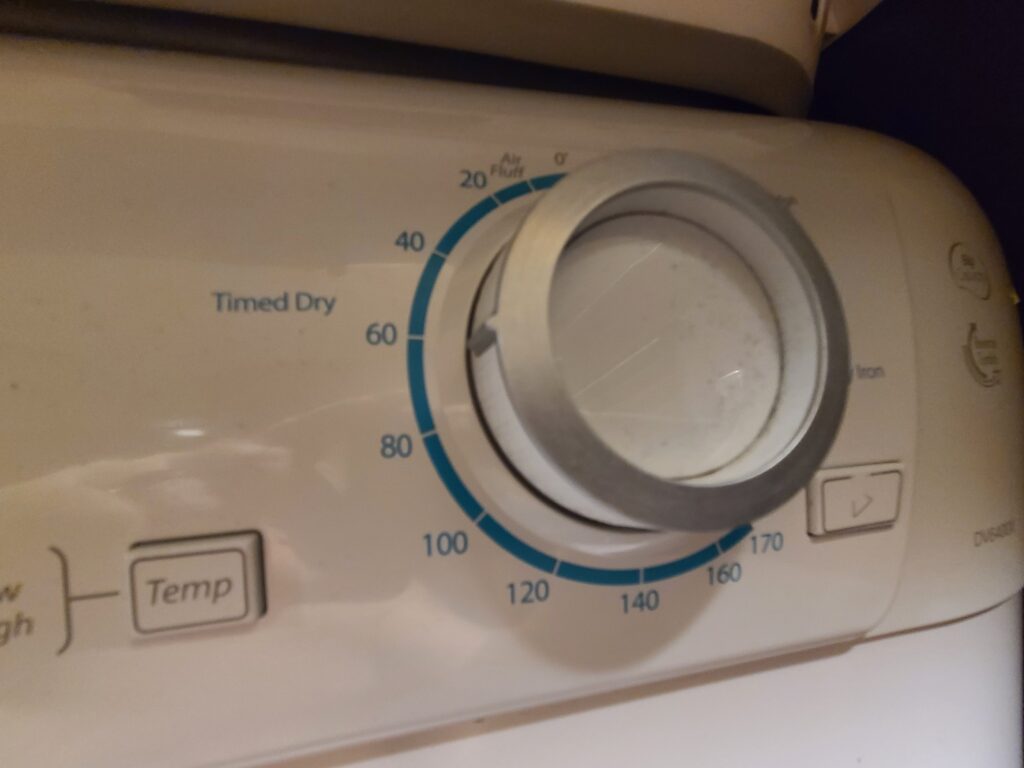
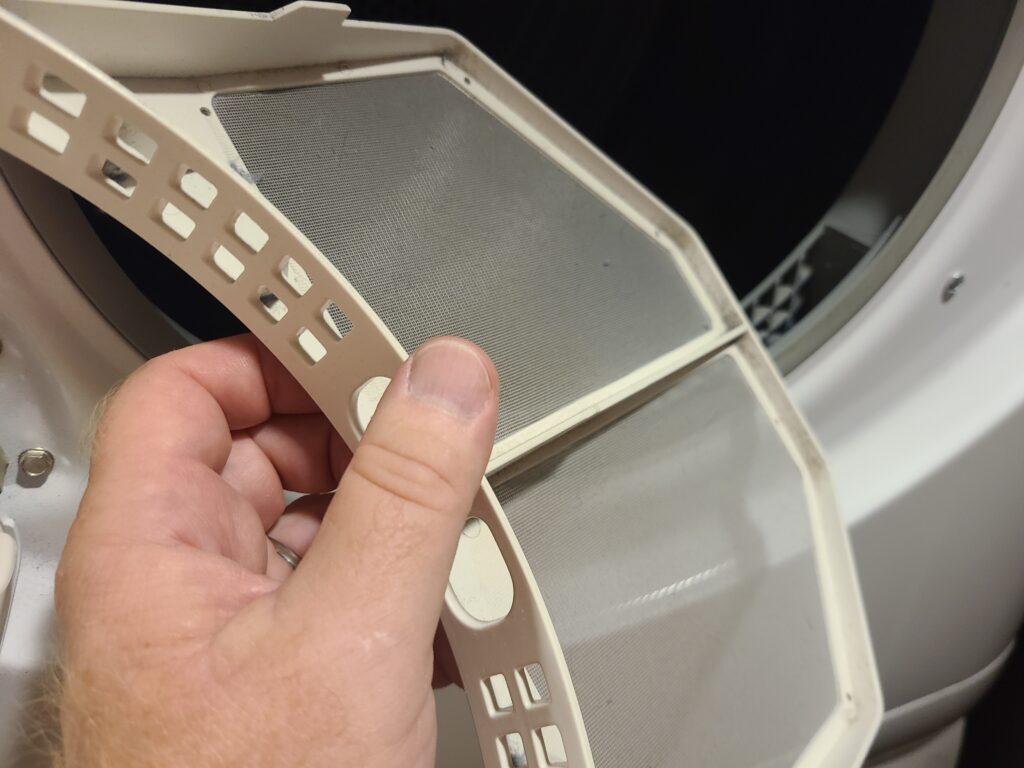
All-in-one combo units often take longer because washing and drying occur in the same drum.
It is not unusual for a full wash-and-dry cycle in a combo unit to take:
- two to three hours or more
Tips to Improve Drying Performance
We have learned a few simple habits that help reduce drying time:
- wash smaller loads
- shake out clothing before placing it in the dryer
- avoid overloading the machine
- clean the lint filter regularly
- make sure the dryer vent is clear
What to Expect Overall
RV laundry requires a slightly different mindset than doing laundry at home. Running smaller loads more frequently often produces the best results.
For us, the convenience of being able to do laundry anytime more than offsets the longer cycle times compared to residential appliances. After a day of work or play, our clothes go in the washer to start a load.
Popular RV Washer and Dryer Brand Comparison
If you are researching which washer and dryer to install in your RV, the models below are some of the most commonly used by full-time travelers and RV owners.
| Brand / Model | Type | Best For | Key Advantage | Considerations |
|---|---|---|---|---|
| Splendide Stackable Set | Stackable | Full-time RV living | Reliable performance and faster drying | Requires dedicated cabinet space |
| Splendide Combo Units | All-in-one | Smaller RVs | Space saving and simple install | Longer drying cycles |
| LG Compact Combos | All-in-one | Larger motorhomes or fifth wheels | Modern features and larger capacity | May require electrical planning |
| Equator Combo Models | All-in-one | Budget-friendly RV installs | Compact and versatile venting options | Smaller drum size |
| ConServ Stackable Sets | Stackable | Apartment-style RV layouts | Efficient European-style design | May require 220V dryer |
Alternative RV Laundry Options
Not every RV has space for a stackable washer and dryer. Fortunately, there are other options.
Washer Dryer Combo Units
These are popular in smaller Class A motorhomes, fifth wheels, and travel trailers. They provide a space-saving solution but often require longer drying cycles.
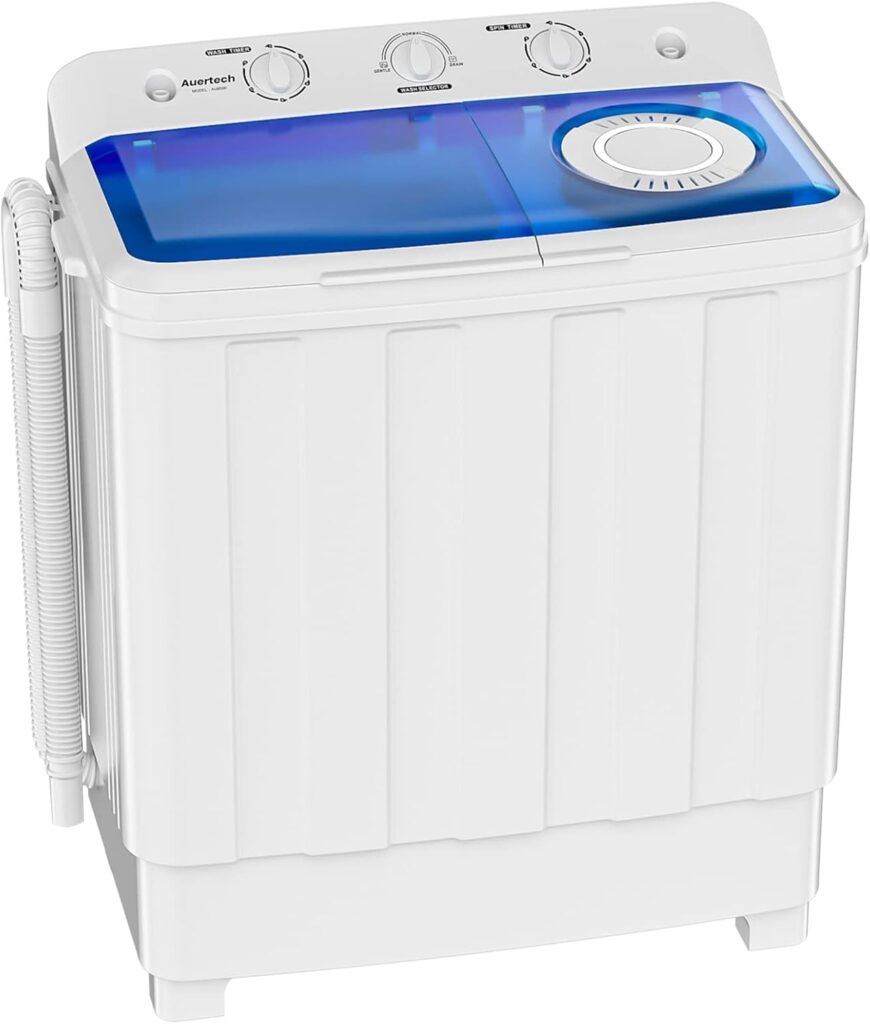
Portable RV Washers
Some RVers use small portable washers that connect to sinks or showers. These can be useful for occasional laundry needs but typically require air drying.
Campground Laundry Facilities
Many RV parks offer laundry rooms. While convenient, cleanliness, availability, and cost can vary significantly.
RV Washer and Dryer Frequently Asked Questions
Below are answers to some of the most common questions RV owners have about installing and using a washer and dryer on the road.
Is an RV washer and dryer worth it?
For full-time RV living, many travelers find a washer and dryer to be one of the most valuable comfort upgrades. It allows you to do laundry on your own schedule and avoid relying on campground laundry facilities or laundromats.
What is better for an RV, a combo unit or stackable washer and dryer?
Combo units are ideal for smaller RVs where space is limited. Stackable washer and dryer setups typically provide faster drying times and larger load capacity, making them a better choice for full-time RVers.
Can you run an RV washer and dryer on 30 amp service?
Most RV washing machines operate on standard 120-volt power and can be used on 30 amp service. However, running the dryer at the same time as other high-demand appliances may require careful power management.
How long does it take to wash and dry clothes in an RV?
Wash cycles are typically similar to residential machines, but drying times can be longer, especially with combo units. Stackable dryers usually complete loads faster than all-in-one machines.
Do RV washer dryers use a lot of water?
RV laundry appliances are designed to be efficient and generally use less water than residential units. However, smaller drum sizes may require more loads depending on your laundry needs.
Can you install a washer and dryer in any RV?
Not all RVs are prepped for laundry appliances. Installation depends on available space, plumbing access, electrical capacity, and proper venting for the dryer.
What brand of RV washer and dryer is most popular?
Splendide is one of the most widely used brands designed specifically for RV installations. Other compact residential brands are also used depending on space and power requirements.
Our RV Washer & Dryer Recommendation at a Glance
Best for Full-Time RV Living:
Stackable washer and dryer setup for faster drying, larger loads, and better overall performance.
Best for Smaller RVs or Occasional Travel:
All-in-one combo washer dryer to save space and simplify installation.
Best Overall Advice:
If you have the cabinet space and electrical capacity, installing a washer and dryer can significantly improve comfort and convenience on the road.
Final Verdict: Is an RV Washer and Dryer Worth It?
After years of full-time RV living, installing a washer and dryer has proven to be one of the most practical and lifestyle-improving upgrades we’ve made to our motorhome.
While laundromats and campground laundry facilities can work, they often require extra planning, time, and patience. Having our own laundry setup allows us to wash clothes whenever it fits our schedule, avoid crowded facilities, and spend more time enjoying the places we travel.
For RVers who travel occasionally or have limited space, a combo washer-dryer can be a good solution. It offers convenience in a compact footprint and simplifies installation.
However, for full-time RV living or extended travel, a stackable washer and dryer setup generally provides better performance, faster drying times, and greater long-term satisfaction.

Our experience has shown that running smaller loads more frequently works best in an RV environment. Once you adjust to that routine, the convenience of onboard laundry quickly becomes something you would not want to live without.
If your RV has the space and electrical capacity, investing in a washer and dryer can make daily life on the road significantly easier and more comfortable.
For us, it has been one of the upgrades that truly improved our overall travel experience.
Like many comfort upgrades, installing a washer and dryer is easier to justify when you understand your overall RV budget and long-term travel plans.
If you’re looking to build your own home-based business like we have with this webpage, check out Wealthy Affiliate.
Wealthy Affiliate is an all-in-one platform that you can build your whole affiliate marketing business on. It combines training, software, and website hosting into one. This makes the whole process of starting an online business from scratch much easier, especially if you’re new to building a website.