Sometimes the places you’ve been meaning to visit for years finally work out.
Last year, while we were working near West Columbia, Texas, we had plans to visit Brazoria National Wildlife Refuge, but somehow never made it there. This time, as we passed through the area, we made a point to stay nearby at On the Bayou RV Park so we could finally explore one of the Gulf Coast’s premier wildlife refuges.
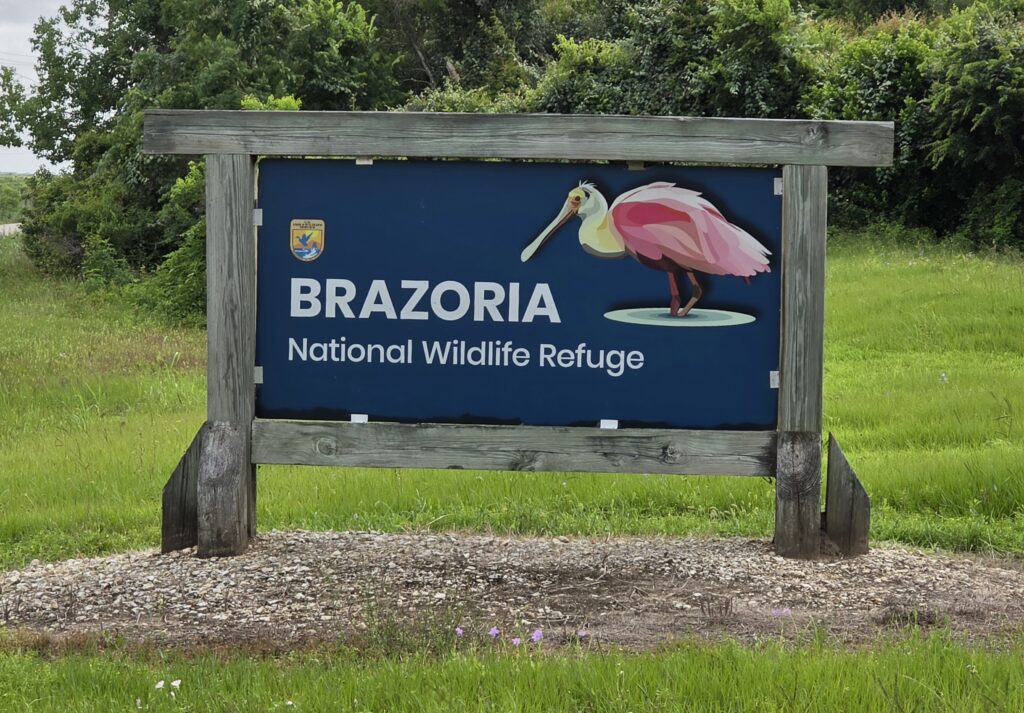
Located near Angleton and Lake Jackson on the Texas Gulf Coast, Brazoria National Wildlife Refuge protects thousands of acres of marshes, wetlands, prairies, and waterways that provide habitat for all kinds of wildlife.
As full-time RVers, we love finding places that are a little off the beaten path, and Brazoria National Wildlife Refuge had been on our list for quite a while.
Our main goal?
Baby alligators.
And thankfully, Brazoria National Wildlife Refuge delivered.
- Starting at Big Slough Recreation Area
- Baby Gators Everywhere
- What We Heard
- Exploring the Big Slough Auto Tour
- Best Time to Visit Brazoria National Wildlife Refuge
- Photography Tips for Brazoria National Wildlife Refuge
- A Great Stop for Wildlife Lovers
- Getting There
- Things to Know Before You Go
- Continue Exploring the Area
- Final Thoughts
This post contains affiliate links. As a participant in Amazon Associates and various affiliate programs, we are compensated when qualifying purchases are made through our referral links at no additional cost to you. Full Disclosure
Starting at Big Slough Recreation Area
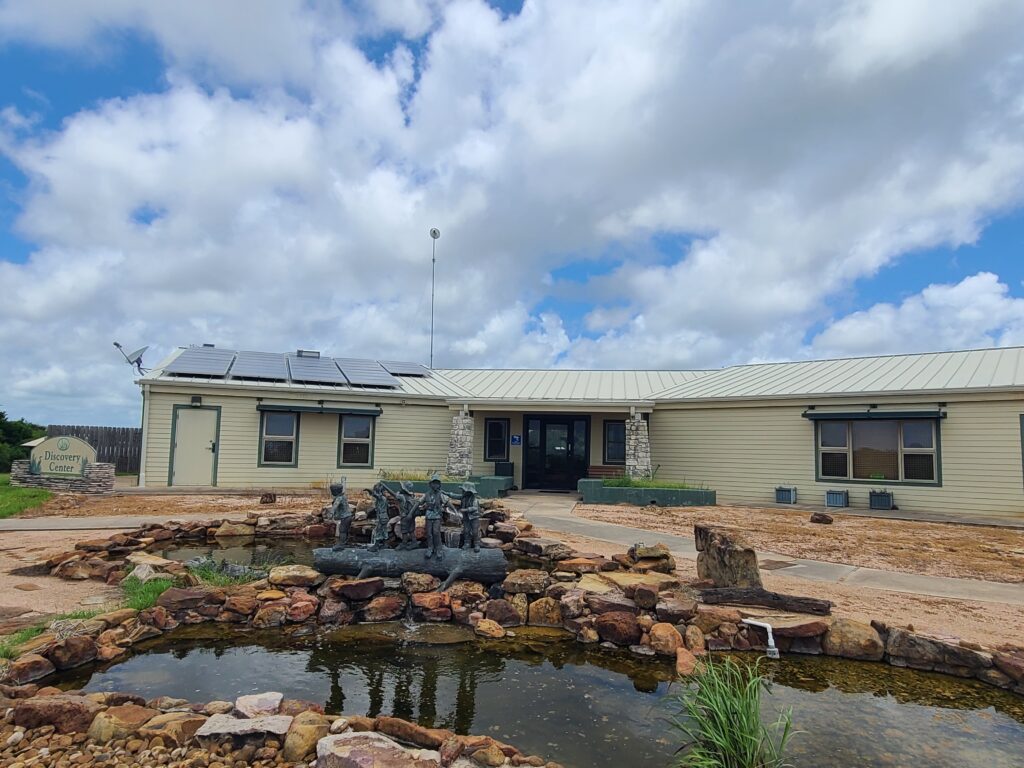
Our first stop was the Big Slough Recreation Area. We headed to the Discovery Center, only to find it closed. We didn’t see any posted hours or information explaining whether it was temporarily closed or simply not open that day.
Fortunately, the real highlight was just behind the building.
A boardwalk winds through the wetlands behind the Discovery Center, providing excellent views of the marsh habitat and its wildlife. Almost immediately, we spotted what we had come to see.
Baby alligators.
Lots of them.
Baby Gators Everywhere
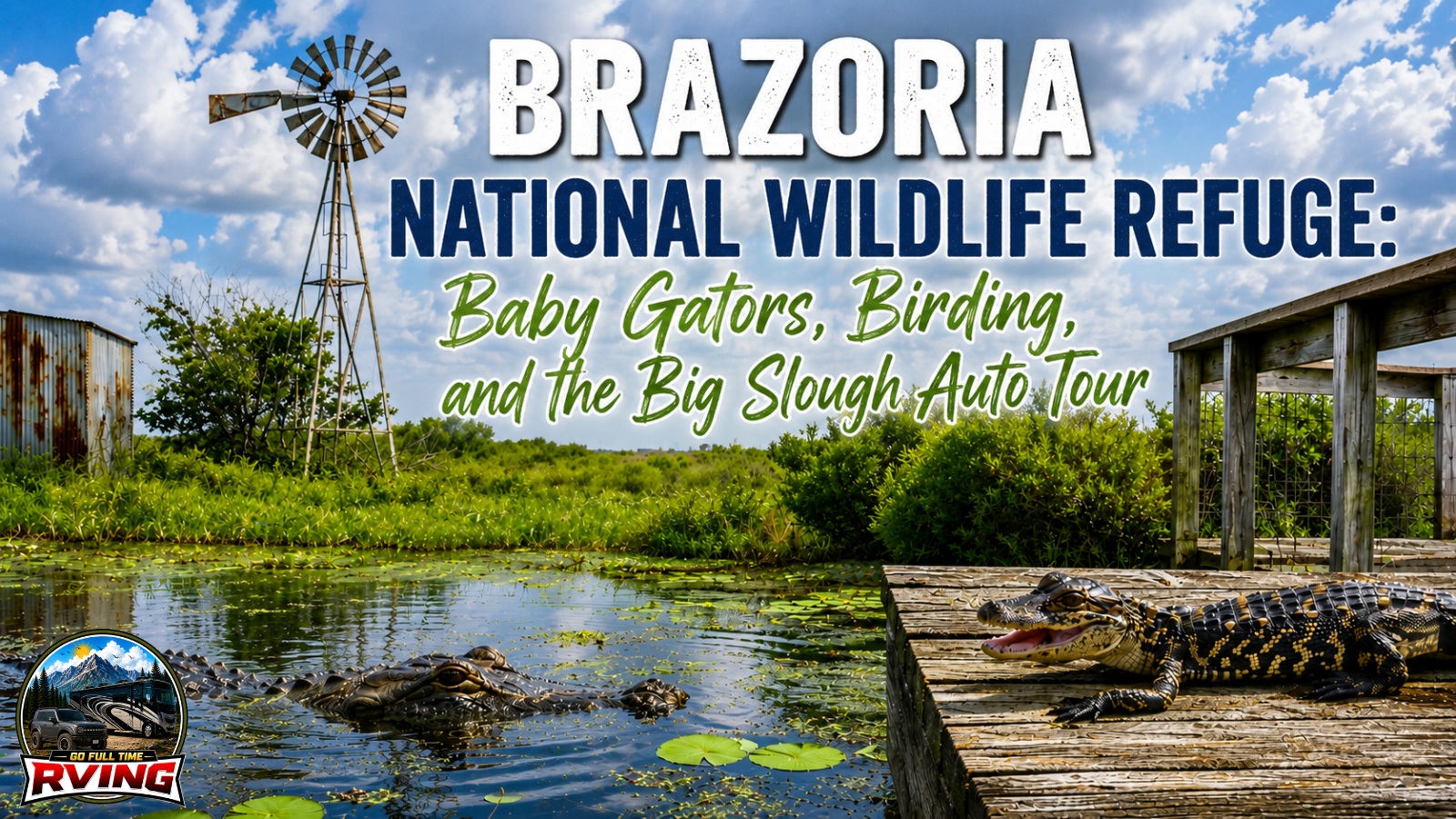
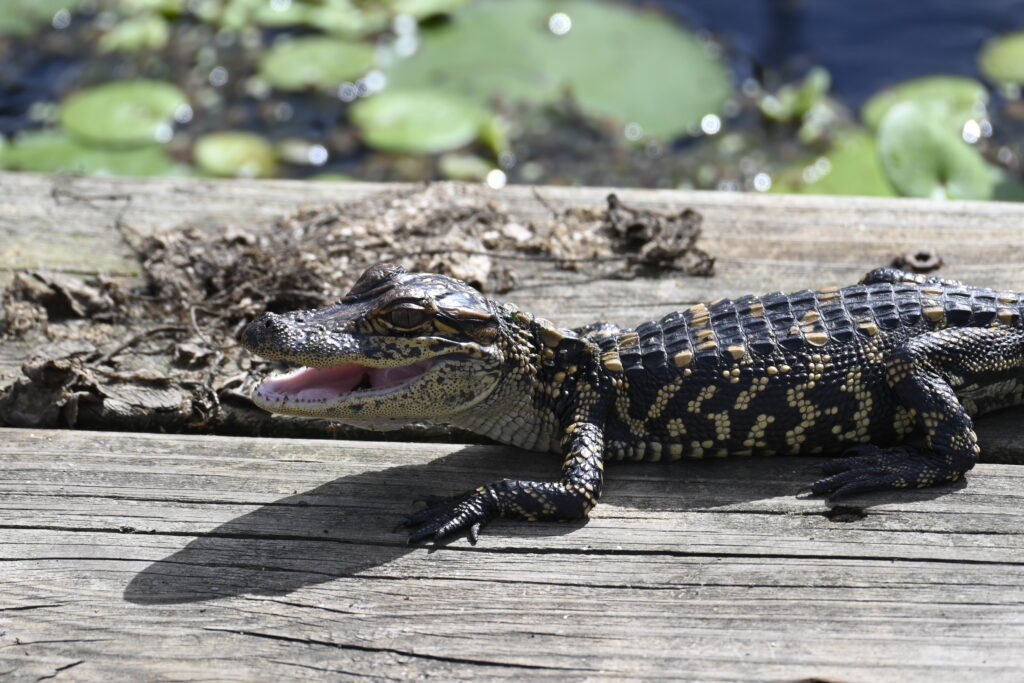
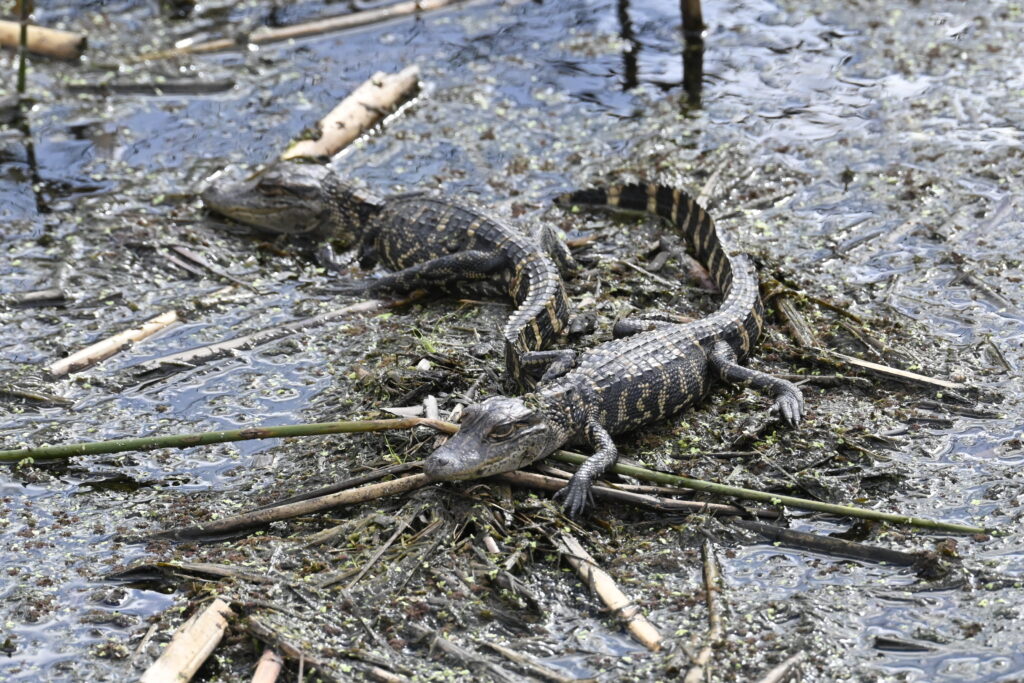
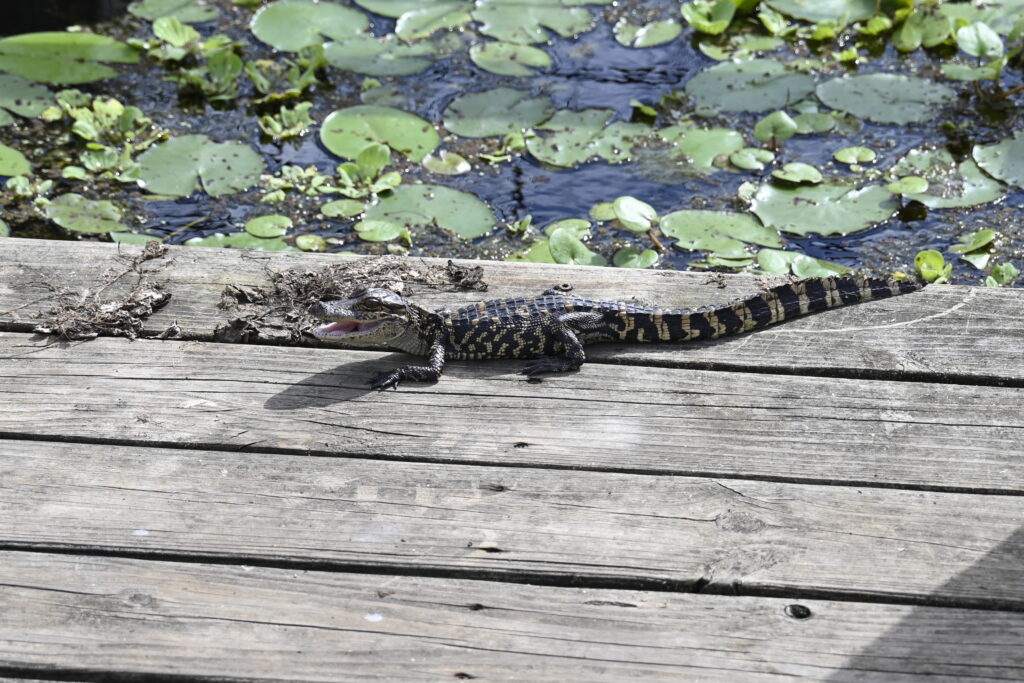
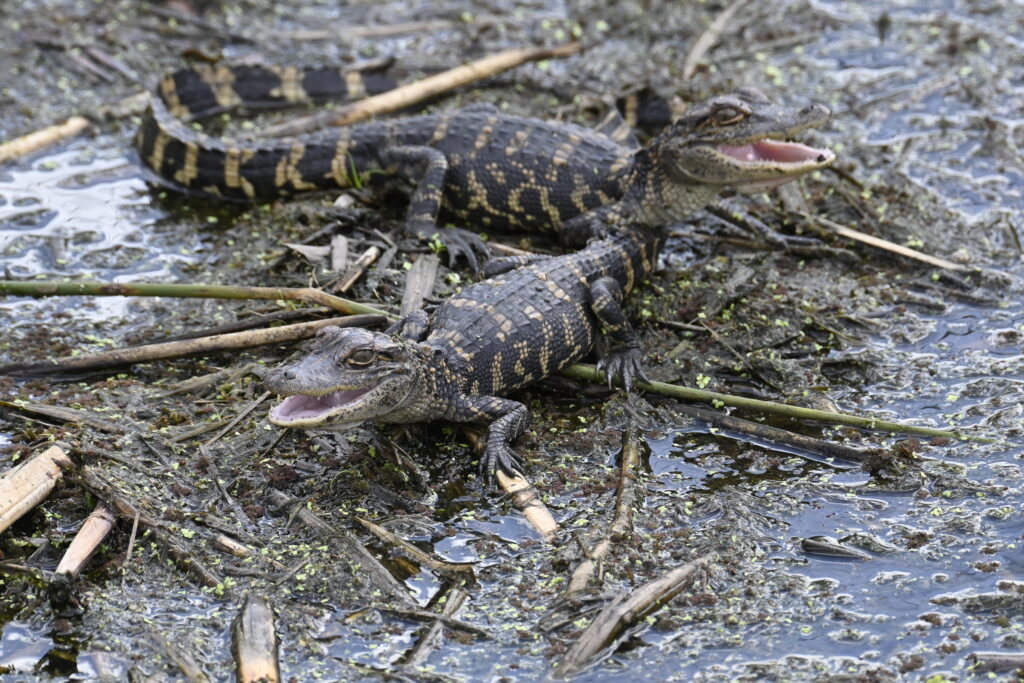
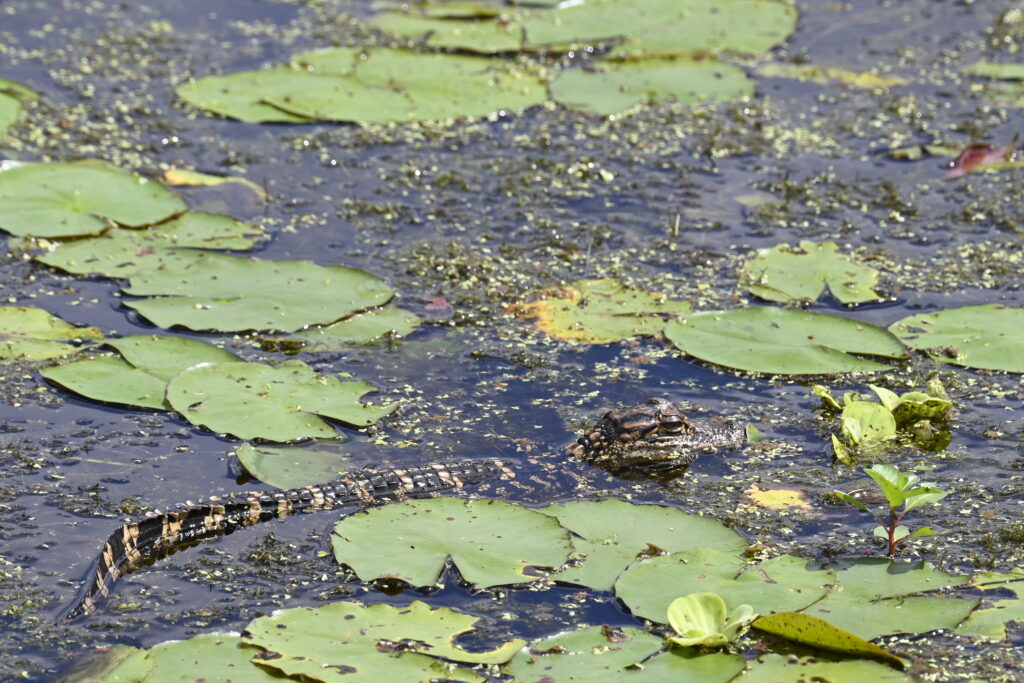
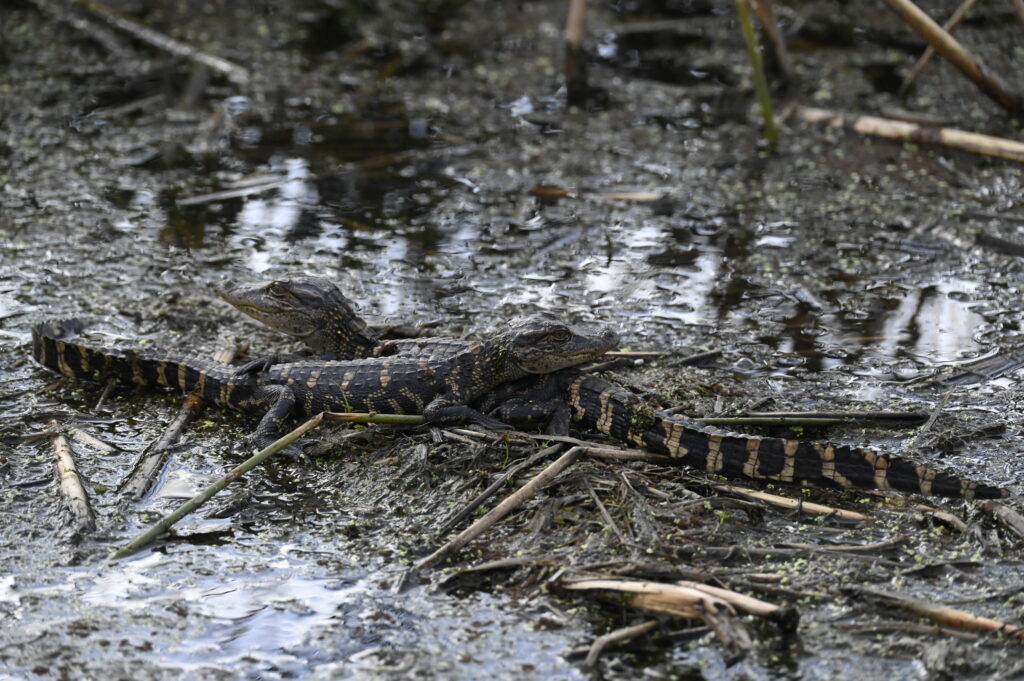
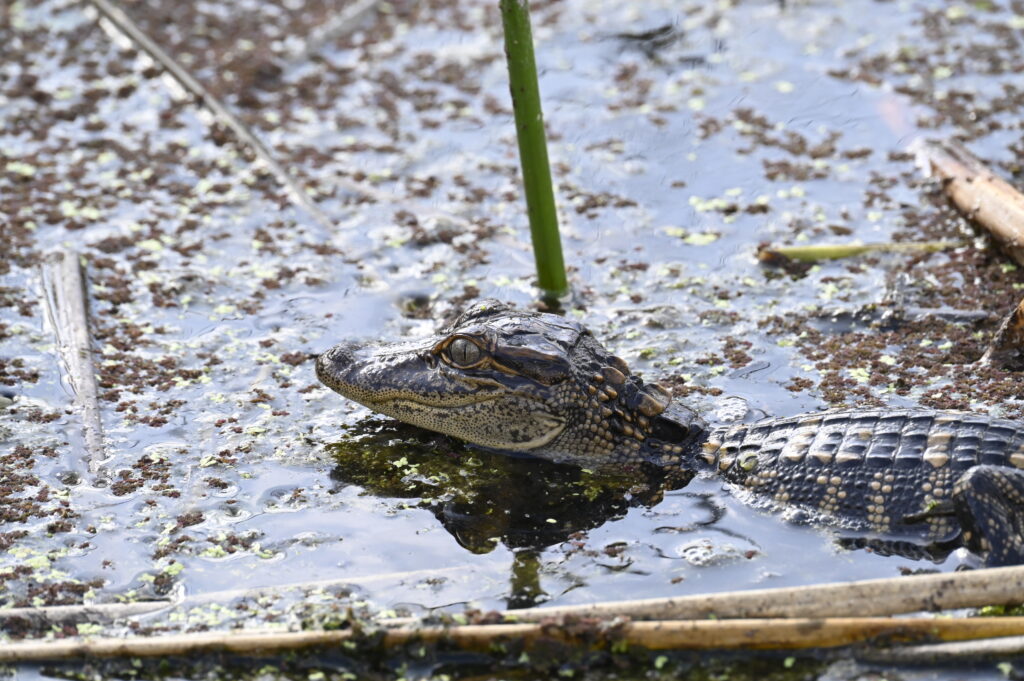
Several of the young alligators were resting on a small dock adjacent to the boardwalk, while others floated quietly in the shallow water nearby. The dock made them easy to spot, but once we started looking more closely, we realized there were baby gators scattered throughout the area. Most appeared to be around a foot long and provided outstanding photo opportunities.
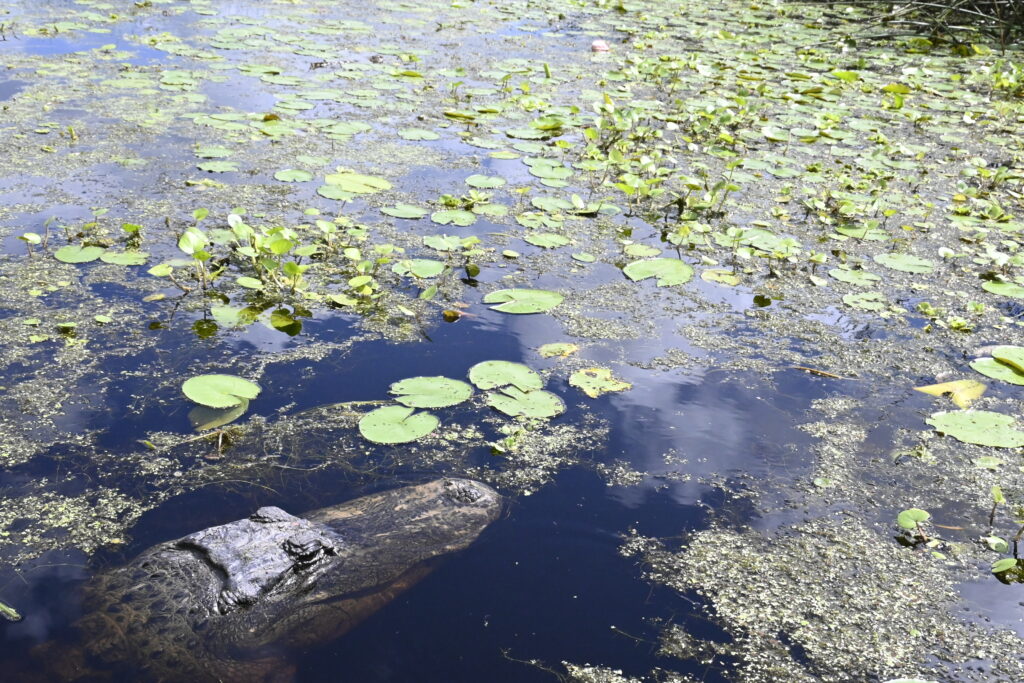
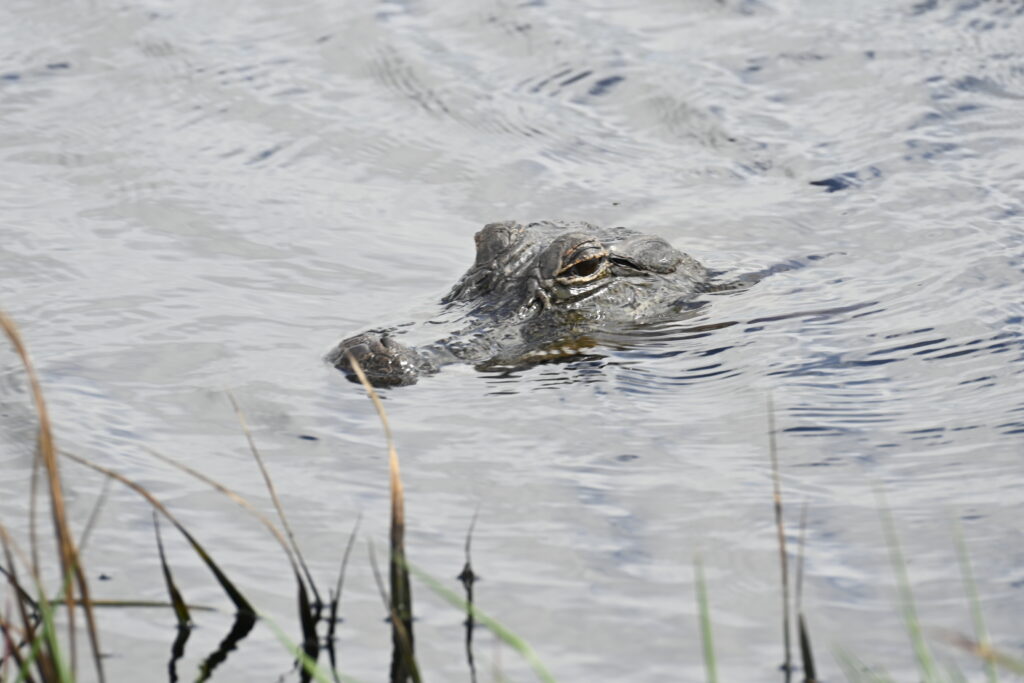
Nearby, a watchful alligator mother kept a close eye on the youngsters from the water.
We arrived with our Nikon cameras ready, thinking we’d spend maybe 15 or 20 minutes on the boardwalk before driving the auto tour. Instead, the baby gators kept us there for well over an hour as we filled memory cards and compared photos.
Every few minutes, another baby would emerge from the vegetation, swim through the shallows, or climb onto the dock. Watching the babies interact with each other while their mother remained close by was fascinating. It was one of those wildlife experiences that keeps you lingering just a little longer, waiting to see what happens next.
For wildlife photographers, this area alone makes the visit worthwhile.
What We Heard
The refuge wasn’t just impressive visually. The sounds of birds calling from the marsh, insects buzzing through the wetlands, and the occasional splash from the water made the whole area feel alive.
Standing on the boardwalk surrounded by wildlife, it was easy to forget we were only a short drive from town. Every direction seemed to have something happening, whether it was a baby alligator slipping into the water, birds calling from the reeds, or movement in the marsh grass.
It’s one of those places where slowing down and simply listening becomes part of the experience.
Exploring the Big Slough Auto Tour
Eventually, we pulled ourselves away from the baby gators and continued to the Big Slough Auto Tour.
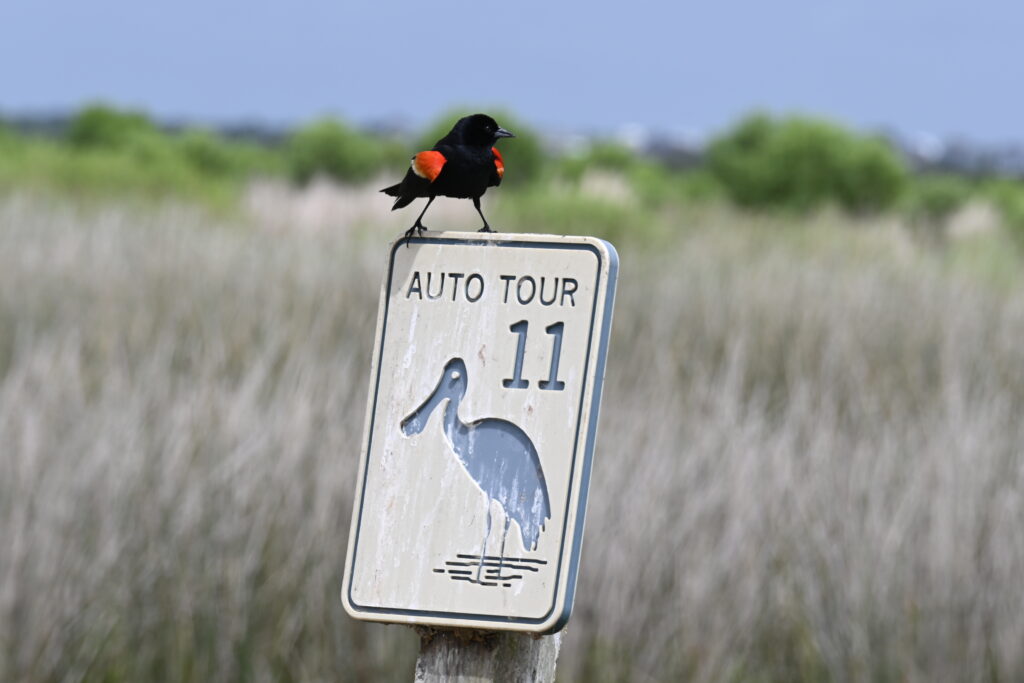
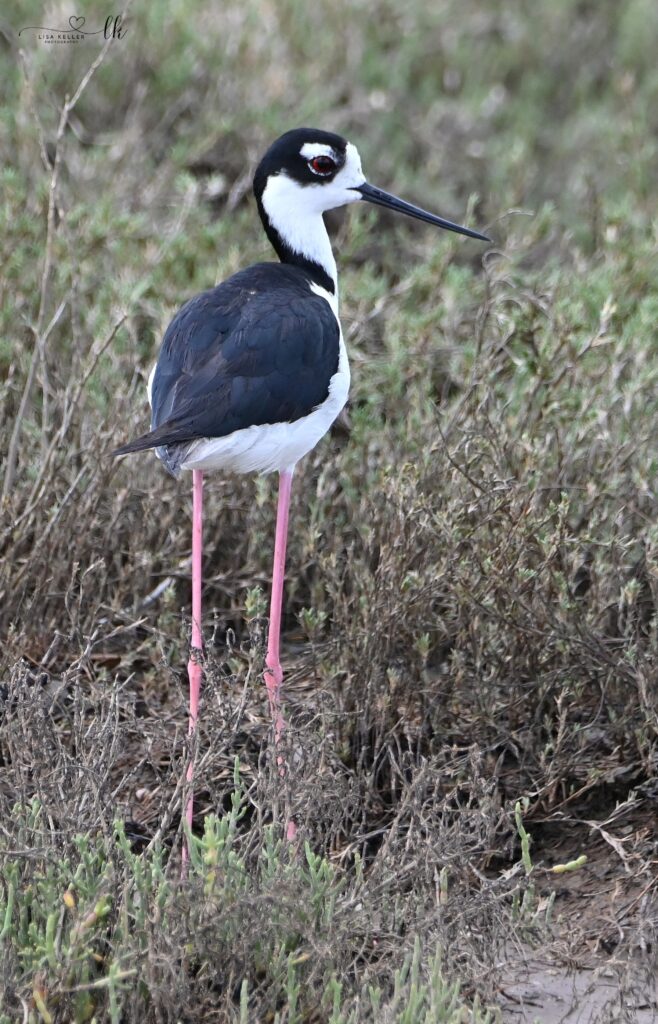
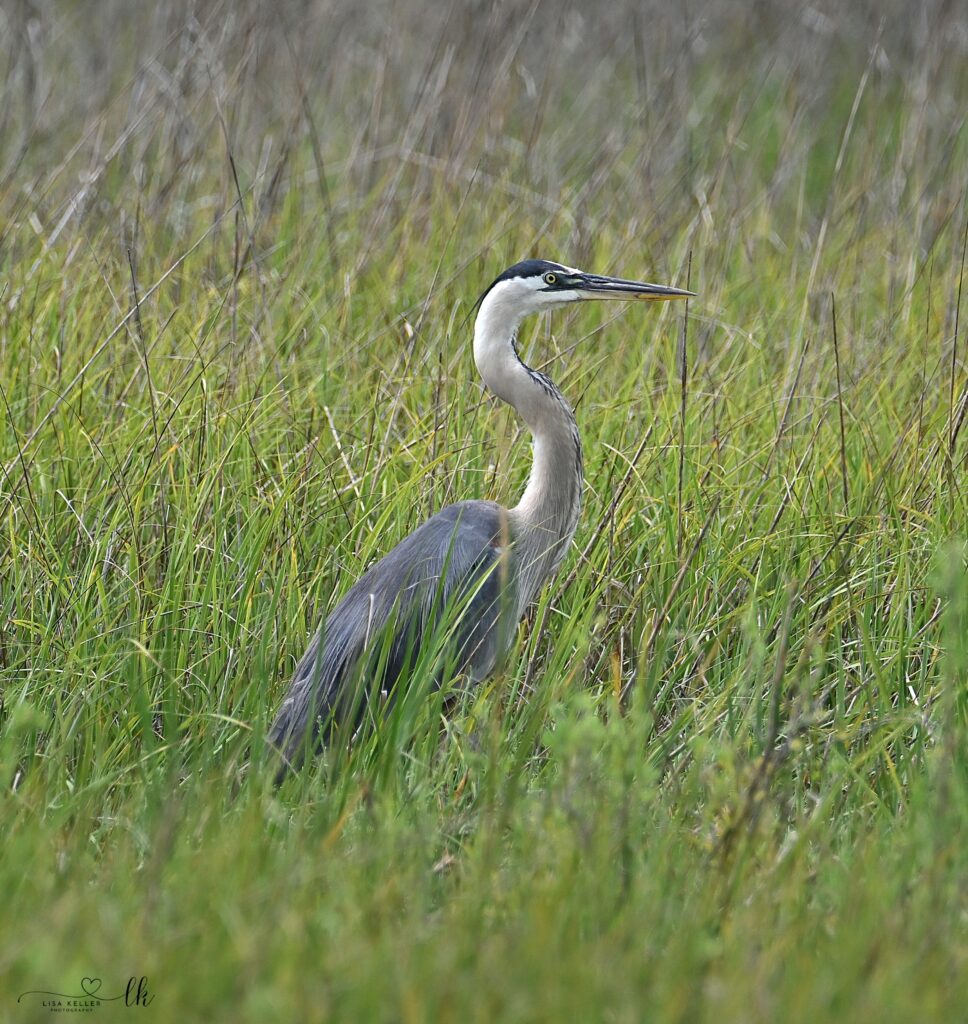
The driving route offers an easy way to explore a variety of habitats throughout the refuge without needing long hikes. Along the route, we encountered a diverse array of birdlife.
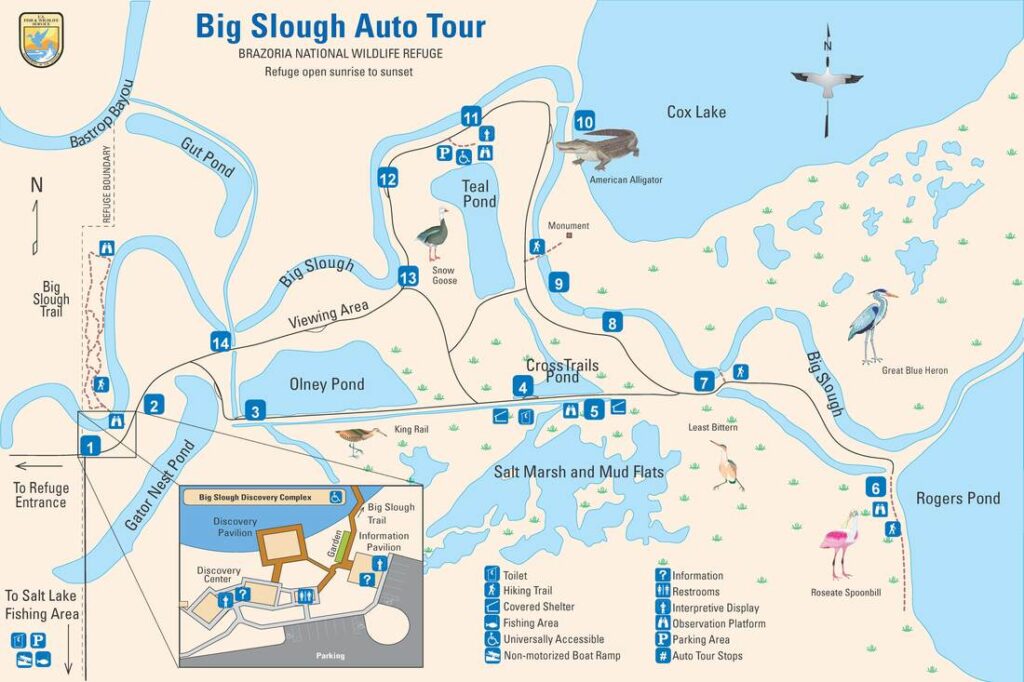
Some of the species we spotted included:
- Great egrets
- Herons
- White ibis
- Black-necked stilts
- Crested caracaras
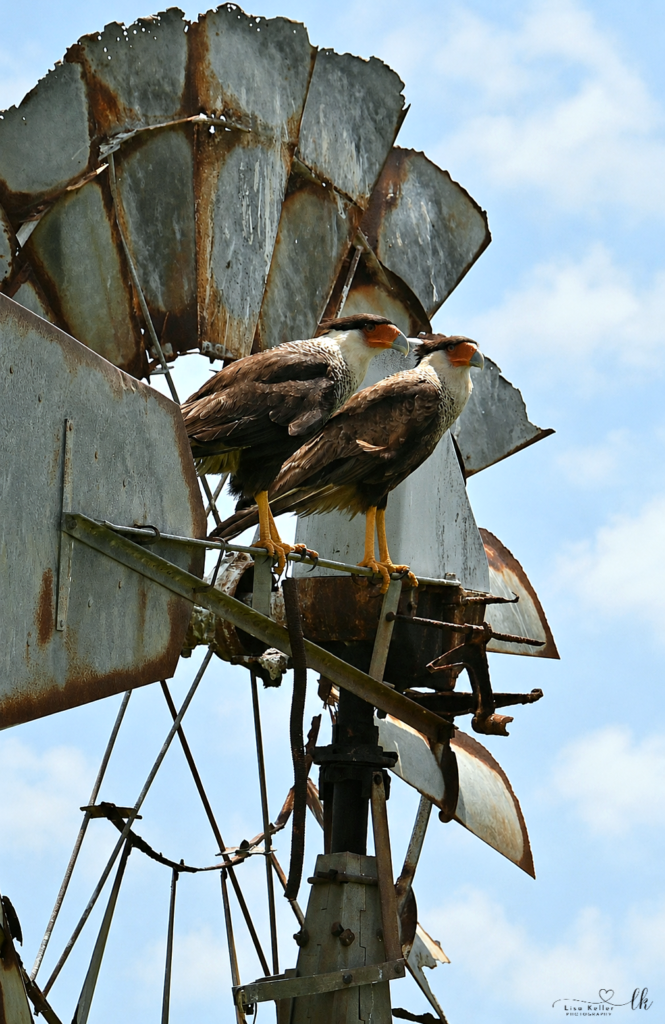
One of our favorite sightings was the crested caracara. These striking birds stand out with their bold coloring, distinctive orange face, and unique appearance. We spotted two perched on top of an old windmill along the Big Slough Auto Tour both days we visited. It almost felt like they were standing watch over the refuge. They’re always a treat to spot and one of those birds that immediately catches your attention.
The birds weren’t the only wildlife we encountered on the auto tour. We also spotted several larger alligators along the route. Several would slowly swim toward the edge of the road whenever a vehicle stopped nearby.
Unfortunately, it was obvious some of the alligators had learned to associate vehicles with food. We suspect people have fed them in the past, which is both illegal and harmful to the animals. We enjoyed watching and photographing them, but we never fed them and strongly encourage other visitors not to either.
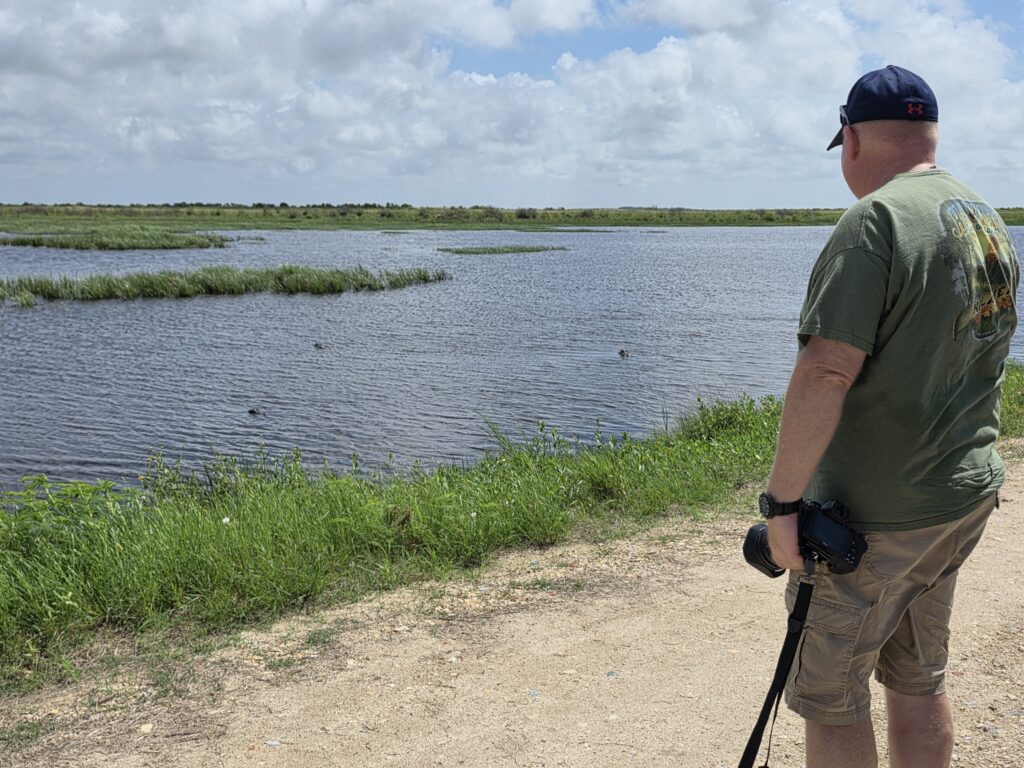
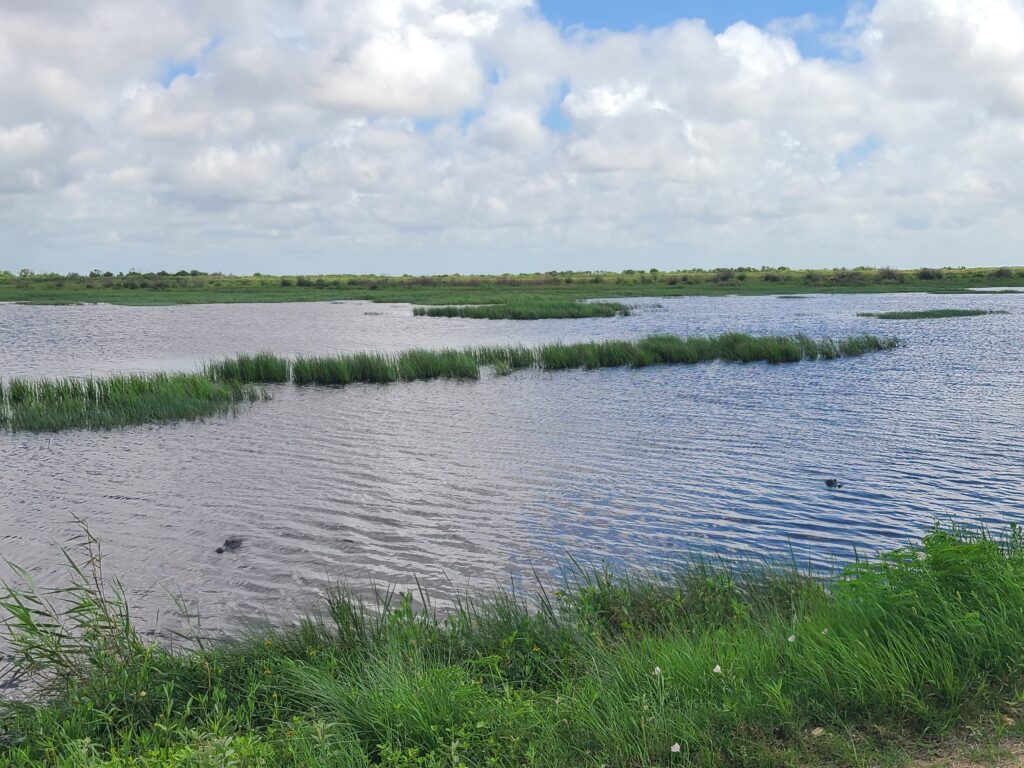
Wild alligators should remain wild, and feeding them only creates problems for both the animals and future visitors.
The combination of wetlands, ponds, grasslands, and marshes creates excellent habitat for both resident and migratory birds. Even casual birdwatchers will likely find plenty to enjoy.
As we slowly made our way along the route, it seemed like every turn revealed another bird perched in the marsh or wading through the shallow water. The refuge is a photographer’s dream, especially for anyone who enjoys wildlife and bird photography.
Best Time to Visit Brazoria National Wildlife Refuge
Brazoria National Wildlife Refuge can be enjoyed year-round, but some seasons offer better wildlife viewing opportunities than others.
Spring and fall are especially popular for birdwatching as migratory birds move through the Texas Gulf Coast. During these seasons, the wetlands can be filled with egrets, herons, ibis, shorebirds, and waterfowl.
Late spring and early summer can be an excellent time to spot baby alligators. That’s exactly what brought us here, and seeing the young gators gathered around the boardwalk was the highlight of our visit.
If possible, plan your visit for early morning or late afternoon. Wildlife tends to be more active during the cooler parts of the day, and the lighting is much better for photography than the harsh midday sun.
One of the best things about visiting Brazoria National Wildlife Refuge is that admission is completely free, making it an easy addition to any Gulf Coast road trip or RV adventure.
Photography Tips for Brazoria National Wildlife Refuge
If you’re bringing a camera, you’ll find plenty of opportunities throughout the refuge.
For the boardwalk behind the Discovery Center, a shorter zoom lens works well for photographing baby alligators both on the dock and in the water surrounding the boardwalk. Some of the young gators were surprisingly close, making it easy to capture detailed photos without needing an extremely long lens.
For the Big Slough Auto Tour, a longer telephoto lens is helpful for photographing birds that may be feeding or resting farther from the road. Many of the egrets, herons, ibis, stilts, and caracaras we observed were well beyond the reach of a standard lens.
A few tips that helped during our visit:
- Bring both a shorter zoom and a telephoto lens if possible.
- Early morning provides the best wildlife activity and softer light.
- A faster shutter speed helps freeze birds in flight.
- Watch the edges of ponds and marshes for hidden alligators.
- Bring extra batteries and memory cards—you may end up taking far more photos than planned.
We certainly did. We originally came hoping to see a few baby alligators and ended up spending so much time photographing them that our visit lasted much longer than expected.
What’s In Our Camera Bags
We travel with camera gear that gives us the flexibility to photograph everything from wildlife and landscapes to city attractions and fast-moving aircraft. Here is the camera equipment we currently use and recommend.
Rob’s Camera Bag
Camera:
Nikon Z6II Mirrorless Camera
Everyday Lens:
Nikon Z 24-120mm f/4 S Lens
Travel Superzoom Lens:
Nikon Z 28-400mm f/4-8 Lens
Wildlife and Aviation Lens:
Nikon Z 180-600mm f/5.6-6.3 VR Lens
Our recommended upgrade from the Nikon 200-500mm lens.
Extra Batteries:
Nikon EN-EL15C Batteries
Lisa’s Camera Bag
Camera:
Nikon Z50 Mirrorless Camera
Everyday Travel Lens:
Tamron 18-400mm f/3.5-6.3 Lens
Wildlife and Aviation Lens:
Tamron 150-600mm f/5-6.3 Lens
Extra Batteries:
Nikon EN-EL25a Batteries
Our Favorite Memory Cards
For fast continuous shooting and high-resolution photography, we use Delkin Devices Power 32GB SDHC UHS-II U3/V90 Memory Cards . Their fast write speeds make them especially useful for wildlife, aviation photography, and other fast-moving subjects.
We only recommend camera equipment we personally use or would choose as a direct upgrade. As an Amazon Associate, we may earn from qualifying purchases at no additional cost to you.
A Great Stop for Wildlife Lovers
What we enjoyed most about Brazoria National Wildlife Refuge was how accessible the wildlife was. You don’t need to hike miles into the backcountry or spend hours searching. The boardwalk and auto tour make it easy to see wildlife up close while still respecting the animals’ space.
Whether you’re interested in birdwatching, wildlife photography, or simply spending a few hours outdoors, Brazoria National Wildlife Refuge is well worth a visit.
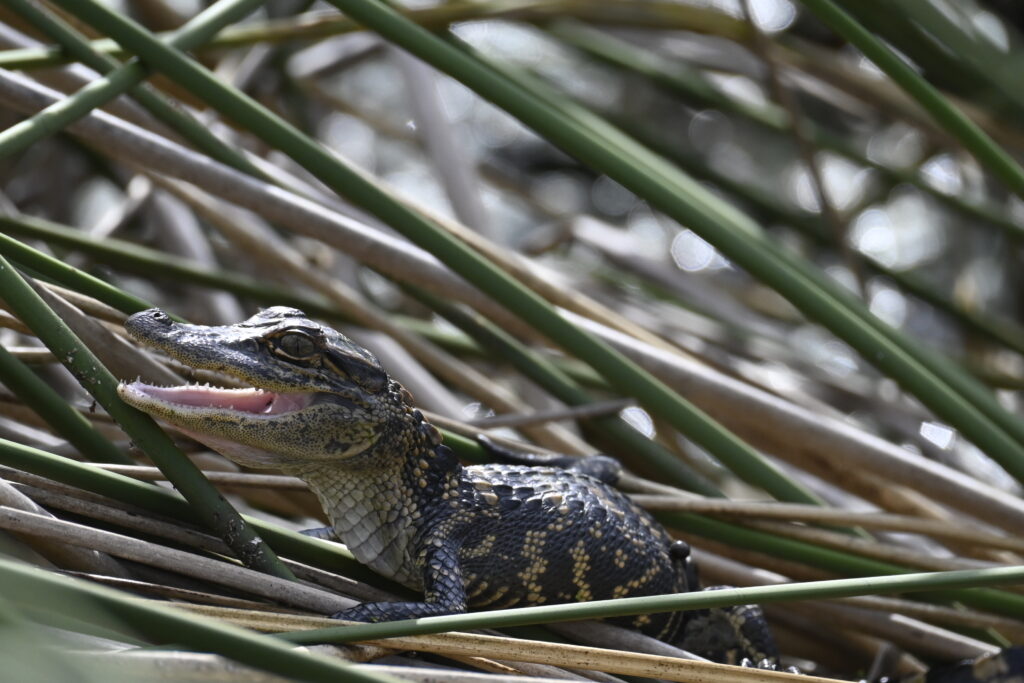
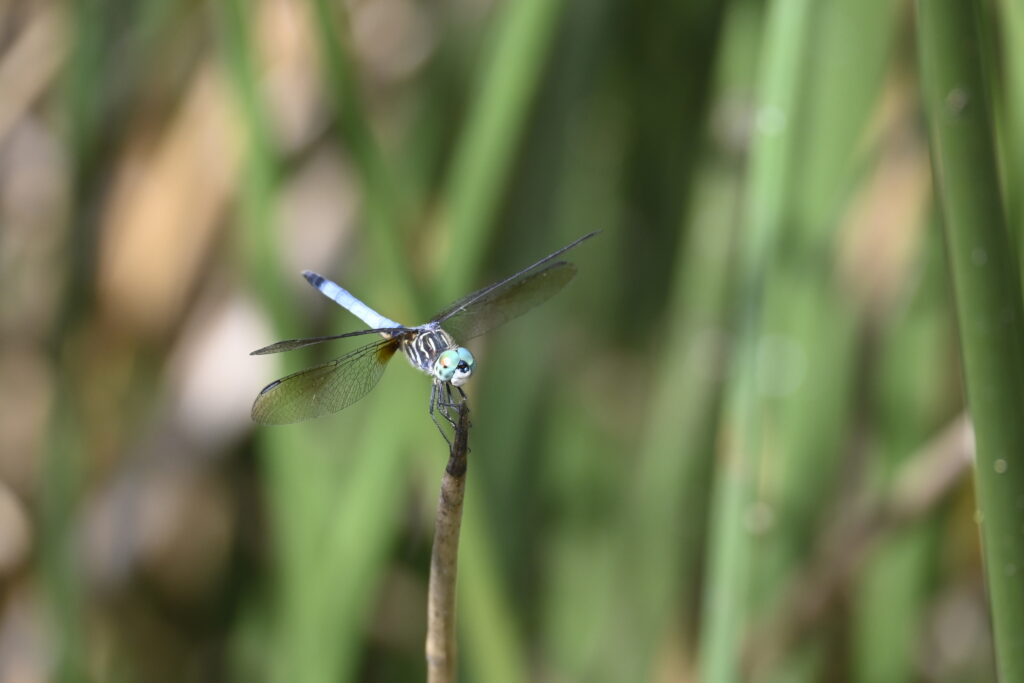
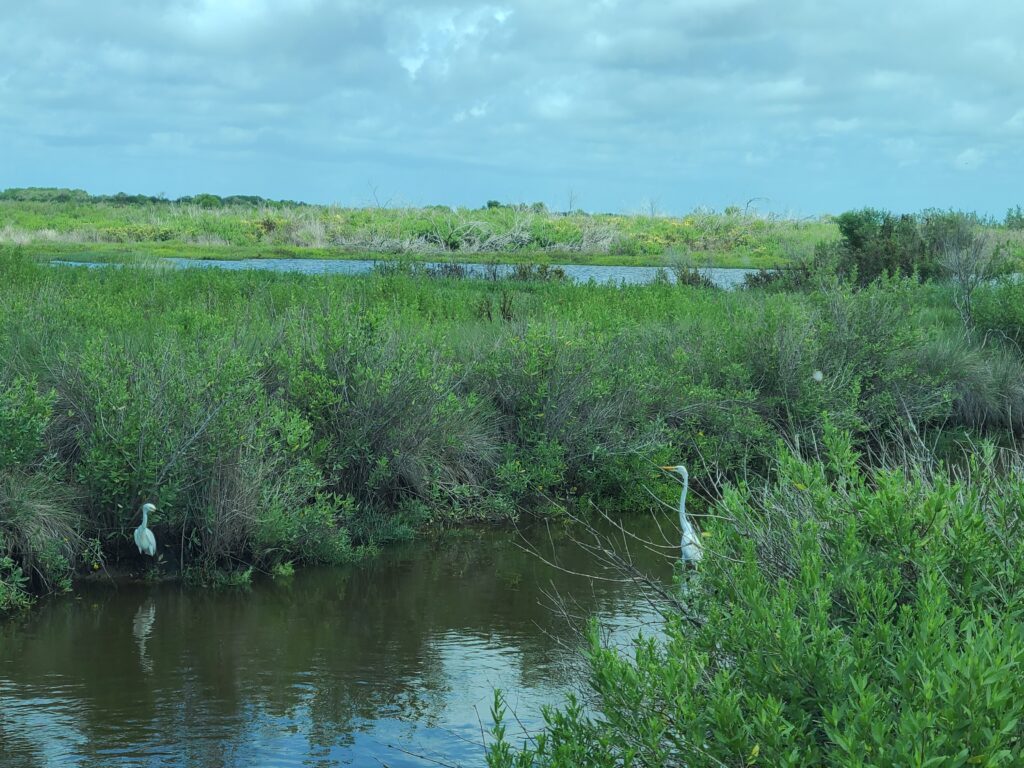
For us, finally getting to see those baby alligators made the stop memorable.
After missing our chance last year, we’re glad we made the effort to come back. Sometimes, the places that stay on your travel list the longest end up being some of the most rewarding to finally experience.
Getting There
Finding the refuge can be a little confusing if you’re relying on GPS or general map searches, so it’s best to use the address of the entrance gate:
2072 Hoskins Mound Rd
Angleton, TX 77515
This address takes you to the automatic entrance gate for Brazoria National Wildlife Refuge. From there, it’s approximately three miles down Fleetwood Lane to the Discovery Center, boardwalk, and the start of the Big Slough Auto Tour.
The entrance gate automatically opens at sunrise and locks at sunset, so plan your visit accordingly.
The drive into the refuge is part of the experience. Even before reaching the visitor area, keep an eye out for birds perched on fence posts, wildlife moving through the marshes, and plenty of opportunities to stop and enjoy the scenery.
Brazoria National Wildlife Refuge is located south of Angleton and Lake Jackson, making it an easy day trip for anyone exploring the Texas Gulf Coast. Visitors coming from Houston can also comfortably visit the refuge as a day trip while escaping the city for a few hours of wildlife viewing and photography.
Things to Know Before You Go
- Bug spray is highly recommended. The mosquitoes and biting flies were everywhere near the wetlands during our visit.
- Bring plenty of water, especially during warmer months.
- Binoculars can be just as useful as a camera.
- Allow at least 2–4 hours to fully enjoy the boardwalk and Big Slough Auto Tour.
- Wildlife is most active during the cooler morning and evening hours.
- The Discovery Center may not always be open, so don’t plan your visit around it.
- Never feed the alligators or other wildlife.
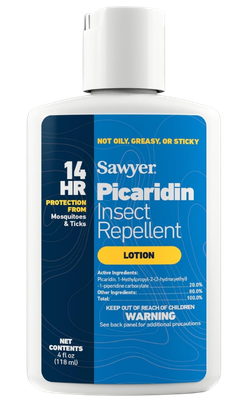
Don’t Forget the Mosquito Repellent
Mosquitoes can be plentiful near the bayou, especially around sunrise and sunset. We like Sawyer Products Picaridin Insect Repellent because it provides long-lasting protection without feeling greasy or having a strong odor.
It’s a smart addition to your RV gear when camping near wetlands, wildlife refuges, or the Texas Gulf Coast.
View Sawyer Picaridin on Amazon →Continue Exploring the Area
If you’re spending a few days exploring the Texas Gulf Coast, there are several attractions nearby that pair well with a visit to Brazoria National Wildlife Refuge.
Surfside Beach (20 Minutes)
Just a short drive from the refuge, Surfside Beach is a great place to unwind after a morning of wildlife watching. Take a walk along the shoreline, search for seashells, watch shorebirds, or simply enjoy the Gulf views.
Sea Center Texas (20 Minutes)
Sea Center Texas is a free visitor center and fish hatchery that offers a closer look at Texas coastal marine life. Explore the aquariums, learn about conservation efforts, and stroll around the outdoor ponds filled with native fish.
Stay at On the Bayou RV Park (20 Minutes)
If you’re traveling by RV, we stayed at On the Bayou RV Park while exploring the refuge. Its convenient location made it an excellent base for visiting Brazoria National Wildlife Refuge and other attractions along the Texas Gulf Coast.
Read Our Review: On the Bayou RV Park Review
San Bernard National Wildlife Refuge (35 Minutes)
Another excellent destination for wildlife lovers, the San Bernard National Wildlife Refuge features wetlands, birding opportunities, scenic driving routes, and peaceful hiking trails. It’s a great addition if you’re planning a weekend of exploring Texas wildlife refuges.
Quintana Beach County Park (25 Minutes)
For a quieter beach experience, head to Quintana Beach County Park. The beach is popular for birdwatching, fishing, beachcombing, and enjoying a less crowded stretch of the Texas coastline.
Brazos Bend State Park (45 Minutes)
If you’re hoping to see even more alligators, Brazos Bend State Park is one of the best places in Texas for wildlife viewing. The park’s trails and lakes provide excellent opportunities to photograph alligators, birds, turtles, and other native wildlife.
Explore Lake Jackson
Before heading home, spend some time exploring nearby Lake Jackson. We also recommend stopping at the original Buc-ee’s, where the Texas convenience store chain began. It’s much smaller than the massive interstate locations but offers a fun glimpse into the company’s beginnings.
Final Thoughts
Our favorite moment was watching the baby alligators gather around the dock while their mother stayed nearby in the water. We came hoping to see a few baby gators and ended up spending over an hour photographing them.
We left with hundreds of photos, memories of watching a mother gator guard her young, and sightings of several beautiful bird species along the auto tour.
Brazoria National Wildlife Refuge turned out to be one of those places that remind us why we enjoy traveling slowly. Sometimes all it takes is a boardwalk, a few baby gators, and a quiet marsh to make for a great day of exploring.
If you’re traveling the Texas Gulf Coast, don’t overlook this hidden gem. Between the alligators, abundant birdlife, scenic wetlands, and free admission, Brazoria National Wildlife Refuge offers one of the best wildlife-viewing experiences we’ve found in Texas.
Whether you’re staying near Angleton, Lake Jackson, Freeport, or looking for a unique day trip from Houston, this refuge is well worth adding to your travel plans.