Our RV propane Extend-A-Stay has become one of those upgrades that makes full-time RV living a little easier, especially during the winter months. After struggling to find propane companies willing to refill the permanently mounted tank on our 2019 Thor Challenger 37YT, we decided to install a Camco Extend-A-Stay system, so we could connect an external 20-pound propane cylinder without having to move our motorhome.
- The Problem with Refilling a Motorhome’s Propane Tank
- Our Solution: The RV Propane Extend-A-Stay
- Installing the Camco Extend-A-Stay on Our Thor Challenger
- Why We Chose a 20-Pound Propane Tank
- How Long Will a 20-Pound Propane Tank Last in an RV?
- Could We Use a Larger External Propane Tank?
- Using an External Propane Tank During Freezing Weather
- The Biggest Advantage: We Don’t Have to Move Our Motorhome
- Is the Camco Extend-A-Stay Worth Installing?
- RV Propane Extend-A-Stay FAQ
- Our Final Thoughts on the Camco Extend-A-Stay
This post contains affiliate links. As a participant in Amazon Associates and various affiliate programs, we are compensated when qualifying purchases are made through our referral links at no additional cost to you. Full Disclosure
When you’re living in your motorhome full-time, there are certain conveniences you don’t really think about until they become a problem.
For us, one of those conveniences is propane delivery.
Our 2019 Thor Challenger 37YT has a permanently mounted propane tank. Under normal circumstances, getting propane is pretty straightforward. We drive the motorhome to a propane filling station, have the tank filled, and continue on our way.
But what happens when you’re parked in one location for an extended period, especially during the winter?
That’s where things get complicated.
We’ve found that while propane companies are often willing to deliver propane to a stationary 50- or 100-gallon tank, finding one willing to refill the permanently mounted tank on our motorhome has become increasingly difficult.
And frankly, that doesn’t make much sense to us.
We’re not asking them to do anything unusual. Our motorhome’s propane tank is designed to be refilled. Yet companies that routinely deliver propane to residential and commercial tanks often won’t service it.
Rather than continue dealing with this frustration, we decided to make our propane system a little more flexible.
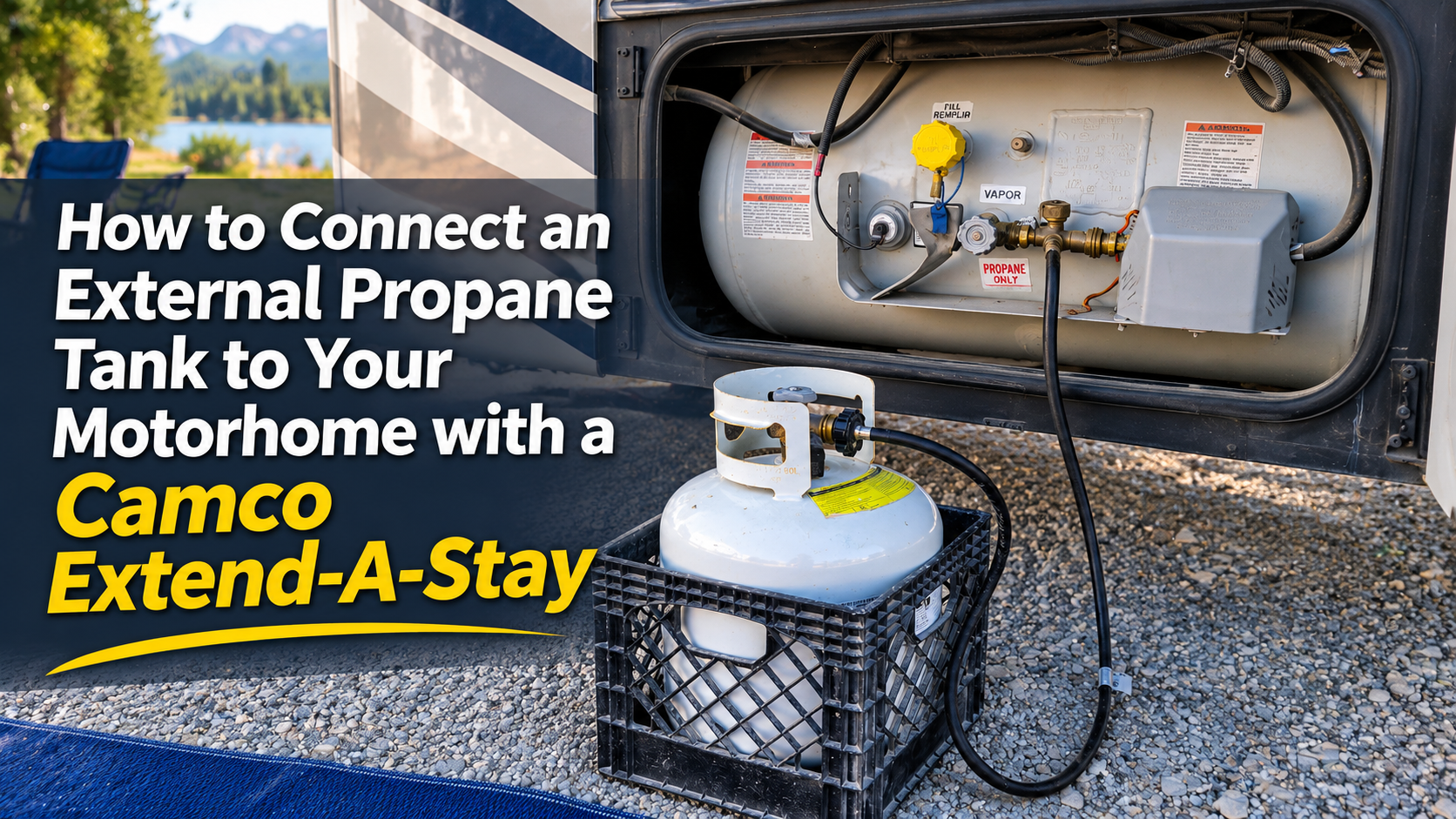
Our solution was installing a Camco Propane Extend-A-Stay, which allows us to connect an external propane cylinder directly to our motorhome’s existing propane system.
Now, instead of having to move our entire motorhome whenever we need propane, we can disconnect a portable cylinder, get it refilled, and reconnect it.
For full-time RVers, especially those spending the winter in colder climates, that’s a pretty useful modification.
The Problem with Refilling a Motorhome’s Propane Tank
One of the differences between a Class A motorhome and many travel trailers or fifth wheels is the propane tank.
Most Class A motorhomes have permanently mounted ASME propane tanks. Unlike the removable propane cylinders commonly found on travel trailers, these tanks stay attached to the motorhome.
That’s convenient when you’re traveling regularly.
You simply pull into a propane filling station, fill the tank, and head down the road.
But when you’re staying in one campground for weeks or months, the situation changes.
Imagine having your motorhome completely set up for an extended stay.
You’ve leveled the coach, connected the water and sewer hoses, hooked up the electrical service, put out the slides, and settled into your campsite.
Now imagine having to undo much of that setup just because your propane tank is getting low.
That’s a lot of work for something that should be relatively simple.
During warmer weather, it might not be a major issue. But when temperatures start dropping, and you’re relying on your propane furnace, having a dependable propane supply becomes much more important.
Why Won’t Propane Companies Deliver to a Motorhome?
This is the question we kept asking.
We found companies that would deliver propane to larger stationary tanks but weren’t interested in filling the permanently mounted tank on our motorhome.
Why?
The exact reason depends on the company. Possible explanations include delivery minimums, company insurance requirements, equipment and access restrictions, or policies concerning mobile RV tanks.
A larger stationary tank also represents a more substantial delivery, making it more economical for a propane company to send out a truck.
We understand that companies have operating costs and procedures to follow.
It’s still frustrating when you’re looking at a perfectly serviceable propane tank and can’t find anyone willing to come fill it.
And we’re certainly not interested in packing up our motorhome every time we need propane.
That’s what led us to look for another solution.
Our Solution: The RV Propane Extend-A-Stay
After researching different options, we decided to install a Camco Propane Extend-A-Stay system.
The concept is relatively simple.
The Extend-A-Stay adds a specialized brass tee fitting to the motorhome’s existing propane system, allowing an auxiliary propane cylinder to supply propane to the RV.
Instead of relying exclusively on the motorhome’s permanently mounted tank, we can connect an external propane cylinder.
And the best part?
We don’t have to move the motorhome to refill that portable tank.
We can disconnect the cylinder, take it to a propane filling station, and bring it back to the campsite.
For extended stays, that makes managing propane considerably easier.
What Is a Camco Extend-A-Stay?
The Camco Extend-A-Stay is a propane connection system designed for compatible motorhome installations.
The four-port version installs in the propane supply line between the motorhome’s onboard tank service valve and its existing regulator.
Depending on the kit, the system provides connections for:
- The motorhome’s permanently mounted propane tank.
- The existing RV propane regulator.
- An auxiliary propane cylinder.
- An additional compatible high-pressure propane appliance, such as certain portable grills.
We’re primarily interested in the auxiliary propane cylinder connection.
That allows us to use a standard refillable 20-pound cylinder to supply our existing RV propane appliances through the motorhome’s regulator.
The auxiliary cylinder connects through the appropriate manufacturer-approved hose and fitting arrangement, without adding a second regulator to that inlet.
The important distinction is that we’re supplying propane to the motorhome’s existing system, not transferring propane into the onboard tank.
The external cylinder is simply an alternative source of fuel.
An Added Bonus: Connect Your BBQ Grill or Propane Fire Pit
Another nice feature of the Camco Extend-A-Stay kit is that it does more than allow us to connect an external propane cylinder to our motorhome.
The four-port kit also includes a separate 12-foot propane hose that can be used to connect compatible portable propane appliances, such as a BBQ grill, camp stove, or propane fire pit.
That means we can potentially use our motorhome’s onboard propane supply to fuel outdoor cooking equipment without having to carry a separate propane cylinder just for the grill.
For full-time RVers like us, anything that reduces the amount of extra equipment we need to carry is a bonus.
One important consideration is that this additional connection supplies high-pressure propane before the motorhome’s regulator. Your grill or fire pit must have the appropriate regulator, fittings, and pressure rating for this type of connection. Not every portable propane appliance is compatible without additional equipment.
While our primary reason for installing the Extend-A-Stay was to make winter propane refills easier, having an additional connection for outdoor propane appliances makes this modification even more versatile.
The Camco Extend-A-Stay We Purchased
We chose the Camco Extend-A-Stay because it provides an auxiliary propane connection without requiring us to replace our onboard propane tank or redesign the entire RV propane system.
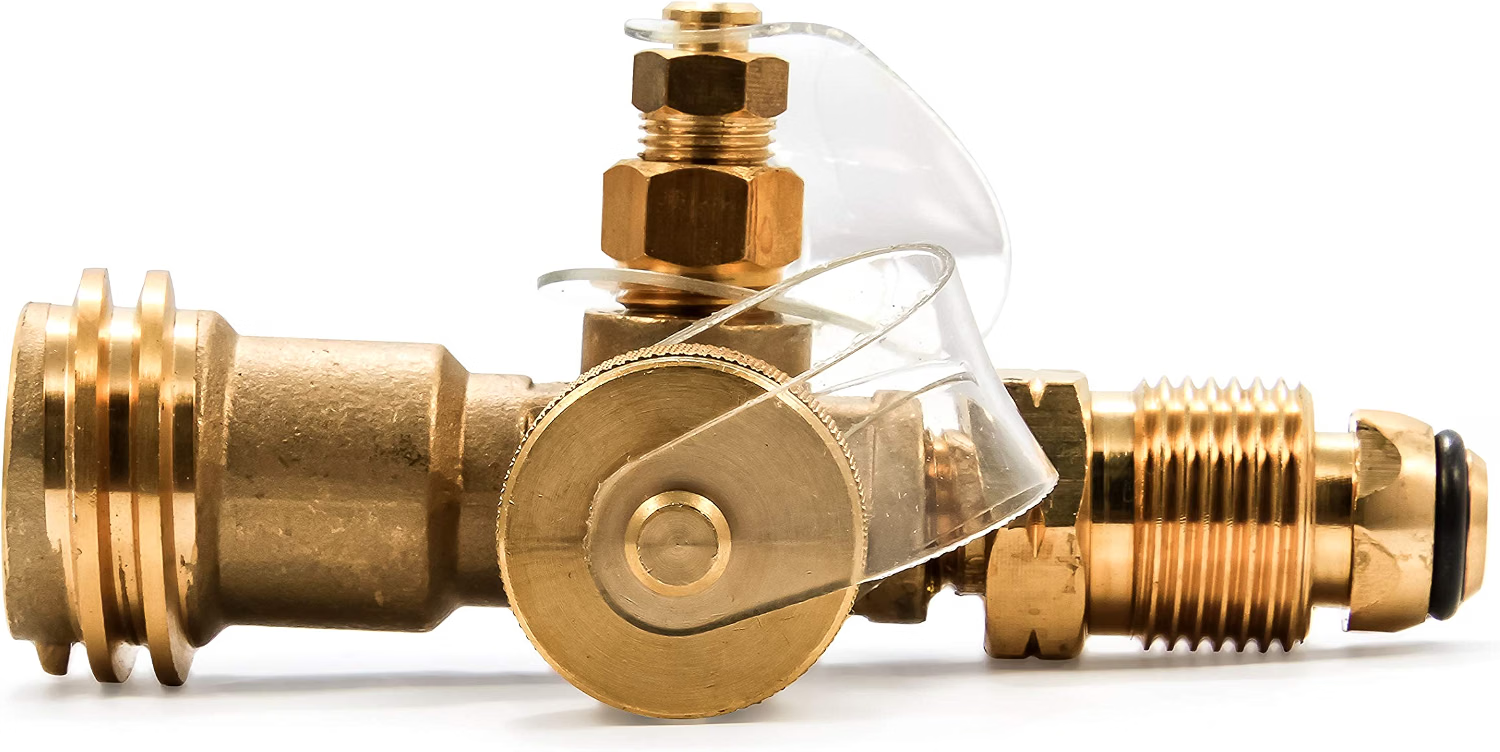
Tired of moving your motorhome just to refill propane? The Camco Extend-A-Stay allows you to connect an external propane cylinder to a compatible motorhome propane system, making it easier to manage your propane supply during extended campground stays.
We installed the Camco Extend-A-Stay on our 2019 Thor Challenger 37YT so we can use a standard 20-pound propane cylinder instead of relying entirely on our permanently mounted tank. Now we can take the portable cylinder for refilling without disconnecting utilities, retracting the slides, or moving our motorhome.
Don’t Need the BBQ or Fire Pit Hose?
Camco also offers an Extend-A-Stay kit that includes the 4-port propane fitting and 5-foot hose for connecting an external propane cylinder, but leaves out the additional 12-foot appliance hose. If your only goal is to avoid moving your motorhome for propane refills, this version may be all you need.
If you only need to connect an external propane cylinder to your motorhome, Camco also offers an Extend-A-Stay kit without the additional 12-foot hose for BBQ grills and fire pits. This may be a more economical option if you don’t need the outdoor appliance connection.
Installing the Camco Extend-A-Stay on Our Thor Challenger
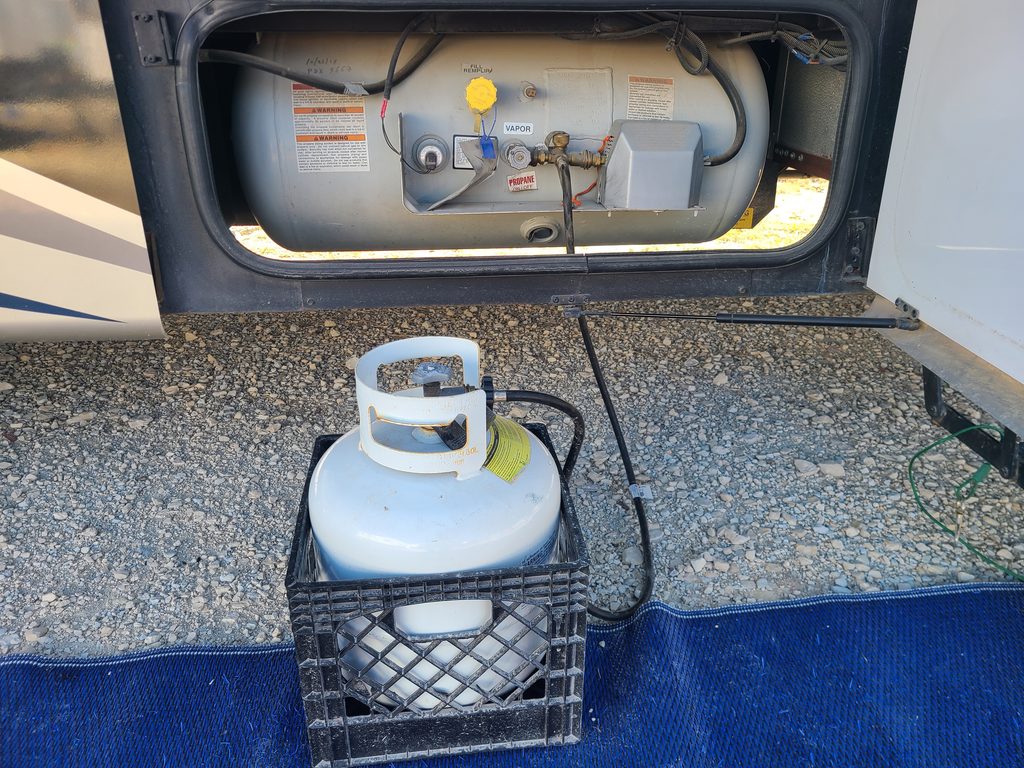
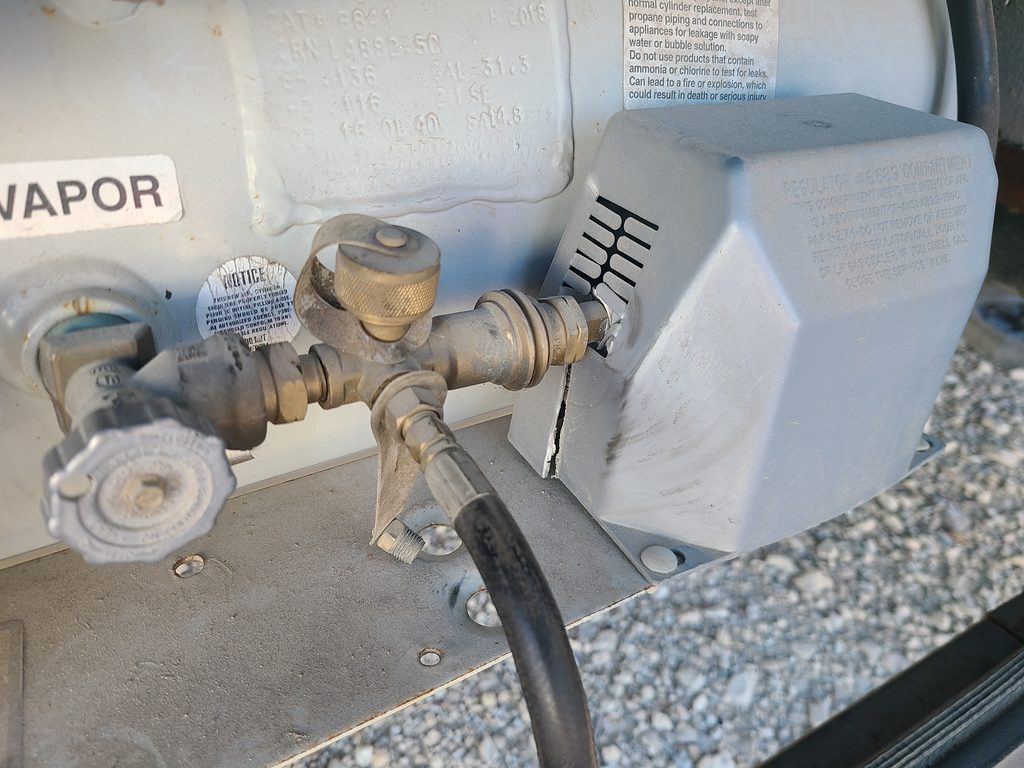
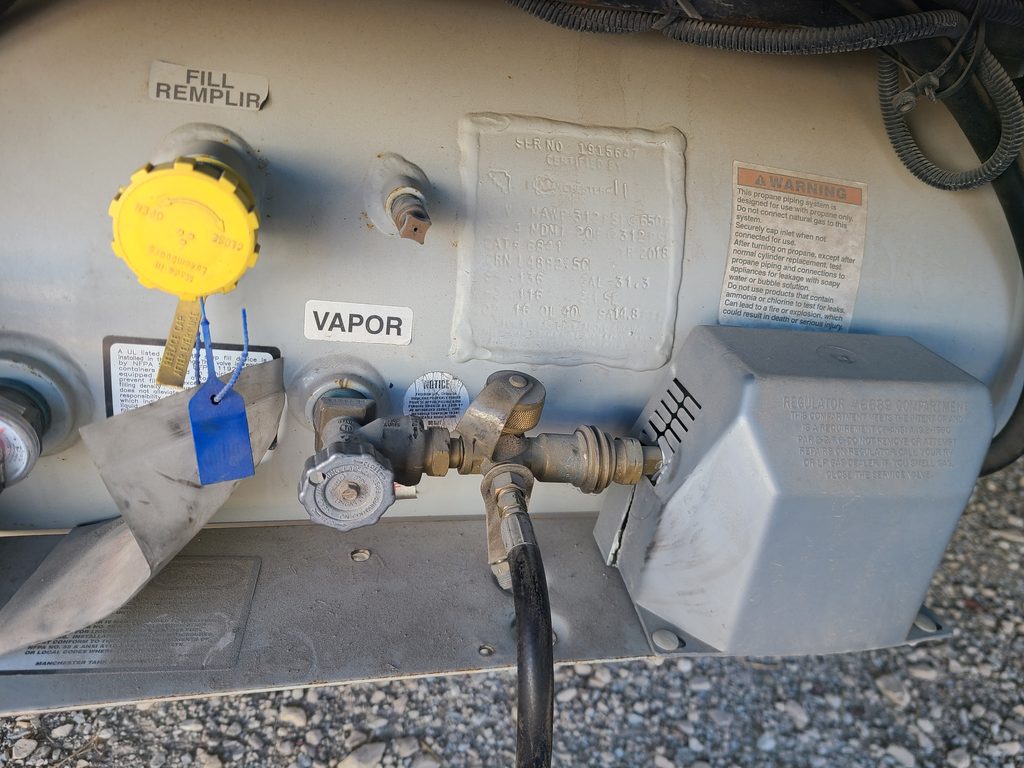
Our 2019 Thor Challenger 37YT has a dedicated propane compartment containing the permanently mounted tank, service valve, regulator, and associated propane connections.
The Extend-A-Stay fitting is installed between the onboard propane tank’s service valve and the existing regulator.
This allows propane from an external cylinder to enter the system before reaching the regulator that supplies our RV appliances.
The Extend-A-Stay Connection
The brass tee fitting connects to our existing propane supply system.
The auxiliary connection provides a place to attach the hose leading to our portable propane cylinder.
With the correct connection, the cylinder can supply propane to the motorhome through the existing regulator.
When using the external cylinder, we close the onboard propane tank’s service valve so the two supplies aren’t feeding the system simultaneously.
The auxiliary connection is designed for vapor service, not for filling or transferring liquid propane between tanks.
Connecting Our 20-Pound Propane Cylinder
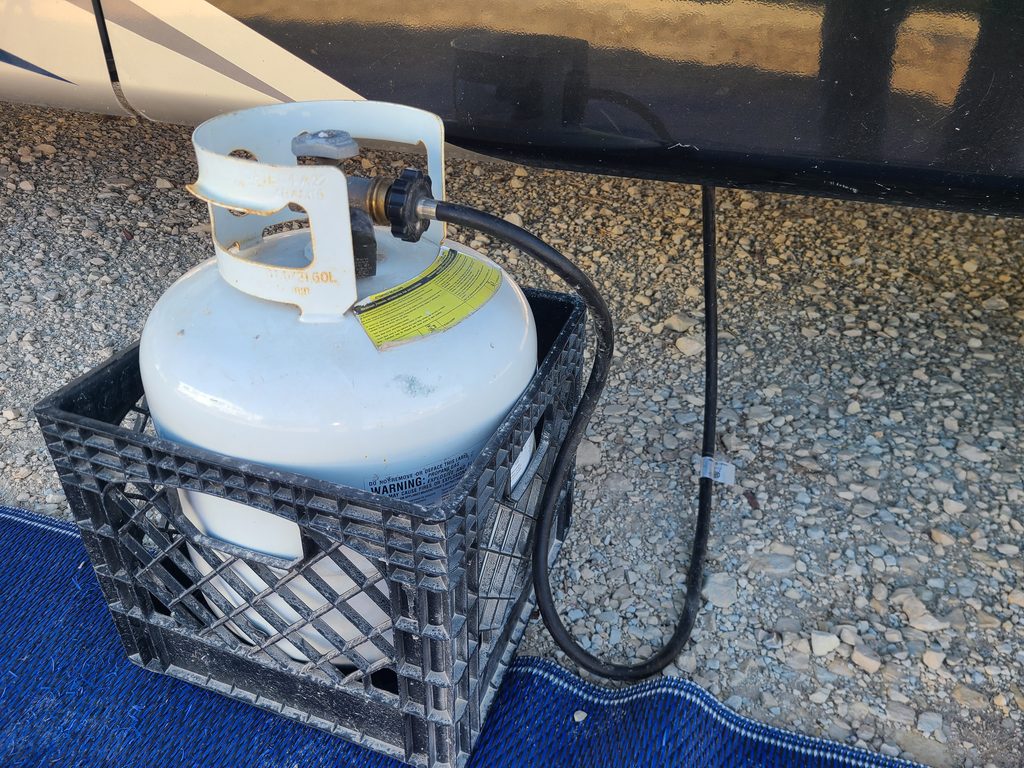
For our initial setup, we chose a standard 20-pound propane cylinder.
These are the same general type of refillable cylinders commonly used with backyard propane grills.
They’re easy to transport, and propane refill stations are fairly common.
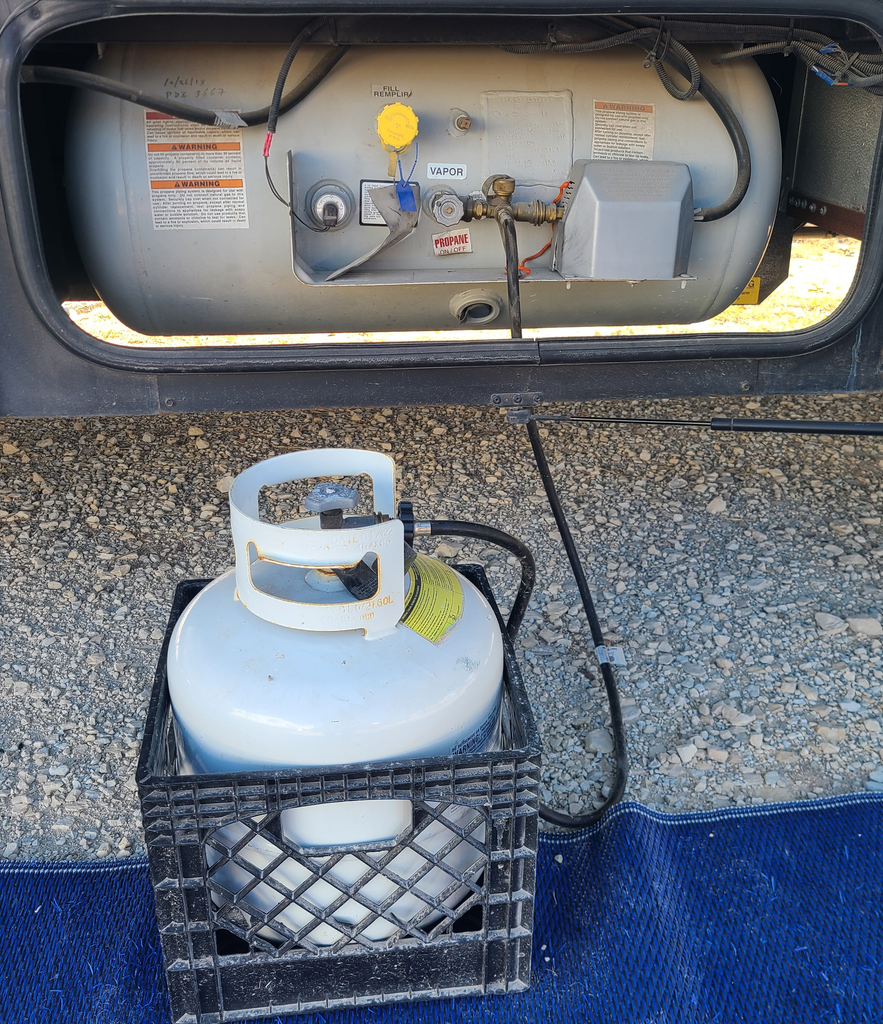
Our external cylinder connects to the Extend-A-Stay through a compatible propane hose.
The cylinder remains outside the motorhome, upright, and secured against tipping.
Once properly connected and leak-tested, it becomes an alternative propane source for the RV.
Important Installation and Safety Considerations
Propane systems require special attention because you’re working with a pressurized, flammable gas.
This article shows our setup and explains why we chose it. It isn’t a substitute for the manufacturer’s installation instructions or professional propane service.
The hose needs to be routed safely without being pinched by the compartment door or interfering with ventilation. The compartment door must not be left in an unsafe position to accommodate the connection.
Whenever you’re making changes to your RV’s propane system, it’s also a good time to check your propane and carbon monoxide detectors. These important safety devices don’t last forever, and we’ve already had to replace ours more than once. We documented the process in our guide on How to Replace an RV Propane and Carbon Monoxide Detector, including how to identify an aging detector and what to look for when choosing a replacement.
Never use a flame to check for propane leaks.
If you smell propane, stop using the system, avoid operating electrical switches or ignition sources, shut off the supply if it’s safe to do so, move away, and have the problem inspected before using it again.
Why We Chose a 20-Pound Propane Tank
You might wonder why we started with a standard 20-pound propane cylinder instead of a larger one.
For us, convenience was the biggest factor.
A 20-pound propane cylinder is readily available, relatively inexpensive, and easy to transport.
We can take it to a refill station without having to move our motorhome.
That flexibility is exactly what we were looking for.
The Advantages of a Portable Propane Cylinder
There are several reasons we like this arrangement.
Availability: Standard 20-pound cylinders can be refilled at many propane dealers, hardware stores, and other propane filling locations.
Portability: Even when full, a 20-pound cylinder is manageable for most people.
Refill flexibility: We can refill our cylinder when needed rather than trying to schedule delivery.
Backup propane supply: Our motorhome’s onboard tank remains available as the primary propane source.
Less disruption: We don’t need to retract the slides, disconnect our utilities, or break down our campsite for a routine propane refill.
Of course, a 20-pound cylinder doesn’t hold nearly as much propane as our onboard tank.
That’s the tradeoff.
But for us, being able to refill a portable cylinder without moving the motorhome is worth it.
How Long Will a 20-Pound Propane Tank Last in an RV?
A standard 20-pound propane cylinder holds approximately 4.7 gallons of propane when properly filled to its rated capacity.
How long that lasts depends entirely on what you’re running.
During warmer months, propane consumption might be relatively low, especially if you’re using campground electricity for most of your appliances.
During the winter, however, the furnace can consume considerably more propane.
For example, a furnace with a 30,000 BTU-per-hour input rating uses approximately 0.33 gallons of propane per hour while the burner is operating.
That doesn’t mean it runs continuously.
The furnace cycles on and off depending on the outside temperature, thermostat setting, insulation, and how well the RV retains heat.
Estimated Propane Usage for an RV Furnace
These estimates use approximately 91,500 BTUs per gallon of propane and assume the furnace’s burner is running for the stated number of hours.
Actual consumption will vary, and other propane appliances will use additional fuel.
If you’re also using propane for cooking, heating water, or operating other appliances, the cylinder won’t last as long.
Very cold weather can also limit how quickly a small cylinder can produce the propane vapor a furnace needs.
For winter camping, we think it’s important to maintain a backup propane supply rather than waiting until the last minute to refill the external cylinder.
One way we’ve reduced our propane consumption during colder weather is by using our motorhome’s electric fireplace when we have sufficient campground electricity available. We learned during a winter stay in Colorado just how useful that fireplace could be for reducing the amount of time our propane furnace runs. We’ve even documented how to fix an annoying RV electric fireplace squeak after encountering the problem with the Napoleon fireplace in our Thor Challenger.
Could We Use a Larger External Propane Tank?
Absolutely, provided the external container, regulator arrangement, hose, and installation are all properly rated and approved.
In fact, using a larger propane supply is something we’re considering for extended winter stays.
Our initial setup uses a standard 20-pound cylinder, but a larger auxiliary supply could mean fewer trips to the propane filling station.
Comparing Different Propane Cylinder Sizes
One thing worth mentioning is that propane containers are identified in different ways.
Portable propane cylinders are commonly rated by the pounds of propane they hold.
Larger stationary tanks are frequently identified by their total water capacity in gallons. Because propane tanks aren’t filled completely with liquid, a 100-gallon stationary tank typically holds about 80 gallons of propane when filled to its allowed capacity.
That’s very different from a 100-pound propane cylinder, which holds approximately 23.6 gallons.
Would a 50- or 100-Gallon Stationary Tank Be Better?
This brings us back to the problem that started the whole project.
Several propane companies indicated they would deliver to a larger stationary tank, even though they weren’t willing to refill our motorhome’s onboard tank.
For someone spending an entire winter in one location, a larger stationary tank could make sense.
You could potentially arrange scheduled propane deliveries without having to transport cylinders yourself.
However, it also comes with additional considerations.
A large stationary propane tank requires an approved location and installation. Depending on the supplier, there may be rental fees, minimum delivery requirements, setup charges, or other conditions.
The tank, regulator arrangement, and connection to the motorhome must be evaluated and approved by the propane provider.
A large stationary propane tank should not simply be connected to an ordinary portable-cylinder hose without confirming that the entire system is designed for that application.
For now, the 20-pound cylinder gives us the flexibility we’re looking for without committing to a much larger propane installation.
Using an External Propane Tank During Freezing Weather
Since winter camping was one of the main reasons we installed this system, cold-weather performance is worth discussing.
Propane behaves differently from water.
Liquid propane has an atmospheric boiling point around -44°F, so the propane inside a cylinder doesn’t ordinarily freeze during typical winter weather.
However, cold temperatures affect how quickly the liquid propane can turn into vapor and supply your RV appliances.
As temperatures drop, the available vapor pressure and vaporization capacity decrease.
This is particularly important with smaller cylinders and appliances with relatively high propane demands.
Can a 20-Pound Propane Tank Run an RV Furnace in Winter?
Yes, under suitable conditions, but the cylinder must be capable of supplying enough vapor for the furnace and any other appliances operating at the same time.
A nearly empty 20-pound cylinder can struggle to supply enough propane vapor during extremely cold weather.
Even when liquid propane remains in the cylinder, the appliance might not receive enough fuel to operate properly.
A larger cylinder can often provide better vaporization performance because of its greater surface area and fuel capacity.
We’re also keeping our onboard propane tank available as a backup.
Never Use an Improvised Heater on a Propane Cylinder
One important safety reminder: never attempt to warm a propane cylinder using an improvised electric heater, heating pad, heat lamp, or open flame.
If your propane system cannot supply enough vapor in cold temperatures, have a qualified propane professional evaluate it and recommend properly sized equipment.
Keeping the cylinder upright, outdoors, and secured remains essential.
The Biggest Advantage: We Don’t Have to Move Our Motorhome
For us, this is what makes the Extend-A-Stay worthwhile.
Our Thor Challenger is our home.
We’ve been full-time RVers since 2019, and when we’re parked at a campground for an extended period, it’s not something we want to disconnect and move unnecessarily.
Every time we break camp, there’s a process.
We have to disconnect utilities, secure everything inside, retract the slides, raise the leveling jacks, and get the motorhome ready to travel.
Then we have to do everything again when we return.
That’s a lot of extra work just to refill propane.
With an auxiliary cylinder, the process becomes much simpler.
We can take the propane cylinder to a filling station using our Ford Bronco, have it refilled, and return to our campsite.
The motorhome stays exactly where it is.
During the winter, when we’re trying to keep the coach warm and protect our plumbing from freezing, that’s a major advantage.
Is the Camco Extend-A-Stay Worth Installing?
For someone who only uses their motorhome occasionally and travels frequently, an Extend-A-Stay might not be necessary.
If you’re already driving past propane filling stations regularly, filling the onboard tank probably isn’t much of an inconvenience.
But for full-time RVers, winter campers, and anyone staying in one location for extended periods, we think it’s worth considering.
It gives you another way to manage your propane supply.
And that flexibility can make a big difference.
Who Would Benefit Most from an Extend-A-Stay?
We think this modification is particularly useful for:
- Full-time RVers.
- Motorhome owners who camp during winter.
- RVers staying at one campground for several weeks or months.
- Seasonal campground residents.
- Anyone who can’t arrange direct propane delivery.
- Motorhome owners who don’t want to move the coach just to refill propane.
We particularly like having options.
Our onboard propane tank is still available, but we now have the ability to use an external cylinder when it makes more sense.
Would We Recommend the Camco Extend-A-Stay?
Absolutely. We’ve had our Camco Extend-A-Stay installed on our Thor Challenger for several years now, and it’s worked well whenever we’ve needed it.
It’s not something we use all the time. When we’re traveling regularly, it’s usually easy enough to stop at a propane filling station and refill our motorhome’s onboard tank.
But when we’re parked at a campground for an extended period, especially during the winter, having the option to connect an external propane cylinder is extremely convenient.
Instead of breaking down camp and moving our motorhome just to refill propane, we can take our portable 20-pound cylinder to a refill station and be back in business.
That’s exactly why we installed it in the first place.
After several years of ownership, we still consider the Camco Extend-A-Stay a worthwhile addition to our motorhome. It’s one of those RV upgrades that we don’t necessarily use every day, but we’re certainly glad we have it when we need it.
Interested in adding an auxiliary propane connection to your motorhome?
Connect an external propane cylinder to your motorhome without moving your RV for refills. The kit also includes a separate hose for compatible propane BBQ grills, camp stoves, and fire pits.
Be sure to verify compatibility with your motorhome and have the installation inspected by a qualified RV propane technician.
Over the years, we’ve found that some of the best RV upgrades aren’t necessarily the most expensive ones. They’re the products that make everyday life easier. The Camco Extend-A-Stay is one of those upgrades for us. You can find it, along with many of the other products we’ve personally used and recommend, in our RV Gear We Use guide.
RV Propane Extend-A-Stay FAQ
Our Final Thoughts on the Camco Extend-A-Stay
One of the things we’ve learned since becoming full-time RVers in 2019 is that there’s always something you can do to make RV life a little easier.
Sometimes it’s a major upgrade.
Other times, it’s a relatively small modification that solves an everyday problem.
Installing our Camco Extend-A-Stay falls into that second category.
We didn’t install it because our onboard propane system wasn’t working.
We installed it because we wanted a more convenient way to keep propane available during extended campground stays, particularly during the colder months.
The inability to find reliable propane delivery directly to our motorhome was becoming frustrating.
Now we have another option.
We can use an external refillable propane cylinder without having to move our entire motorhome.
And if we eventually decide to arrange a larger stationary propane tank for a winter stay, we can explore that option with a qualified propane supplier.
For now, we’re happy to have a simpler way to manage propane.
Sometimes, making full-time RV living more comfortable is just a matter of finding the right solution to a problem you didn’t expect.
Have you installed an Extend-A-Stay or similar external propane connection on your motorhome?
Have you had trouble finding propane companies willing to refill your onboard tank?
We’d love to hear how other RVers handle propane during extended winter stays.
Leave us a comment below and share your experience!