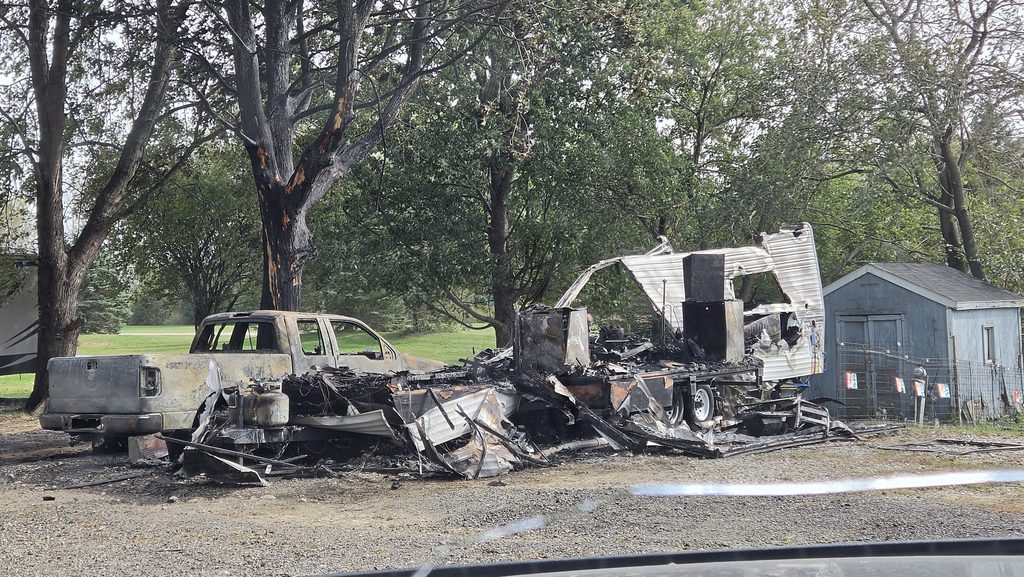
A few nights ago, someone in our campground lost their RV to a fire.
Thankfully, everyone got out safely.
The RV wasn’t so lucky.
By the time it was over, the RV and the truck parked next to it were destroyed. Seeing the aftermath of an RV fire that close to home definitely gets your attention.
Coincidentally, we were already replacing the propane and carbon monoxide detector in our motorhome when the fire got me thinking about another piece of safety equipment.
Our smoke detector.
After seeing firsthand what a fire can do to an RV, we decided it was time to replace ours.
And while we were at it, we decided to do one better.
Instead of simply replacing the original smoke detector, we added a second smoke detector where we sleep.
What started as one of the easiest RV maintenance projects imaginable ended up teaching us quite a bit about smoke alarms, RV-specific listings, and the different types of smoke detection available.
- Why Our RV Smoke Detector Replacement Was Overdue
- Why We Decided to Add a Second Smoke Detector
- The Smoke Detectors We Originally Bought
- Replacing Our Original RV Smoke Detector
- Wait — Does a Smoke Detector Need to Be RV Approved?
- Can You Use a Residential Smoke Detector in an RV?
- What’s Different About an RV-Approved Smoke Detector?
- Our Solution: One RV-Approved Alarm Plus a Second Smoke Detector
- An Unexpected Benefit: Two Types of Smoke Detection
- Our Smoke Alarms and Propane/CO Detector Do Different Jobs
- Where Should You Install a Smoke Detector in an RV?
- Our CO/Propane Detector Started This Whole Safety Check
- Changing the Battery Isn’t the Same as Replacing the Smoke Detector
- RV Smoke Detector FAQ
- Sometimes Writing the Blog Post Changes the Project
- How Old Is the Smoke Detector in Your RV?
This post contains affiliate links. As a participant in Amazon Associates and various affiliate programs, we are compensated when qualifying purchases are made through our referral links at no additional cost to you. Full Disclosure
Why Our RV Smoke Detector Replacement Was Overdue
It wasn’t that we’d ignored it. We had always changed the battery at the recommended intervals, but that was about it. As long as it tested properly and wasn’t chirping at us, we really hadn’t given the detector itself much thought.
Our 2019 motorhome came from the factory with one smoke detector, located in the main living area.
We’re the original owners of the motorhome, so we knew it was still the original detector installed at the factory.
That meant it was now more than seven years old.
Smoke detectors are easy to forget about.
They’re mounted on the ceiling, quietly doing their job. Change the battery, push the test button occasionally, and as long as they don’t start chirping, it’s easy to assume everything is fine.
But changing the battery and replacing the smoke detector itself are two different things.
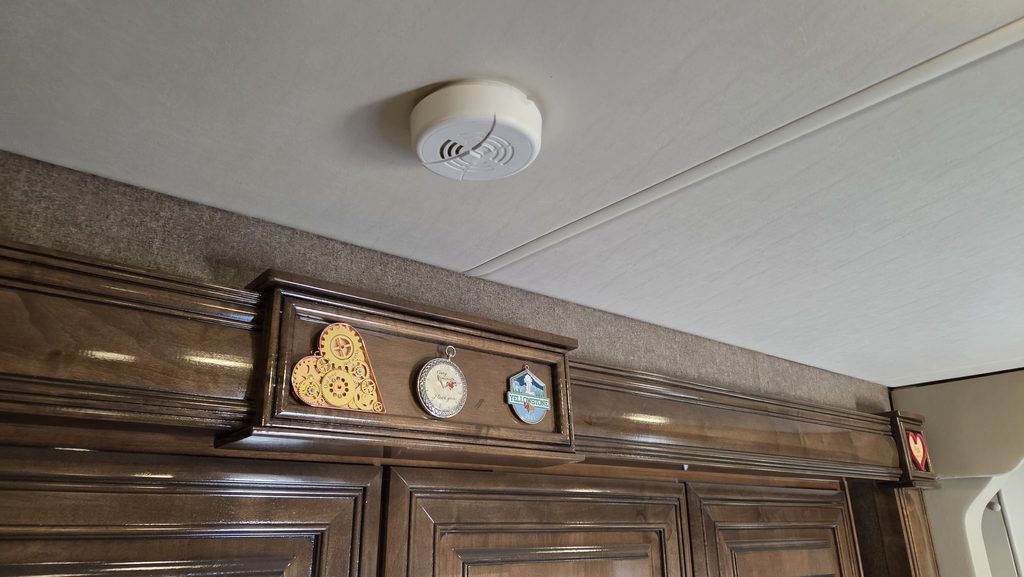
Considering its age—and what had just happened in our campground—we figured replacing ours was cheap insurance.
Why We Decided to Add a Second Smoke Detector
Replacing the old detector was an easy decision.
But while we were already thinking about fire safety, something else stood out.
Our entire 38-foot motorhome came from the factory with one smoke detector.
That’s it.
It was located in the main living area, with no second smoke alarm where we sleep.
After seeing the campground fire, we decided we’d feel better having another alarm closer to us at night.
So instead of buying one replacement smoke alarm, we bought two.
At least, that was our original plan.
The Smoke Detectors We Originally Bought
We initially bought two First Alert SM210 smoke alarms.
And there’s a lot we like about them.
The SM210 uses photoelectric smoke sensing, has a slim profile, and comes with a sealed 10-year lithium battery. First Alert lists the model as conforming to UL 217 10th Edition.
The sealed battery was especially appealing.
Our original smoke detector used a replaceable battery. Although we’d always changed it at the recommended intervals, the idea of installing an alarm that didn’t require routine battery changes sounded pretty good.
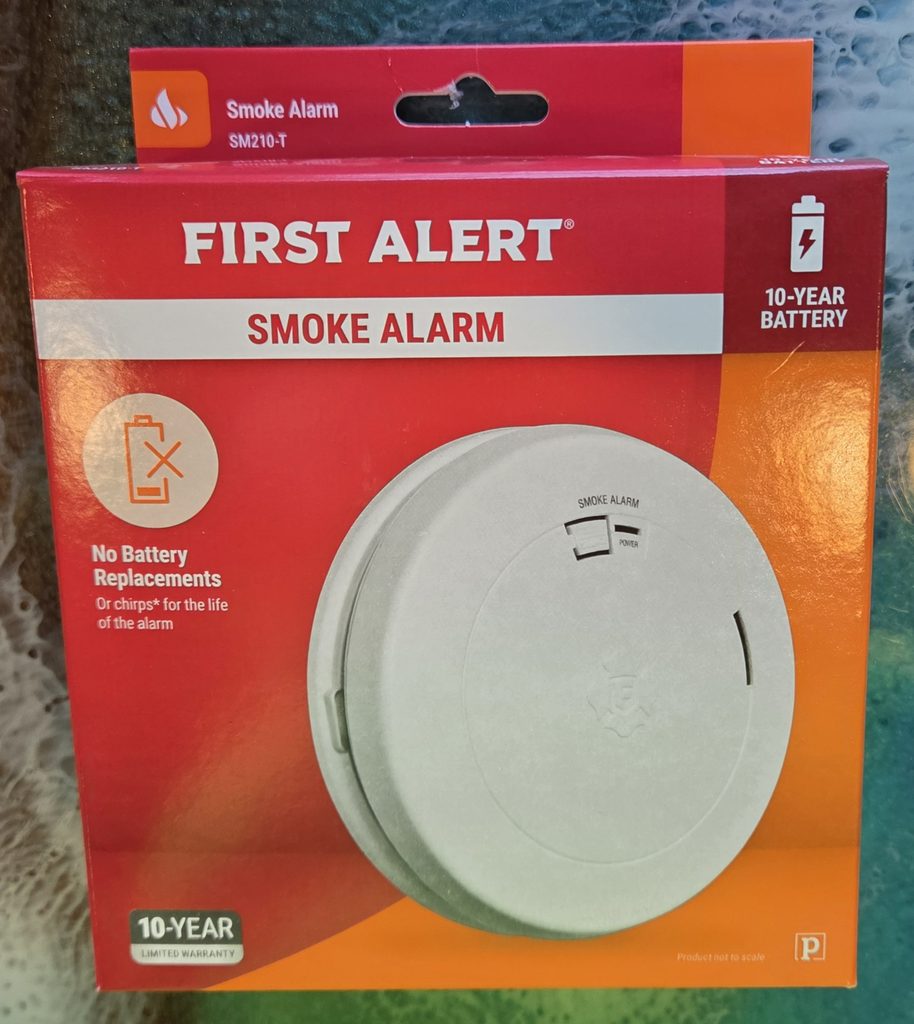
We weren’t looking for the cheapest smoke detector we could find.
We were deliberately trying to upgrade what we already had.
So we installed them.
Replacing Our Original RV Smoke Detector
Replacing the original smoke detector was about as easy as an RV project gets.
Step 1: Remove the Old Smoke Detector
I opened the cover, removed the battery, and then removed the screws holding the mounting plate to the ceiling.
That was it.
No wiring to disconnect and no electrical work involved.
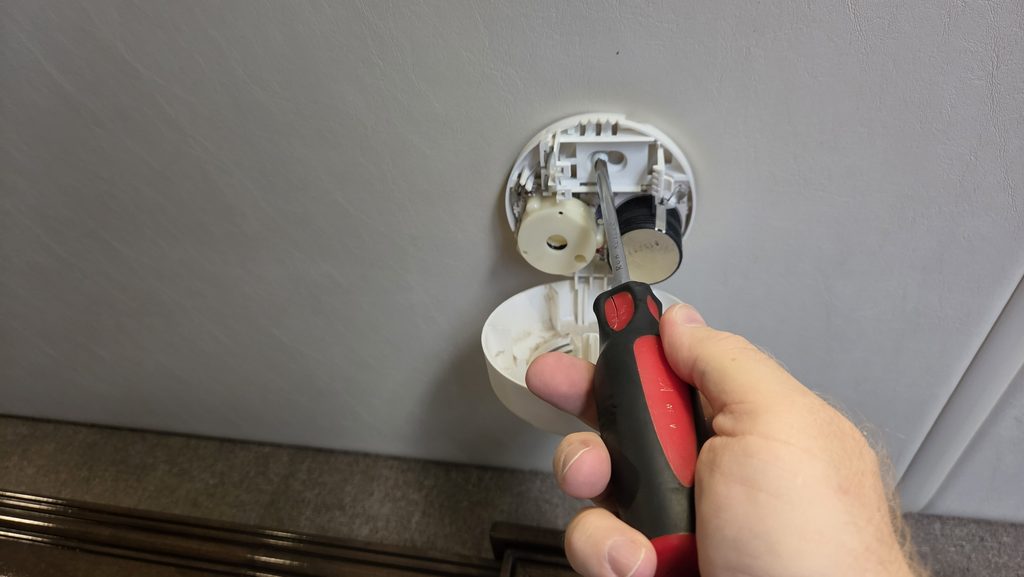
Once it was down, we were ready to install the replacement.
Step 2: Install the New Mounting Plate
The new smoke alarm used its own mounting plate, so I attached the plate to the ceiling where the original detector had been located.
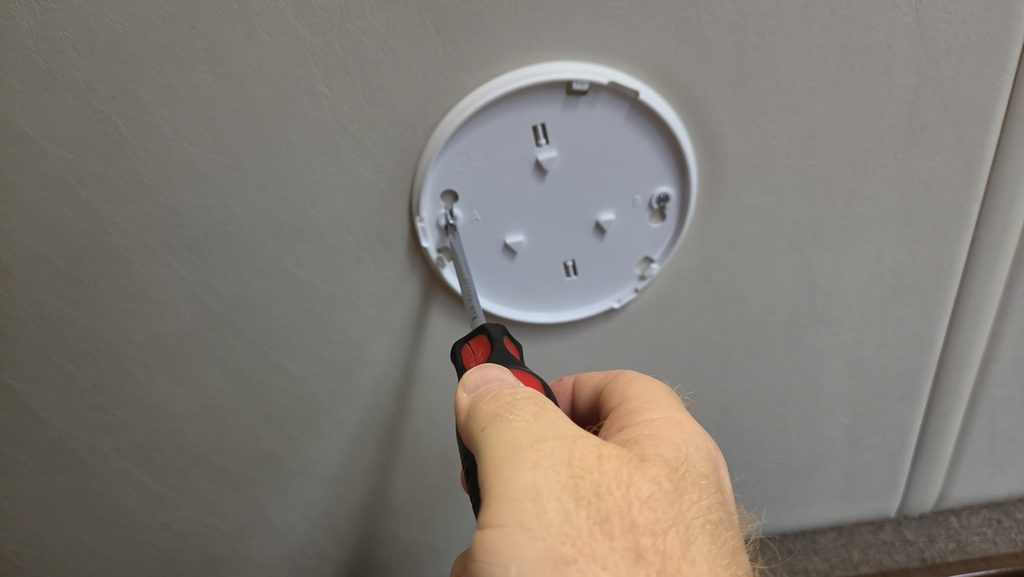
Once the mounting plate was secure, the new detector attached to it.
Step 3: Activate and Test the New Smoke Detector
The SM210 uses a sealed battery, so there wasn’t a separate battery to install.
We activated the detector according to the manufacturer’s instructions and tested the alarm.
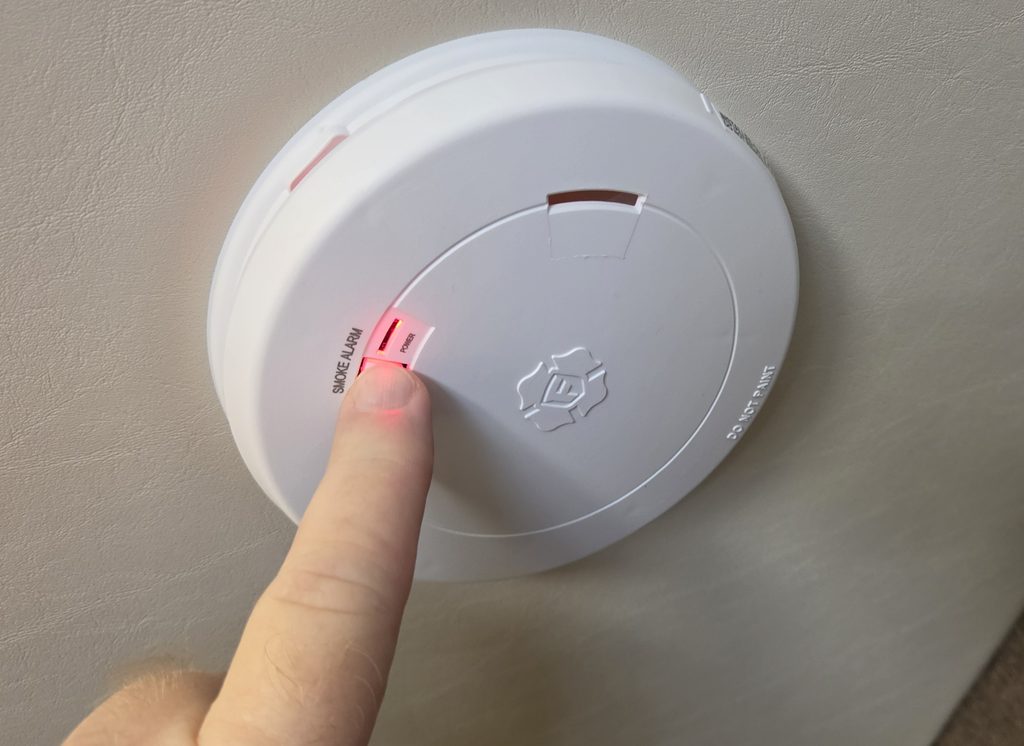
Everything worked exactly as expected.
Then we installed the second SM210 in the bedroom.
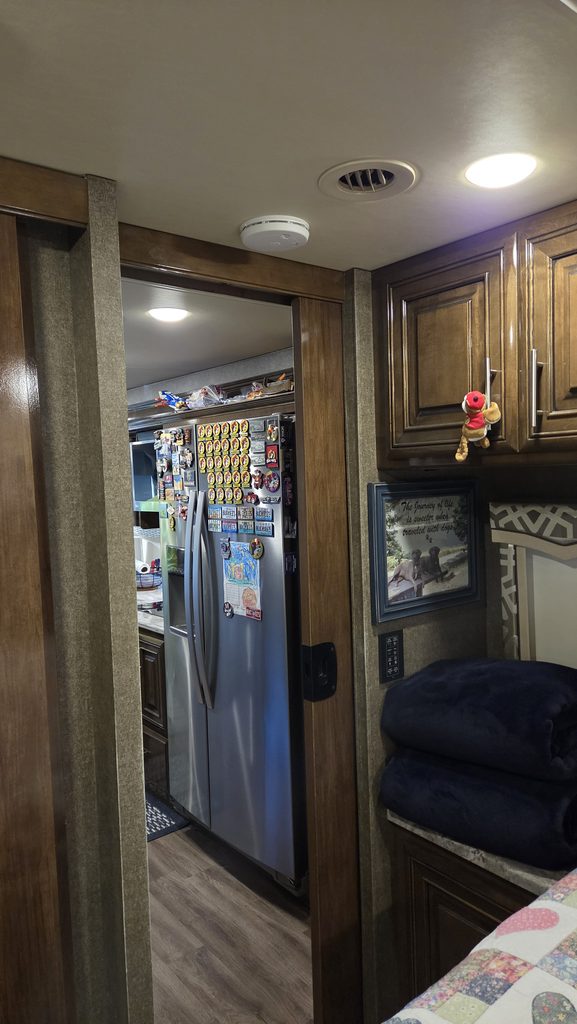
At that point, we thought the project was finished.
Then I started researching this article.
Wait — Does a Smoke Detector Need to Be RV Approved?
This was something we honestly hadn’t considered when we bought the SM210s.
My thoughts were that a smoke detector is a smoke detector.
The First Alert SM210 conforms to UL 217, but First Alert does not specifically identify that model as being approved for recreational-vehicle installation.
First Alert makes another model specifically for that purpose: the First Alert SMI100RV.
That sent us down another rabbit hole.
The NFPA 1192 recreational-vehicle standard calls for at least one battery-operated smoke alarm and specifies that the required alarm be listed and marked as suitable for installation in recreational vehicles under UL 217.
That was a distinction we didn’t know about when we went shopping.
Our SM210 was a legitimate UL 217 smoke alarm.
But it wasn’t specifically marked for RV installation.
Those aren’t quite the same thing.
Can You Use a Residential Smoke Detector in an RV?
This is where the question gets more complicated than it first appears.
Plenty of RV owners use conventional residential smoke alarms in their rigs, and RV publications have discussed both conventional and RV-specific alarms as options.
RV.com — What Smoke Detectors Are Good for RVs?
Our First Alert SM210 is a modern UL 217 smoke alarm with photoelectric sensing and a sealed 10-year battery.
Personally, I think the SM210 would probably work just fine in either location in our motorhome. I don’t expect it to suddenly stop detecting smoke simply because it’s mounted inside an RV.
But once we learned that the RV standard specifically calls for the required smoke alarm to be listed and marked as suitable for recreational-vehicle installation, we didn’t see much reason to take the chance.
If something ever did go wrong, I didn’t want to be looking back and wondering why we ignored something we’d already discovered during our research.
So for us, this became a better-safe-than-sorry decision.
We installed the First Alert SMI100RV in the original factory location and kept one SM210 in the bedroom as an additional photoelectric smoke alarm.
What’s Different About an RV-Approved Smoke Detector?
My first reaction was probably the same one a lot of RV owners would have:
It’s a smoke detector. Why would being inside an RV make that much difference?
The SM210 we bought isn’t some bargain no-name alarm.
It has photoelectric smoke sensing, a sealed 10-year lithium battery, an end-of-life warning, and an 85 dB alarm.
In several ways, we actually prefer its features.
But there’s a difference between a smoke alarm that complies with UL 217 and one that’s also specifically listed and marked for installation in recreational vehicles.
The RV designation relates to the application the alarm has been evaluated and marked for, including the environmental conditions associated with RV use.
None of our research convinced me that the SM210 would suddenly stop working simply because it’s installed in our motorhome. I still think it’s an excellent smoke alarm.
The difference is that the SMI100RV is specifically listed and marked for RV installation, while the SM210 isn’t. Once we knew that, using the RV-specific model in the factory location seemed like the smarter choice.
Could we have left the SM210 there and probably been fine? I think so. But when it comes to something as important as a smoke alarm, “probably fine” wasn’t the standard we wanted to use.
Our Solution: One RV-Approved Alarm Plus a Second Smoke Detector
Our final setup uses two different smoke alarms.
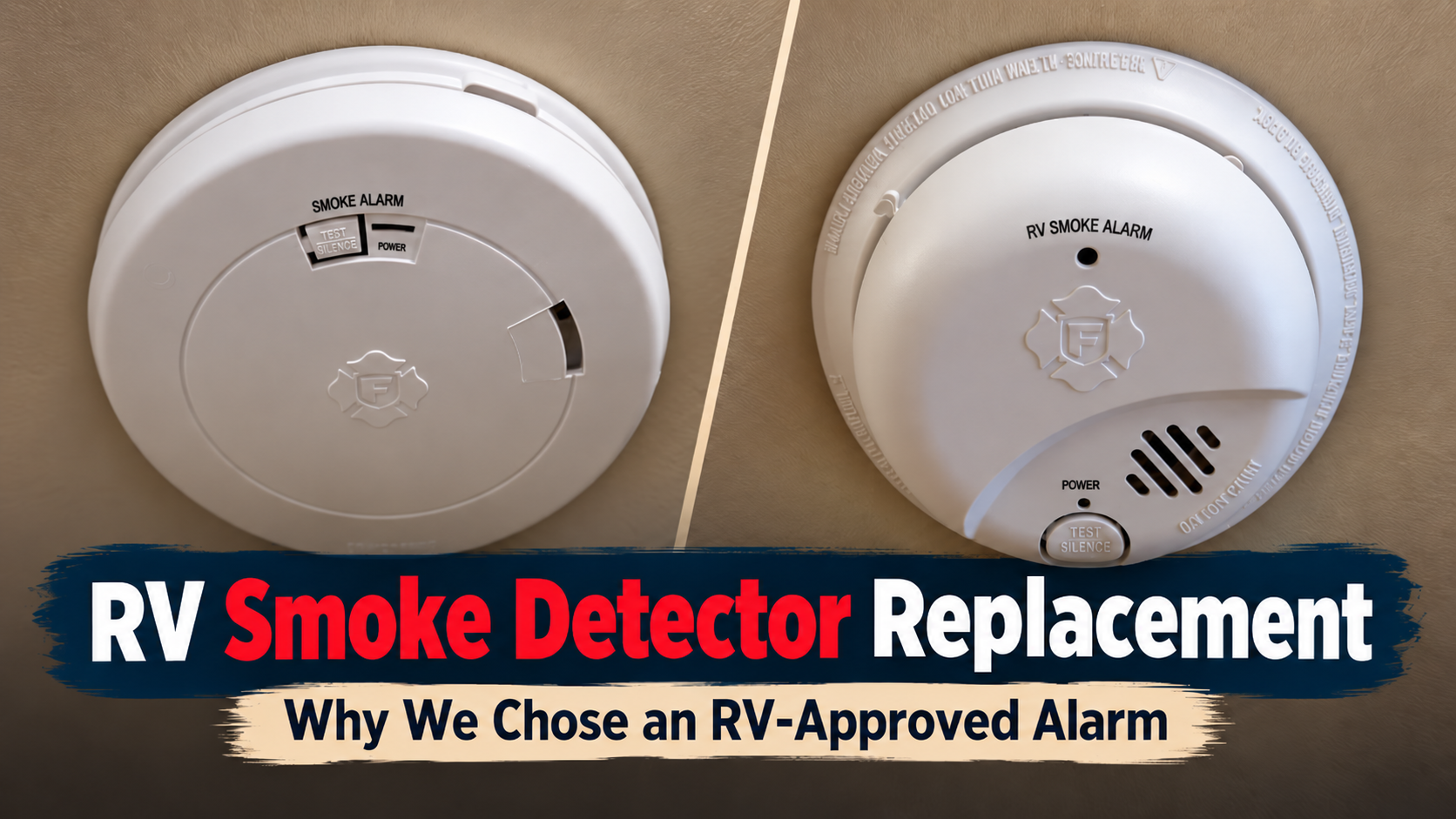
The original factory smoke detector in our main living area has been replaced with a First Alert SMI100RV.
First Alert specifically identifies the SMI100RV as an RV-approved battery-operated smoke alarm.
First Alert SMI100RV RV-Approved Smoke Alarm
That gives us an RV-specific smoke alarm in the location where Thor originally installed our factory detector.
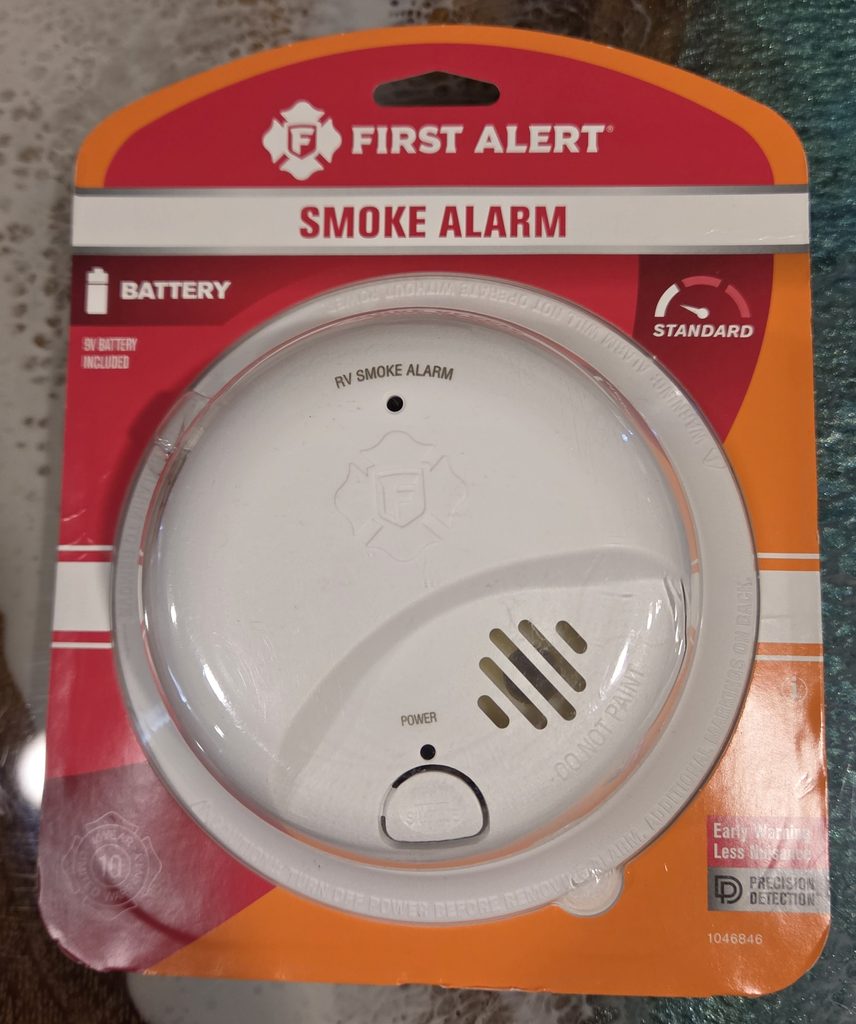
We also kept one First Alert SM210 in the bedroom as an additional photoelectric smoke alarm.
That gives us the RV-specific alarm in the original factory location while still providing the extra protection we wanted near where we sleep.
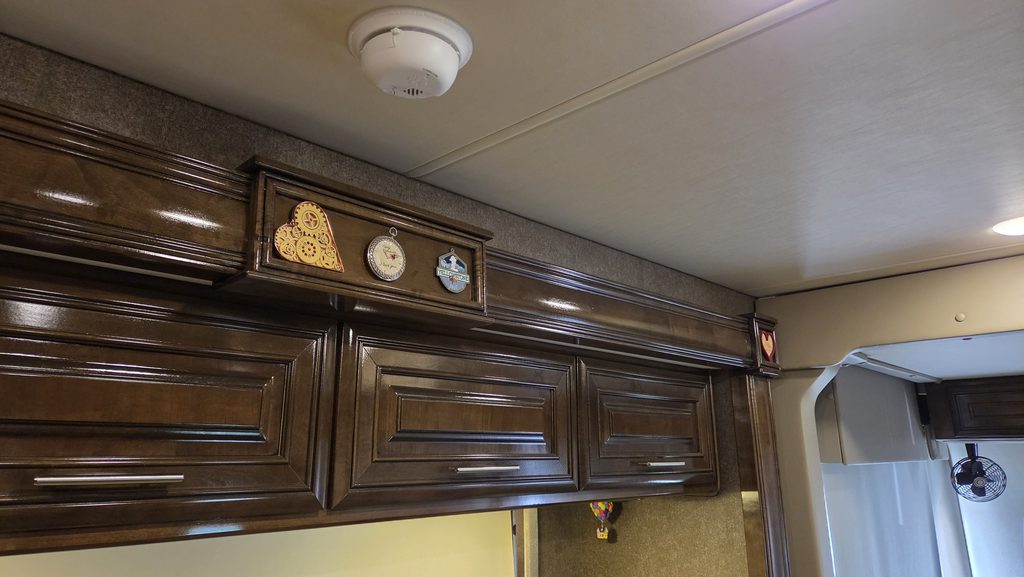
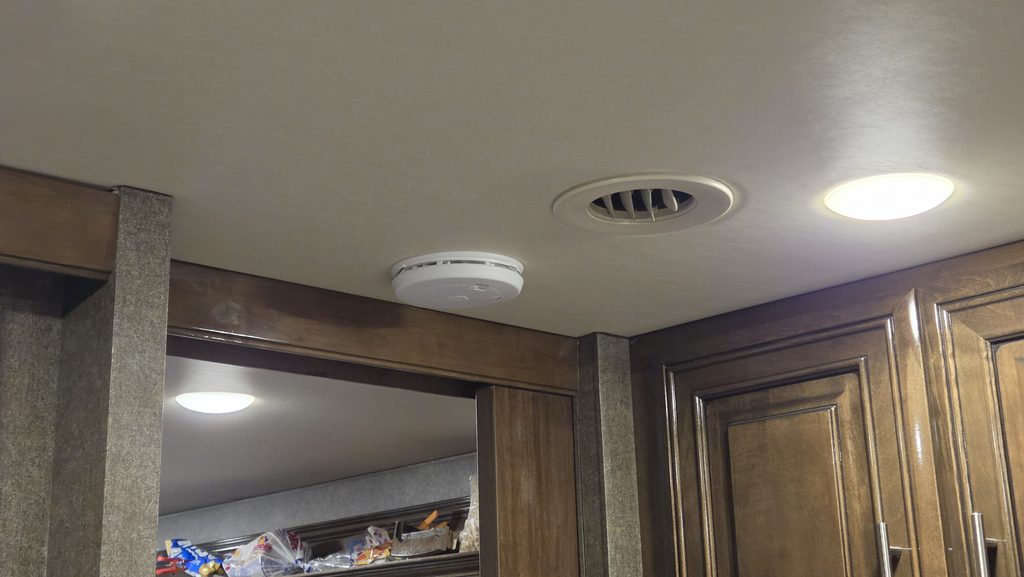
For us, that’s the best of both worlds.
The Two Smoke Alarms We Chose for Our Motorhome
After researching RV smoke-alarm requirements, we decided to use two different First Alert alarms for two different jobs.
First Alert 1046846 RV Approved Battery-Operated Smoke Alarm
This is the RV-approved smoke alarm we chose to replace the original factory detector in the main living area of our motorhome.
We specifically wanted an alarm listed for RV use in the location where Thor originally installed our required smoke detector. This model uses ionization sensing and gives us the extra peace of mind we were looking for after researching the RV-specific requirements.
Check the First Alert RV Smoke Alarm on AmazonFirst Alert 10-Year Battery Smoke Alarm — Slim Profile
We also really like the First Alert SM210 and kept one as an additional smoke alarm where we sleep.
It uses photoelectric smoke sensing and has a sealed 10-year battery. While it isn’t specifically designated by First Alert as an RV-approved model, we like its features and are comfortable using it as an additional alarm alongside our RV-specific detector.
Check the First Alert SM210 on AmazonAn Unexpected Benefit: Two Types of Smoke Detection
This wasn’t something we planned when we started the project.
Our two alarms use different smoke-sensing technologies.
The RV-approved SMI100RV uses ionization sensing, while our SM210 uses photoelectric sensing.
Generally, ionization alarms tend to respond more quickly to fast-flaming fires, while photoelectric alarms tend to respond more quickly to smoldering fires.
If you’ve ever seen how quickly an RV can become fully involved in a fire, it’s easy to understand why having an ionization alarm in the mix gives us some extra peace of mind.
RV.com also discusses the advantages of having both types of smoke detection when you’re not using a single dual-sensor alarm.
RV.com — Smoke Detector Options for RVs
We didn’t intentionally set out to create a two-sensor setup.
But after all the research, we actually like where we ended up.
We now have an RV-approved ionization smoke alarm in the main living area and a photoelectric smoke alarm closer to where we sleep.
Our Smoke Alarms and Propane/CO Detector Do Different Jobs
This is another distinction worth mentioning because RV safety detectors can get confusing quickly.
Our smoke alarms aren’t replacing our hardwired propane and carbon monoxide detector.
That’s separate safety equipment.
Our propane/CO detector is installed low in the motorhome because it’s also responsible for detecting propane, which is heavier than air.
Our smoke alarms serve a different purpose and are installed according to their own manufacturer’s placement requirements.
Our final safety setup includes:
- An RV-approved smoke alarm in the main living area
- An additional photoelectric smoke alarm in the bedroom
- A separate hardwired propane/CO detector mounted low in the motorhome
Each is doing a different job.
Where Should You Install a Smoke Detector in an RV?
This is one place where I wouldn’t recommend simply looking at our photos and copying exactly what we did.
Every RV is different.
Travel trailers, fifth wheels, Class A motorhomes, Class C motorhomes, and camper vans can have very different layouts.
Cooking appliances, ceiling vents, fans, and air-conditioning outlets can also affect where a smoke alarm should be installed.
Follow the installation and placement instructions supplied with your particular smoke alarm.
The NFPA language we found also says the required RV smoke alarm should be installed according to its listing and not within a separate sleeping area.
That’s another reason our arrangement works well for us.
The SMI100RV is installed in the original factory living-area location, while the SM210 in our bedroom serves as an additional smoke alarm.
Smoke detectors are only one part of RV fire safety. The National Park Service has a helpful RV fire-safety guide covering smoke, carbon monoxide, and propane detectors along with electrical systems, propane appliances, fire extinguishers, and other RV fire hazards.
National Park Service — RV Fire Safety 101
Our CO/Propane Detector Started This Whole Safety Check
Funny enough, none of this started with our smoke detector.
It started because our propane and carbon monoxide detector began beeping.
When we checked that detector, we discovered it was dated August 2021 and had reached its expected five-year service life.
We replaced it with a new hardwired 4-in-1 propane and carbon monoxide detector.
Then the campground fire happened.
Between those two events, taking a closer look at the rest of the safety equipment in our motorhome seemed like a pretty good idea.
What started with one beeping CO/propane detector ultimately resulted in us taking a much closer look at the alarms protecting our entire motorhome.
Related: How to Replace an RV Propane and Carbon Monoxide Detector
Changing the Battery Isn’t the Same as Replacing the Smoke Detector
This was one of the biggest takeaways from this project.
We hadn’t neglected the battery in our old detector.
We changed it.
What we hadn’t really thought much about was the age of the detector itself.
There’s an important difference.
Putting a fresh battery into an old smoke detector doesn’t make the detector itself new again.
That’s why it’s worth checking the age and manufacturer’s replacement recommendations for the smoke alarms already installed in your RV.
And now we’ve learned there’s another question worth asking when it comes time to replace one:
Is the replacement smoke detector specifically listed for RV use?
We didn’t ask that question the first time.
We will from now on.
RV Smoke Detector FAQ
Here are some of the questions we had while replacing the smoke alarms in our motorhome.
Can You Use a Residential Smoke Detector in an RV?
Residential smoke alarms are commonly used by RV owners, but there is an important distinction when it comes to the alarm required by the RV standard.
NFPA 1192 calls for the required RV smoke alarm to be listed and marked as suitable for recreational-vehicle installation.
Personally, I think our First Alert SM210 would probably work just fine in either location in our motorhome. It is a modern UL 217 smoke alarm with photoelectric sensing and a sealed 10-year battery.
But once we learned that the RV standard specifically calls for the required alarm to be listed and marked for recreational-vehicle installation, we decided it was better to be safe than sorry.
That’s why we installed the RV-approved First Alert SMI100RV in the original factory location while keeping one SM210 as an additional smoke alarm in the bedroom.
What Does RV Approved Mean on a Smoke Detector?
An RV-approved smoke alarm is more specific than simply being a smoke alarm that meets UL 217.
For the required RV smoke alarm, NFPA 1192 calls for an alarm listed under UL 217 and marked as suitable for installation in recreational vehicles.
That’s a distinction we didn’t know about until we started researching this project.
Is the First Alert SM210 a Bad Choice for an RV?
We wouldn’t describe it that way at all.
In fact, we really like the First Alert SM210. It uses photoelectric smoke sensing, has a sealed 10-year battery and includes several of the features we wanted when we started this project.
What it doesn’t have is First Alert’s specific RV designation.
Could we have left the SM210 in the original factory location and probably been fine? I think so.
But when it comes to something as important as a smoke alarm, “probably fine” wasn’t the standard we wanted to use.
That’s why we installed the SMI100RV in the original factory location and kept the SM210 as additional photoelectric protection near the bedroom.
Why Are We Using Two Different Types of Smoke Detectors?
It wasn’t originally intentional.
The First Alert SMI100RV uses ionization sensing, while the SM210 uses photoelectric sensing.
Generally, ionization alarms tend to respond more quickly to fast-flaming fires, while photoelectric alarms tend to respond more quickly to smoldering fires.
Our final setup gives us both types of smoke detection instead of using two identical alarms.
Do RV Smoke Detectors Need to Be Hardwired?
No.
The original smoke detector in our motorhome was battery-powered, and the First Alert SMI100RV we installed in its place is battery-powered as well.
Don’t confuse the smoke alarm with the propane and carbon monoxide detector found in many RVs.
Our propane/CO detector is hardwired into the motorhome’s 12-volt electrical system and mounted low because it also detects propane.
They’re different pieces of safety equipment with different jobs.
How Can I Tell How Old My RV Smoke Detector Is?
Remove the alarm from its mounting plate and look for a manufacture date, replacement date or date code on the detector.
Then check the manufacturer’s instructions for its recommended replacement interval.
This is especially worth doing if you bought a used RV and don’t know the history of its safety equipment.
Sometimes Writing the Blog Post Changes the Project
This started as one of the easiest maintenance projects we’ve done.
Our original smoke detector was more than seven years old.
We removed it.
Installed a new one.
Added another detector near the bedroom.
Took the pictures.
Done.
Except researching this article taught us something we didn’t know.
We learned there’s a difference between a smoke alarm that meets UL 217 and one that’s specifically listed and marked for recreational-vehicle installation.
That didn’t convince us the SM210 was suddenly a bad smoke detector.
Actually, we still really like it.
It just changed how we decided to use it.
Instead of using two SM210s, we installed an RV-approved First Alert SMI100RV in the original factory location and kept an SM210 as additional photoelectric protection closer to where we sleep.
As an unexpected bonus, that also gives us both ionization and photoelectric smoke detection.
That’s probably not where we would have ended up if I hadn’t researched this article.
But we’re happier with the final setup.
How Old Is the Smoke Detector in Your RV?
Here’s an easy RV maintenance check you can do today.
Take a look at your smoke detector.
Test it according to the manufacturer’s instructions.
Check its age.
Check the manufacturer’s replacement interval.
And if it’s time for a replacement, take a few minutes to look at exactly what you’re buying.
We almost didn’t.
Our simple smoke detector replacement turned into a lesson about RV-specific alarms, different smoke-sensing technologies, and the difference between our smoke alarms and our propane/CO detector.
In the end, our motorhome now has an RV-approved smoke alarm replacing the original factory detector, a second photoelectric smoke alarm closer to where we sleep, and our hardwired propane/CO detector protecting us from a completely different set of hazards.
That’s considerably more protection than we had when this project started.
And after seeing what was left of the RV in our campground, we’re perfectly okay with that.