If you’ve ever spent the night on the mattress that came with an RV, you’ve probably asked yourself the same question:
Why are RV mattresses so uncomfortable?
You’re definitely not imagining it.
Many factory RV mattresses are thin, firm, and made with inexpensive materials designed to keep the RV’s overall weight and manufacturing cost down. They might be fine for an occasional weekend camping trip, but sleeping on one night after night can be a completely different story.
And when you’re a full-time RVer, your RV mattress isn’t a camping mattress.
It’s your bed.
We’ve been RVing full-time since 2019, so we’ve spent thousands of nights sleeping in an RV. One thing we’ve learned is that a comfortable bed isn’t something we’d consider a luxury—especially when you’re living and traveling in your RV for months or years at a time.
The good news is that an uncomfortable RV bed doesn’t automatically mean you need to spend $1,000 or more on a new mattress.
Sometimes a relatively inexpensive change can make a big difference.
Other times, however, the mattress itself is the problem, and throwing another layer of foam on top of it is only delaying the inevitable.
Let’s look at why RV mattresses can be so uncomfortable, what you can do to improve yours, and how to know when it’s finally time to replace it.
- Why Are RV Mattresses So Uncomfortable?
- 9 Ways to Make an RV Bed More Comfortable
- Mattress Topper or New RV Mattress?
- What We Did in Our Motorhome
- Wilderness Montana vs. Brooklyn Bedding
- What Is the Best RV Mattress?
- Don’t Put Up With a Terrible RV Mattress
- Frequently Asked Questions About Uncomfortable RV Mattresses
- More RV Mattress Resources
This post contains affiliate links. As a participant in Amazon Associates and various affiliate programs, we are compensated when qualifying purchases are made through our referral links at no additional cost to you. Full Disclosure
Why Are RV Mattresses So Uncomfortable?
There isn’t one universal reason RV mattresses are uncomfortable.
Usually, it’s a combination of several things.
Factory RV Mattresses Are Often Built to a Price Point
RV manufacturers have to make thousands of decisions about where to spend money when building an RV.
Unfortunately, the mattress isn’t always high on that list.
The mattress included with an RV may only need to be comfortable enough to look and feel acceptable while someone is walking through the RV at a dealership.
Sleeping on it every night for the next five years is another matter entirely.
That’s especially noticeable for full-time RVers.
RV Mattresses Can Be Thinner
Weight and available space matter in an RV.
That’s one reason RV mattresses are frequently thinner than the mattresses you’ll find in a traditional house.
A thinner mattress isn’t automatically uncomfortable, but there’s less room for manufacturers to incorporate substantial comfort and support layers.
For larger or heavier sleepers, that can become particularly noticeable.
Your Mattress May Be Sitting on Plywood
Take a look underneath your RV mattress.
There’s a good chance you’ll find a solid piece of plywood.
Unlike many residential beds that use a box spring, slats, or another foundation, RV beds commonly place the mattress directly onto a solid platform.
That gives the mattress a very firm foundation and can make an already-firm mattress feel even harder.
RV Mattress Sizes Can Be Different
Here’s another problem.
An RV Queen isn’t necessarily the same thing as the Queen mattress you have at home.
RV manufacturers frequently use shorter or unusual mattress dimensions to squeeze beds into floorplans where every inch matters.
That’s why we strongly recommend measuring your existing mattress and the platform underneath it before ordering a replacement.
We’ve put together a complete RV Mattress Sizes Guide explaining the most common RV mattress dimensions and how they compare with residential sizes.
The Mattress May Simply Be Worn Out
Sometimes there isn’t anything wrong with the RV.
The mattress has just reached the end of its useful life.
Foam can soften and break down. Support can deteriorate. Body impressions can develop.
Eventually, you’ll reach the point where adding another layer on top isn’t going to solve the underlying problem.
So before spending money on a replacement, let’s start with the easier fixes.
9 Ways to Make an RV Bed More Comfortable
1. Rotate Your RV Mattress
Let’s start with the easiest—and cheapest—solution.
If your mattress can be rotated, turn it 180 degrees so the head becomes the foot.
Most of us tend to sleep in approximately the same position every night, which means the same portions of the mattress repeatedly support the most weight.
Rotating the mattress can help distribute that wear more evenly.
You may want to do this periodically rather than waiting until you can already see or feel a body impression.
Just remember that rotating isn’t the same as flipping.
Many modern mattresses are designed with specific support and comfort layers and shouldn’t be turned upside down unless the manufacturer specifically says they can be flipped.
2. Check the Platform Under Your Mattress
Before blaming the mattress for everything, lift it up and inspect what’s underneath.
Check for:
- Warped plywood
- Loose fasteners
- Uneven sections
- Broken supports
- Gaps
- Sharp edges
- Areas where the platform flexes excessively
A mattress can only perform as well as the surface supporting it.
This is also a good opportunity to look for moisture underneath your mattress.
Because RV mattresses are often placed directly on a solid platform, airflow underneath them can be limited.
3. Improve Airflow Under the Mattress
Condensation underneath an RV mattress can become a problem, especially when camping in cold or humid conditions.
Think about what’s happening.
You’re sleeping on a warm mattress while the underside of the bed platform can be significantly colder. Add moisture from normal breathing and living inside an RV, and you can create conditions where condensation develops.
If moisture is collecting underneath your mattress, improving airflow should be a priority.
Several products are designed specifically to create a small ventilation layer between an RV mattress and the platform underneath it.
Even if comfort is your main concern today, preventing moisture problems underneath the mattress can save you a much bigger headache later.
4. Add a Mattress Pad
There’s an important difference between a mattress pad and a mattress topper.
A mattress pad is generally thinner.
It can add a little softness, provide some additional cushioning, and protect the mattress, but it won’t dramatically change the way a bad mattress feels.
If your RV mattress is basically comfortable but just feels slightly too firm, a quality mattress pad might be all you need.
This is one of the least expensive upgrades to try before moving on to something more substantial.
5. Try an RV Mattress Topper
If a mattress pad isn’t enough, the next step is usually a mattress topper.
A topper can add several inches of cushioning and can dramatically change the feel of a mattress that’s too firm.
Memory foam is especially popular because it adds pressure relief without requiring you to replace the entire mattress.
For some RVers, this is the perfect solution.
But there’s an important limitation.
A mattress topper can make a supportive mattress softer. It can’t restore the support of a worn-out mattress.
If your existing mattress has a big sag in the middle, adding three inches of memory foam doesn’t eliminate the sag.
Now you have three inches of foam sitting on top of a sagging mattress.
That’s why we’d think twice about spending a few hundred dollars trying to rescue a mattress that really needs to be replaced.
6. Upgrade Your Pillows and Bedding
Sometimes we blame the mattress when another part of the sleep setup is contributing to the problem.
Your pillow plays a major role in keeping your head, neck, and spine in a comfortable position.
And your pillow needs can change depending on whether you sleep primarily on your side, back, or stomach.
The same goes for bedding.
If you’re constantly getting too hot at night, adding another thick memory-foam layer may actually make things worse for some sleepers.
Look at the whole sleep system rather than focusing exclusively on the mattress.
7. Check for Sagging and Body Impressions
This is where we start separating mattresses that can potentially be improved from mattresses that probably need replacing.
Strip the bedding off and look carefully across the surface.
Run your hand across it.
Lie down and pay attention to whether your hips or shoulders sink noticeably lower than the rest of your body.
A little softening over time is normal.
A noticeable valley where you sleep is something different.
And once the internal support structure of a mattress has deteriorated, there’s only so much you can accomplish with pads and toppers.
How Long Does an RV Mattress Last?
There isn’t a universal number of years when every mattress suddenly needs to be replaced. Mattress lifespan depends on factors such as construction, materials, how often it’s used, and how well it’s cared for. Sleep Foundation’s mattress lifespan guide also recommends paying attention to changes in comfort and support when deciding whether it’s time for a replacement.
A mattress used for a few weekends and vacations each year may last much longer than one used by full-time RVers 365 nights a year.
Rather than replacing an RV mattress simply because it reaches a certain age, we’d pay attention to how it’s performing.
Signs it may be time for a replacement include:
- Visible sagging or permanent body impressions
- Waking up sore or uncomfortable
- Feeling the bed platform underneath you
- Foam that no longer returns to its original shape
- Poor support compared with when the mattress was new
- Regularly sleeping better somewhere other than your RV
Age matters, but condition matters more.
We’ve slept on our Wilderness Montana Hybrid for more than five years, which is one reason our long-term experience with it is more useful to us than reviewing a mattress after sleeping on it for a week.
8. Decide Whether Your Mattress Is Worth Saving
Before buying anything, ask yourself a simple question:
Is our mattress uncomfortable because it’s too firm, or because it’s worn out?
That’s an important distinction.
If it’s relatively new, still supportive, and simply too firm:
Try a topper.
If it’s sagging, breaking down, uncomfortable in multiple areas, or you consistently wake up sore:
It’s probably time to start looking at replacement mattresses.
There’s also a financial point where trying to rescue a bad mattress stops making sense.
If you’re about to spend $150–$300 on toppers, pads, and other fixes for a mattress you already dislike, we’d at least compare that cost with putting the money toward a better mattress.
Especially if you’re living in your RV full-time.
Is Your RV Mattress Uncomfortable?
Before spending money on a new mattress, use this quick guide to figure out whether your current mattress might be worth saving.
Consider Replacing It
A mattress topper can add cushioning, but it can’t restore the underlying support of a mattress that’s already sagging or worn out.
See Our Best RV Mattress Guide →If the mattress still provides good support, a topper may add the cushioning and pressure relief you’re missing.
Inspect the bed platform, pillows, bedding, mattress position, and overall sleep setup before replacing the mattress.
If the mattress is supportive but uncomfortable, try improving it first. If the mattress has lost its support, putting more foam on top probably isn’t going to fix the real problem.
9. Replace the Factory RV Mattress
Sometimes the simplest answer really is the right one.
If you’ve tried the inexpensive solutions and your bed is still uncomfortable, replacing the mattress can completely change how your RV feels.
But don’t just search for an “RV mattress” and buy the first one that appears.
There are some important things to consider first.
Ready to Replace Your Uncomfortable RV Mattress?
We’ve been sleeping on our Wilderness Montana Hybrid RV Mattress for more than five years in our motorhome. If you’ve decided it’s time to replace your RV mattress, Wilderness offers several mattress styles along with RV-specific and custom sizing options.
You can check the current mattress options, available sizes, and pricing directly from Wilderness RV Mattress.
Check Wilderness RV Mattresses & Prices →Can You Put a Regular Mattress in an RV?
Sometimes, yes.
There’s nothing that automatically requires an RV to use a mattress labeled specifically as an “RV mattress.”
The bigger issue is whether a residential mattress actually fits your RV.
Many RV beds use nonstandard dimensions, including shorter versions of traditional mattress sizes. You also need to consider mattress height, weight, slide clearance, cabinets, windows, and whether you can physically get the mattress into the RV.
If your RV happens to use a standard residential mattress size and you have adequate space and cargo capacity, a residential mattress may work perfectly well.
RV Mattress vs. Regular Mattress
You don’t necessarily need a mattress labeled specifically for RV use. The important thing is finding one that fits your RV’s space, weight, and clearance requirements.
| What to Compare | RV Mattress | Regular Mattress |
|---|---|---|
| Sizes | Available in shorter and nonstandard RV sizes | Mostly standard residential sizes |
| Weight | Often available in lighter options for RV use | Some models can be considerably heavier |
| Height | More low-profile options for tight RV spaces | Many residential mattresses are thicker |
| Selection | Smaller overall selection | Much larger selection of brands and models |
| Best For | RVs with short or unusual mattress dimensions | RVs that can accommodate standard residential sizes |
Measure the mattress and the actual bed platform before ordering. Don’t assume that an RV Queen, RV King, or other labeled size matches the residential version.
Measure first. Buy second.
→ See our complete RV Mattress Sizes Guide
Measure Before You Buy
This is probably the most important advice we can give you.
Don’t assume you know your RV mattress size.
Measure it.
Then measure the bed platform.
RV mattresses can come in dimensions such as RV Short Queen, RV King, RV Short King, three-quarter sizes, and manufacturer-specific dimensions.
Start with our RV Mattress Sizes Guide before ordering anything.
It’s much easier to spend five minutes measuring than figure out what to do with a brand-new mattress that doesn’t fit through your RV bedroom.
Consider Mattress Height
Width and length aren’t the only measurements that matter in an RV.
Height can matter too.
Look at:
- Overhead cabinets
- Nightstands
- Windows
- Headboards
- Slide clearance
- Bedroom access
Replacing a thin factory mattress with a significantly thicker mattress could change how easily you can access cabinets or windows around the bed.
In some RV layouts, even a few additional inches can matter.
Consider the Weight
RV owners spend a lot of time thinking about cargo capacity, and your mattress is part of that equation.
A substantial hybrid mattress can weigh considerably more than a thin factory foam mattress.
That’s particularly worth considering if your RV is already close to its cargo-carrying capacity.
For beds that lift to access storage underneath, a heavier mattress can also affect how easily the platform lifts and whether the existing gas struts can support it.
Before You Buy an RV Mattress
Don’t click the order button just yet. Take a few minutes to check these seven things before buying a replacement mattress for your RV.
Measure the actual mattress and the bed platform. Don’t assume the size listed in your RV’s brochure is exact.
RV mattresses are often shorter than residential mattresses. A few extra inches can make a big difference in a tight RV bedroom.
A thicker mattress may be more comfortable, but make sure it won’t interfere with windows, cabinets, headboards, or other bedroom features.
Don’t measure only the old mattress. Measuring the platform tells you how much room you actually have for a replacement.
Look at slide movement, cabinets, windows, nightstands, walkways, and anything else around the bed that could limit mattress size.
A substantial hybrid mattress can weigh considerably more than a thin factory mattress, so consider your RV’s cargo capacity.
If you have storage underneath the bed, a heavier mattress may make the platform harder to lift and could require stronger gas struts.
Grab a tape measure and verify the actual dimensions before ordering. An “RV Queen” or “RV King” isn’t necessarily the same size as the mattress you have at home.
Not sure what size mattress you have? We’ve put together a complete guide to the most common RV mattress dimensions.
See Our RV Mattress Sizes Guide →Mattress Topper or New RV Mattress?
This is probably the decision most RVers eventually face.
Here’s the simple way we’d look at it.
Try a Mattress Topper If:
- Your mattress is still relatively new
- It doesn’t sag
- It provides adequate support
- It’s simply too firm
- You only use your RV occasionally
- You want to try an inexpensive solution first
Consider a New Mattress If:
- Your mattress has noticeable sagging
- You can feel the platform underneath
- You wake up sore regularly
- Both sleepers are uncomfortable
- The mattress has significant body impressions
- You’ve already tried a topper
- You’re living or traveling in the RV for extended periods
There’s nothing wrong with starting with the inexpensive option.
We would.
But there’s also a point where you’re just spending money trying to make a bad mattress slightly less bad.
What We Did in Our Motorhome
When you’re camping a few weekends each year, you can tolerate things that become much more annoying when you’re living in an RV full-time. A mattress is definitely one of them.
We’ve been full-time RVers since 2019, and our RV isn’t our weekend getaway. It’s our home. That changes how we look at things like mattresses.
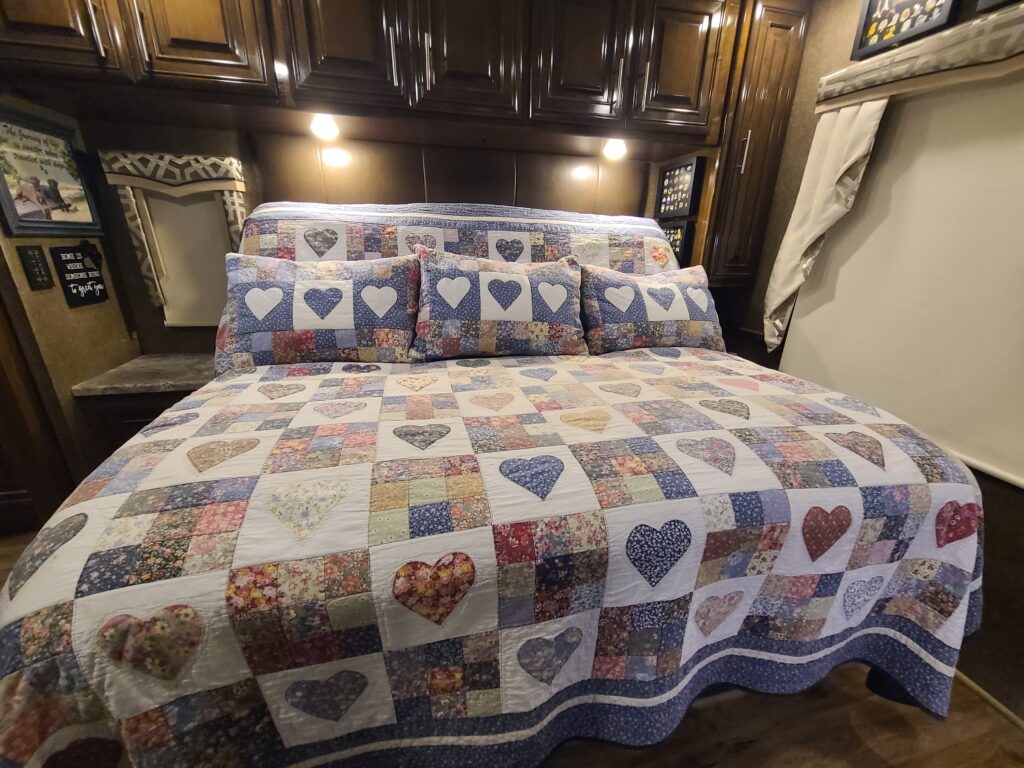
We eventually upgraded the mattress in our Thor Challenger to a Wilderness Montana Hybrid RV Mattress, and we’ve now been sleeping on it for more than five years.
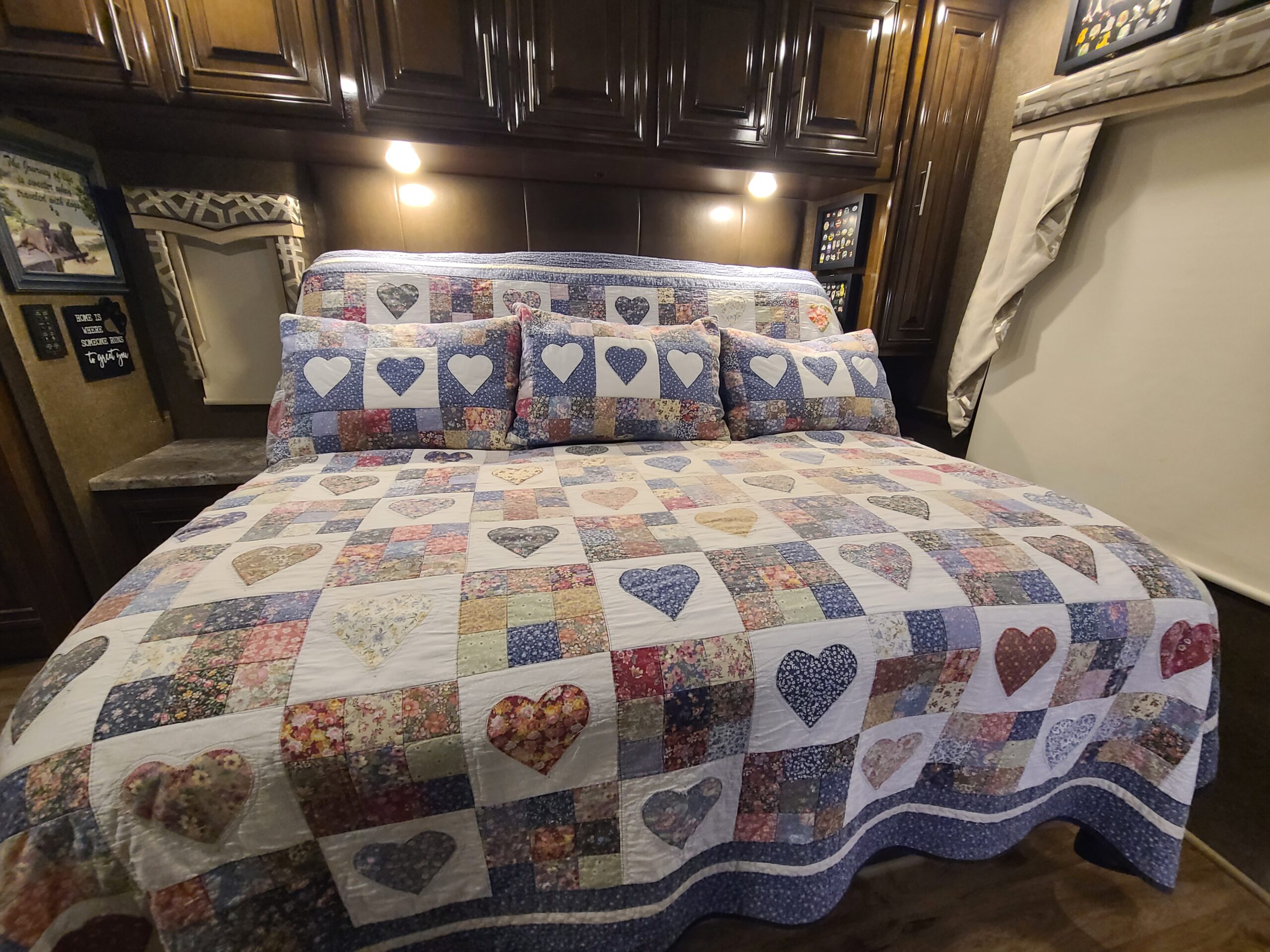
Our Wilderness Montana Hybrid in our Thor Challenger — the mattress we’ve been sleeping on for more than five years.
We’ve covered our complete experience in our Wilderness RV Mattress Montana Review, including what we like, what we’d change, and how it’s held up after more than five years of use.
Read Our 5+ Year Wilderness Montana Review →Wilderness Montana vs. Brooklyn Bedding
Wilderness isn’t the only company making mattresses specifically for RVers.
Brooklyn Bedding is another popular option, and choosing between the two isn’t necessarily obvious from looking at specifications.
That’s why we’ve also put together a detailed Wilderness Montana vs. Brooklyn Bedding RV Mattress comparison.
Rather than simply declaring one mattress the winner for everyone, we look at the differences that actually matter when you’re putting one inside an RV.
That includes things like available sizes, construction, firmness options, mattress height, pricing, and who each mattress is likely to work best for.
If you’ve narrowed your decision down to those two brands, that’s where we’d go next.
What Is the Best RV Mattress?
There’s no single mattress that’s going to be perfect for every RVer.
A weekend camper who’s 150 pounds and sleeps alone doesn’t necessarily need the same mattress as a couple living in a motorhome 365 days a year.
Budget matters.
Sleeping position matters.
Body weight matters.
Mattress dimensions matter.
How frequently you use the RV matters.
That’s why we created our Best RV Mattress guide to bring our recommendations together in one place.
If you’ve decided you’re finished trying to make your current mattress comfortable, that’s probably the best place to start.
From there, you can narrow down the choices and read our individual mattress reviews and comparisons before spending your money.
Don’t Put Up With a Terrible RV Mattress
One of the funny things about RV ownership is how willing we sometimes are to tolerate things in an RV that we’d immediately fix at home.
We upgrade suspension components.
We install better batteries.
We replace TVs.
We buy grills, camping chairs, GPS units, water filters, and all kinds of gadgets to make RV life better.
Then we crawl onto a terrible factory mattress every night and wonder why our back hurts in the morning.
You don’t necessarily need an expensive new mattress.
Start with the simple fixes.
Rotate the mattress.
Check the platform.
Improve the airflow underneath it.
Try a mattress pad or topper if the mattress is still supportive.
But if the mattress itself is worn out, don’t keep throwing money at it.
For full-time RVers especially, we’d argue that your bed is one of the places where comfort is worth prioritizing.
After all, if you’re spending eight hours a night in bed, that’s roughly one-third of your life.
Make those hours comfortable.
Frequently Asked Questions About Uncomfortable RV Mattresses
Still trying to figure out why your RV bed isn’t comfortable? Here are answers to some of the most common RV mattress questions.
Why is my RV mattress so uncomfortable?
RV mattresses can be uncomfortable for several reasons. Many factory mattresses are relatively thin, use inexpensive materials, and sit directly on a solid plywood platform. That combination can make an already-firm mattress feel even harder.
If the mattress is older, sagging, or has developed permanent body impressions, the problem may be the mattress itself rather than simply its firmness.
Why is my RV mattress so hard?
Many RV mattresses are thinner than residential mattresses and are placed directly on a solid platform. If the mattress itself uses relatively firm or thin comfort layers, that combination can make the bed feel especially hard.
If your mattress still provides good support and is simply too firm, adding a quality mattress topper may be enough to make it more comfortable.
Can I put a mattress topper on an RV mattress?
Yes. A mattress topper can be an inexpensive way to add cushioning and pressure relief to an RV mattress that’s still in good condition.
The important thing to remember is that a topper changes the comfort layer—it doesn’t repair the underlying support. If your mattress is badly sagging or worn out, adding several inches of foam on top probably won’t solve the real problem.
Can I use a regular mattress in my RV?
Yes, as long as the dimensions, height, and weight work for your RV. There’s nothing that automatically requires you to buy a mattress labeled specifically as an RV mattress.
The problem is that many RVs use shorter or nonstandard mattress dimensions. Always measure your existing mattress and the actual bed platform before ordering.
How thick should an RV mattress be?
There’s no single ideal thickness for every RV mattress. The right height depends on the mattress construction, your comfort preferences, and the amount of space available around your RV bed.
Before switching from a thin factory mattress to a much thicker replacement, check the clearance around windows, cabinets, nightstands, headboards, and slides. In some RV bedrooms, adding several inches of mattress height can create unexpected clearance problems.
Do RV mattresses need ventilation underneath?
Providing airflow underneath an RV mattress can help reduce moisture accumulation, particularly when the mattress sits directly on a solid platform.
Condensation can develop when the warm mattress and interior air meet a colder bed platform. Periodically check underneath your mattress for moisture, especially when camping in cold or humid conditions.
How long does an RV mattress last?
There’s no single replacement age that applies to every RV mattress. Mattress quality, materials, sleeper weight, and how frequently the RV is used can all affect how long a mattress remains comfortable.
Instead of replacing a mattress simply because it reaches a certain age, look for signs such as sagging, permanent body impressions, deteriorating support, or regularly waking up uncomfortable.
We’ve been sleeping on our Wilderness Montana Hybrid for more than five years, which gives us a much better idea of how it performs long-term than we could have gotten from reviewing it after only a few nights.
Is an RV mattress topper worth it?
It can be. If your mattress is still supportive but simply feels too firm, a mattress topper may be one of the easiest and least expensive ways to make your RV bed more comfortable.
If the mattress is sagging, badly worn, or no longer providing adequate support, we’d think twice before spending a lot of money on a topper. In that situation, putting the money toward a replacement mattress may make more sense.
What is the best RV mattress for full-time RV living?
There isn’t one mattress that’s going to be best for every full-time RVer. Your sleeping position, body weight, preferred firmness, available mattress dimensions, budget, and RV layout all matter.
For full-time RVing, we’d put more emphasis on long-term comfort and durability than we would for a mattress that’s only going to be used a handful of weekends each year.
We’ve put together a complete guide comparing the options we’d consider for RV use.
More RV Mattress Resources
If you’re trying to make your RV bed more comfortable or you’re ready to replace your mattress, these guides can help:
RV Mattress Sizes Guide
Learn the difference between RV Queen, Short Queen, RV King, and other common sizes—and why you should always measure before ordering.
Best RV Mattress
Our guide to choosing a mattress for RV travel and full-time RV living.
Wilderness RV Mattress Montana Review
Our experience with the Wilderness Montana Hybrid after more than five years of actually sleeping on it in our motorhome.
Wilderness Montana vs. Brooklyn Bedding RV Mattress
A side-by-side look at two popular choices for RV owners.
Brooklyn Bedding Signature Hybrid RV Mattress Review
A closer look at Brooklyn Bedding’s Signature Hybrid and what RVers should consider before buying.
Is your RV mattress actually comfortable, or is upgrading the bed still somewhere on your RV project list? Let us know in the comments.