
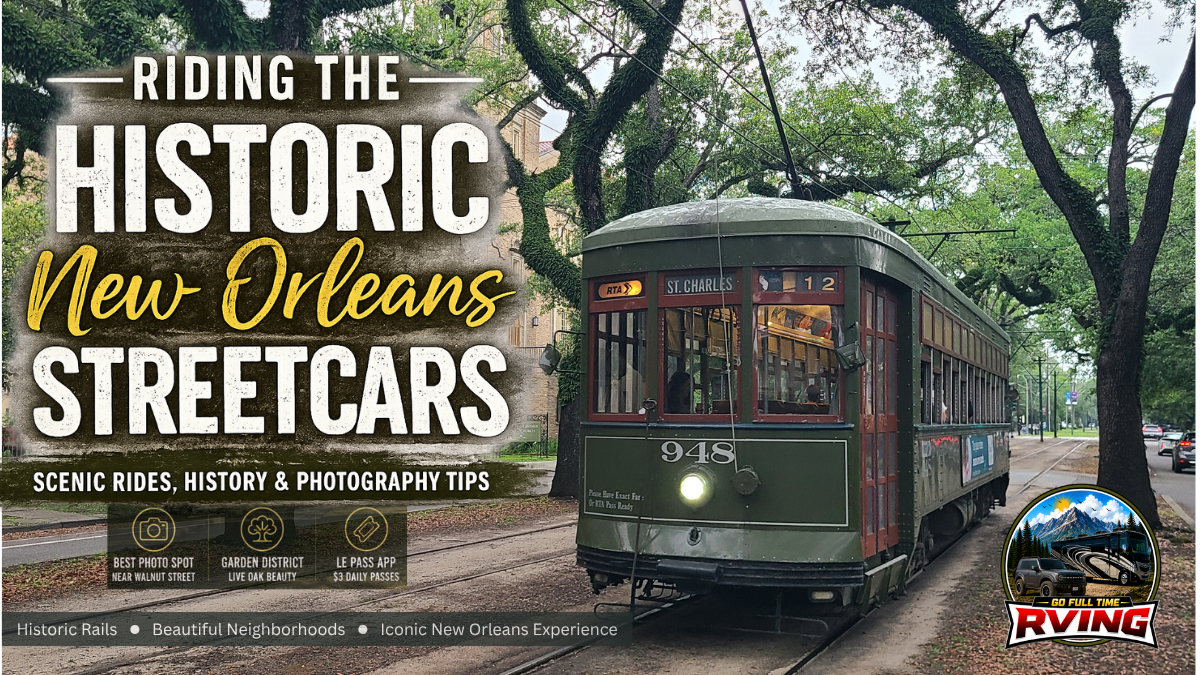
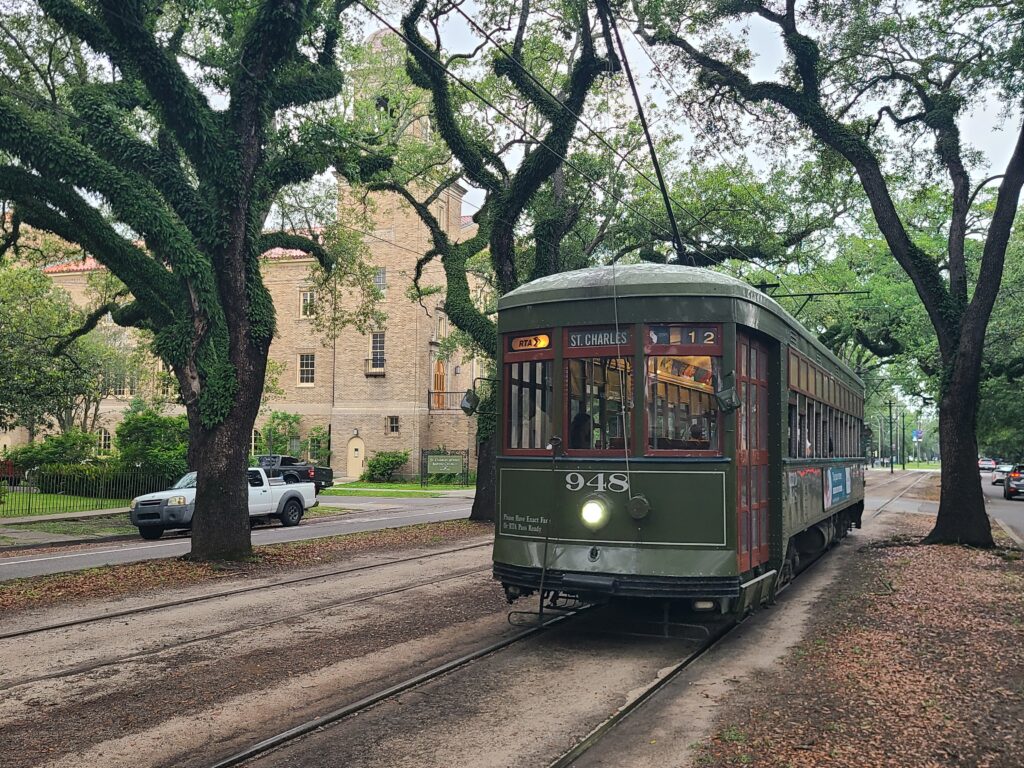
The clanging bell echoed beneath the massive live oak trees as the green streetcar rolled slowly down St. Charles Avenue. Riding the historic New Orleans streetcars quickly became one of our favorite experiences during our visit to the city.
- A Brief History of the New Orleans Streetcars
- St. Charles Streetcar Line and the Garden District
- Riding the Historic Streetcars
- Photographing the St. Charles Streetcars
- Photography Gear We Used
- Canal Street Line to the Cemeteries
- Using the Le Pass App
- Tips for Riding the New Orleans Streetcars
- Things to See Along the Routes
- New Orleans Streetcar FAQ
- Final Thoughts
- Other Things To Do In New Orleans
- Our Other Louisiana Posts
This post contains affiliate links. As a participant in Amazon Associates and various affiliate programs, we are compensated when qualifying purchases are made through our referral links at no additional cost to you. Full Disclosure
A Brief History of the New Orleans Streetcars
The New Orleans streetcars are more than just transportation — they are a living piece of New Orleans history. The St. Charles Avenue line began operating in 1835 and is recognized as the oldest continuously operating street railway system in the world.
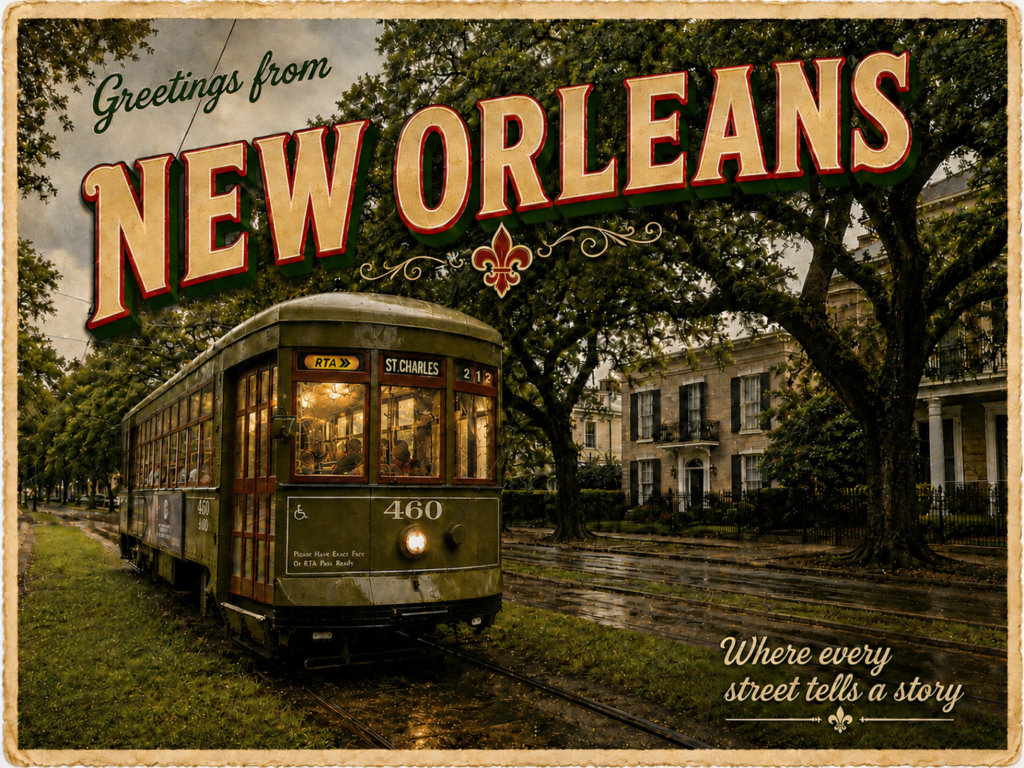
Many of the historic green streetcars still operating on the St. Charles line date back to the 1920s. Riding in the beautifully preserved cars feels like stepping into another era, especially with the wooden interiors, vintage hardware, and open windows.
Over the years, the streetcars have endured hurricanes, modernization efforts, and shifting transportation trends, while continuing to serve both locals and visitors. Today, they remain one of the most iconic symbols of New Orleans and a great way to experience the city’s historic neighborhoods.
St. Charles Streetcar Line and the Garden District
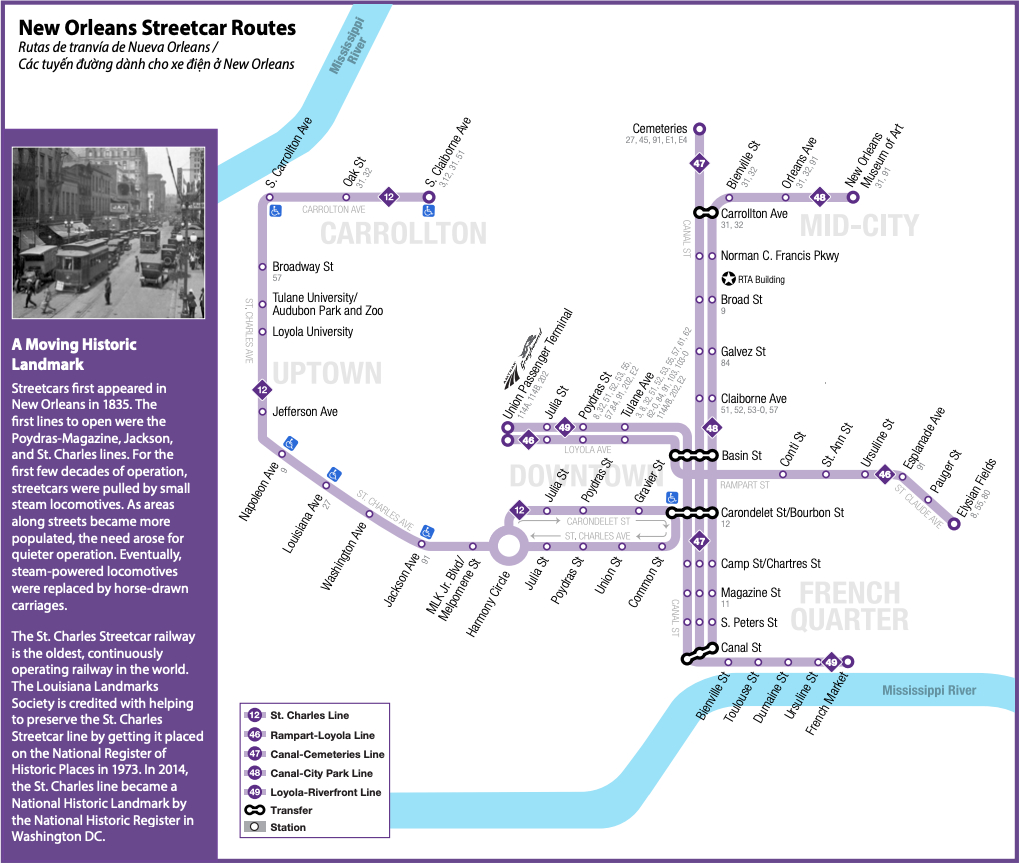
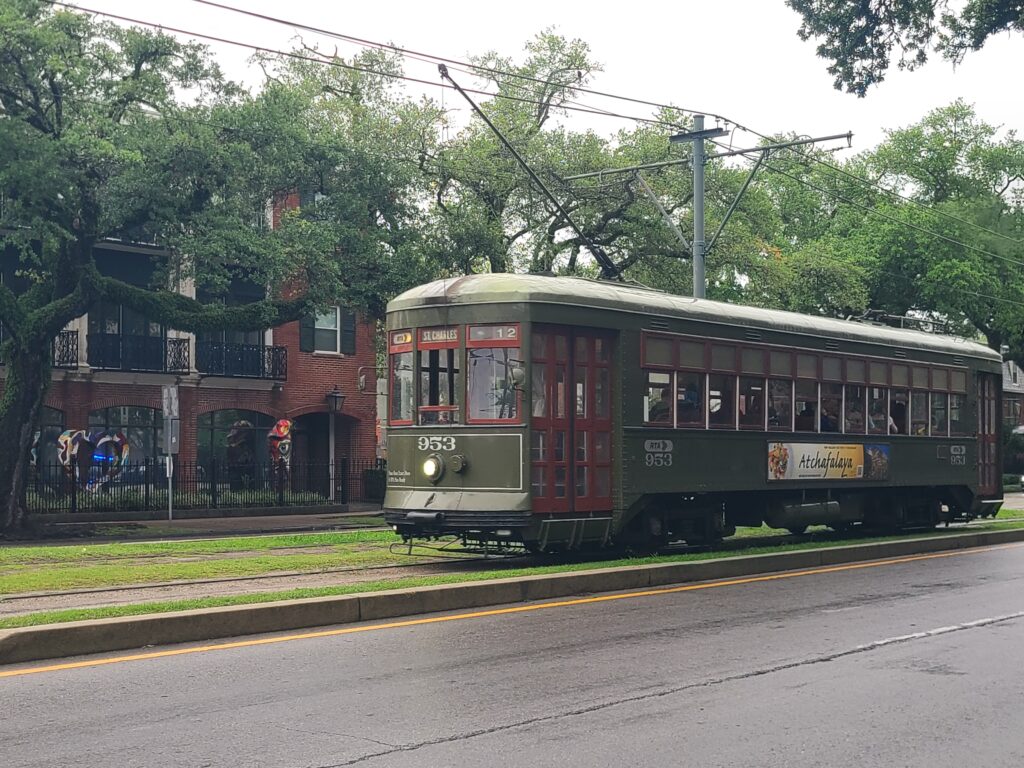
Our first ride was on the famous St. Charles line heading toward the Garden District. Riding in the green vintage streetcars beneath the massive oak trees felt like stepping back in time. The line passes through some of the most beautiful parts of the city, with historic mansions, wrought-iron fences, colorful gardens, and grand southern architecture lining the route.
The Garden District quickly became one of our favorite areas in New Orleans. It’s the kind of place where you can simply wander and admire the homes, hidden courtyards, and quiet streets. Everywhere we looked seemed photo-worthy, especially with the soft southern light filtering through the oak canopies.
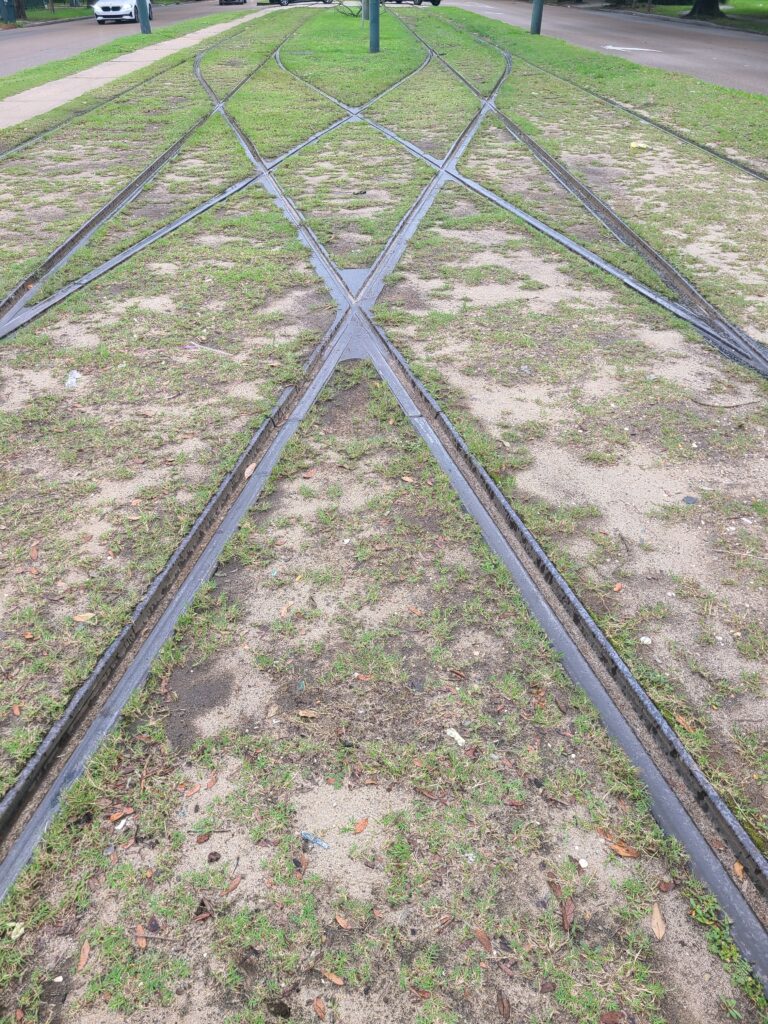
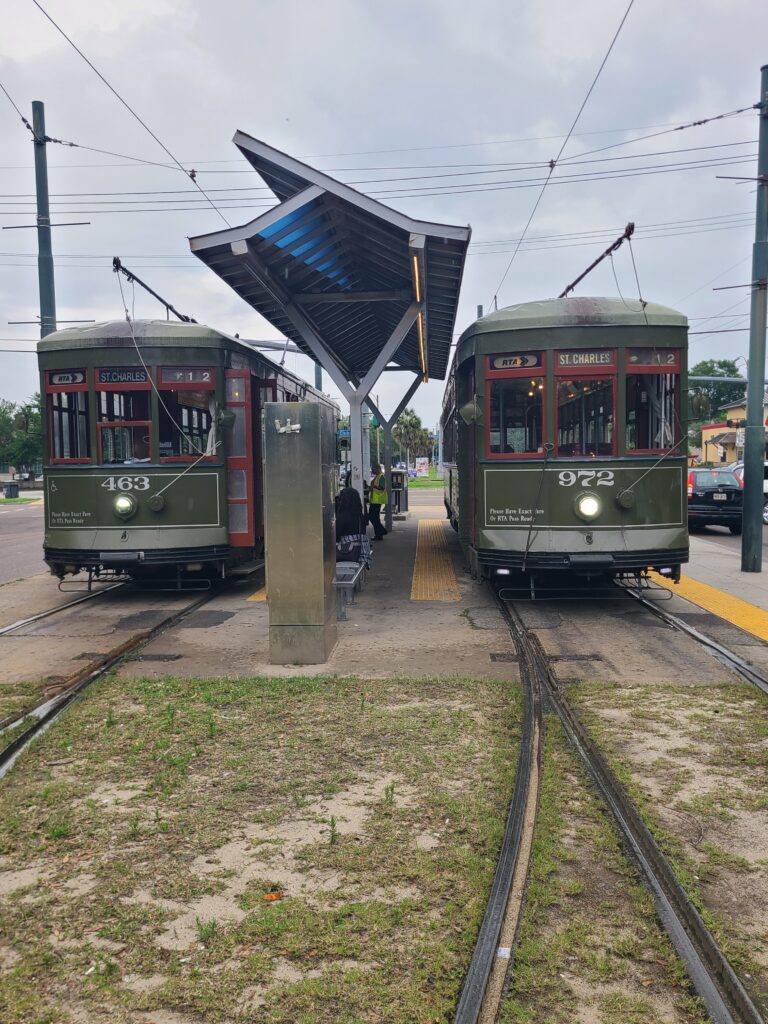
If you only have time for one streetcar ride in New Orleans, we would absolutely recommend the St. Charles line.
Riding the Historic Streetcars
The streetcars themselves were part of the experience. Listening to the wheels clatter along the tracks while warm air flowed through the open windows made the ride feel nostalgic in a way modern transit never could.
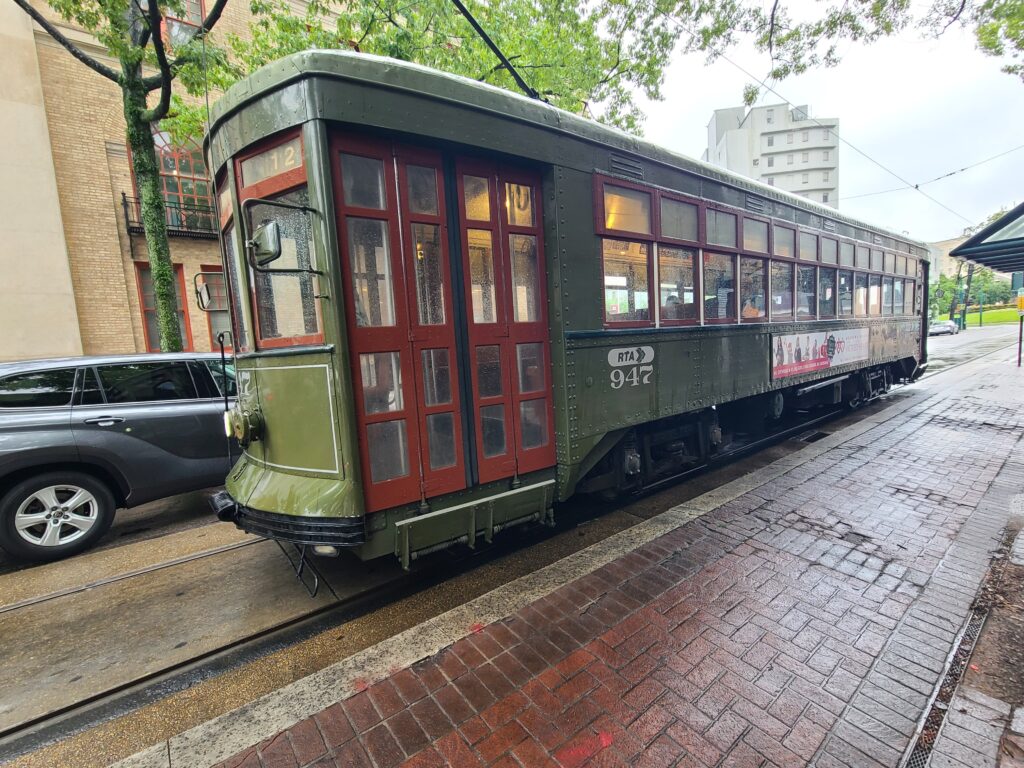
One feature we found especially interesting was the wooden bench seating. The backs of the benches can actually be moved depending on the direction of travel, allowing groups of four people to sit facing each other during the ride. It was a small detail, but one that added even more charm to the historic cars.
I also enjoyed watching the streetcar operators work the controls. The drivers constantly moved the large handles back and forth to control the speed and braking of the streetcar. Seeing the operator manage the historic equipment while navigating busy city streets was fascinating.
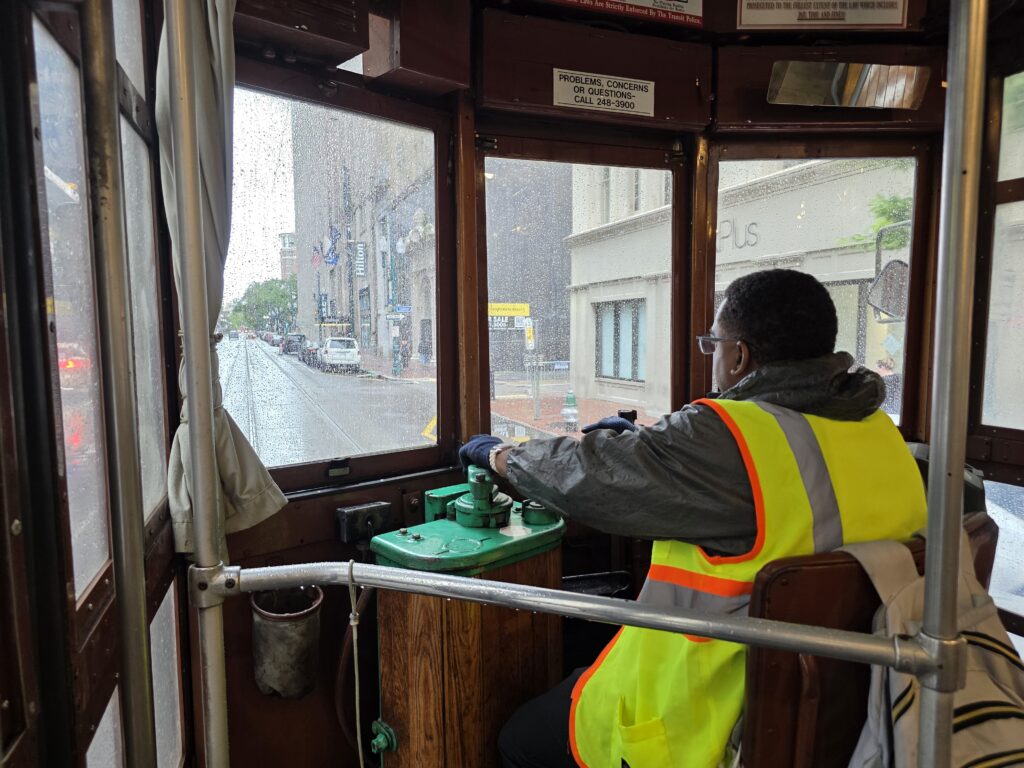
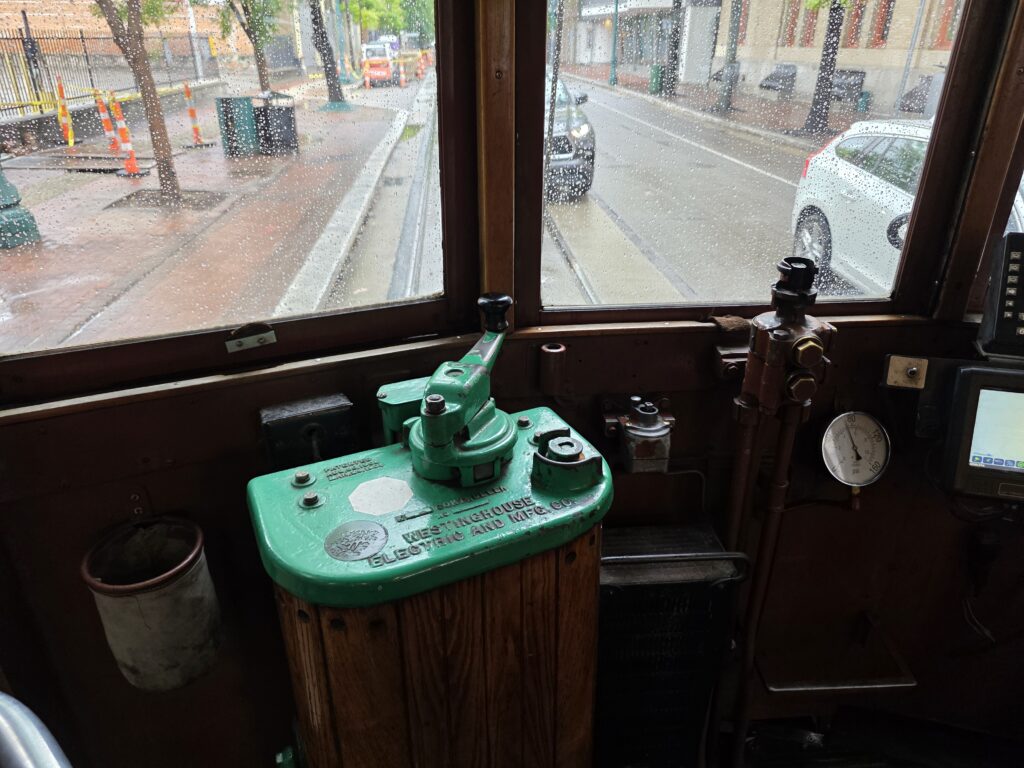
One thing that surprised us was how many cars would pull directly in front of the streetcar while it was turning. Considering the size and weight of the cars, it definitely kept things interesting to watch from the front seats.
During the afternoons, the streetcars became much busier, and on a couple of rides, we found ourselves standing in crowded cars with locals and tourists packed together. While the crowds could make photography more difficult, they also added to the authentic New Orleans experience.
Photographing the St. Charles Streetcars
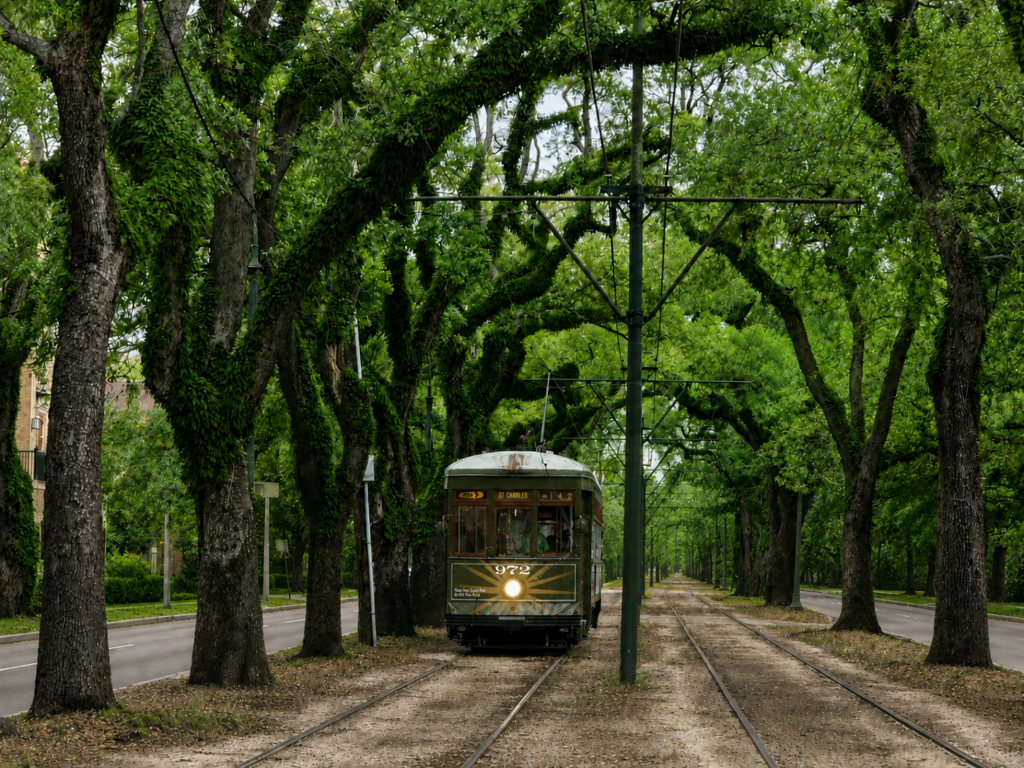
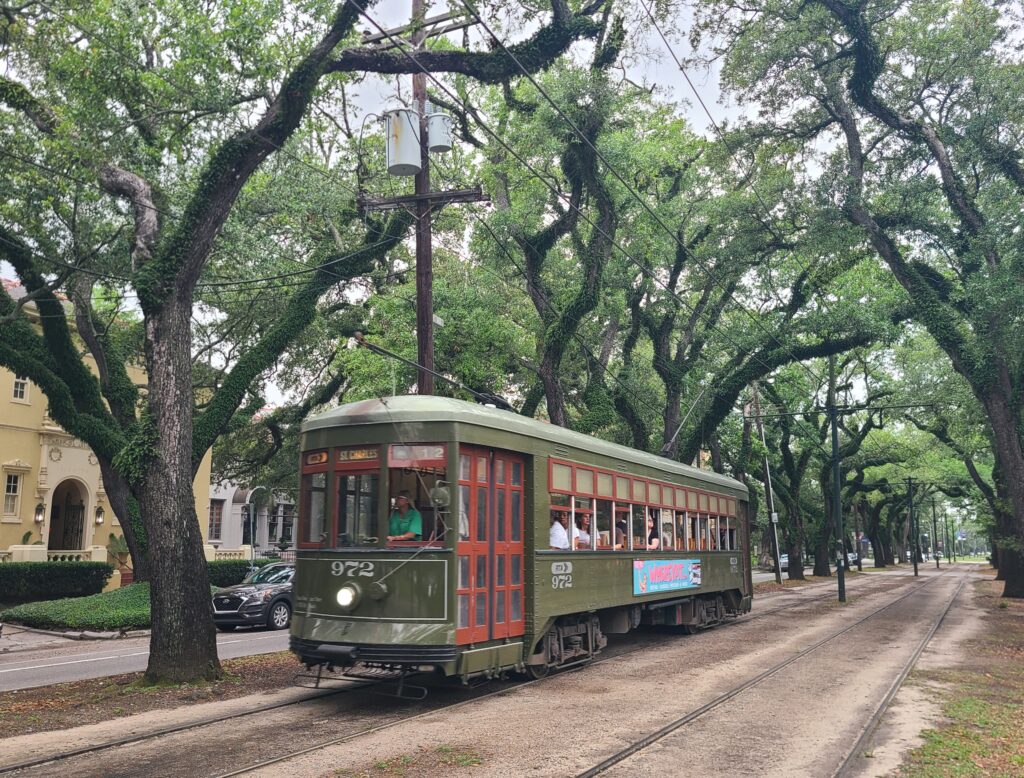
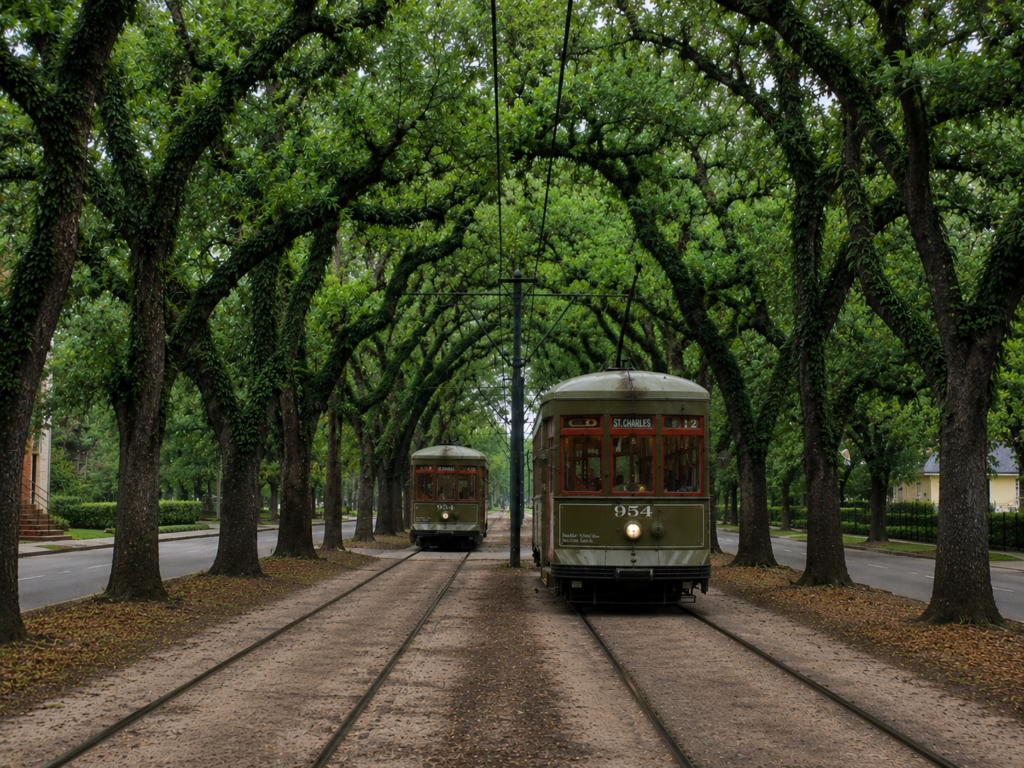
One of the main reasons we rode the St. Charles streetcar line was to photograph the historic streetcars beneath the massive live oak trees. After exploring several areas along the route, we found that one of the best photography spots was near Walnut Street.
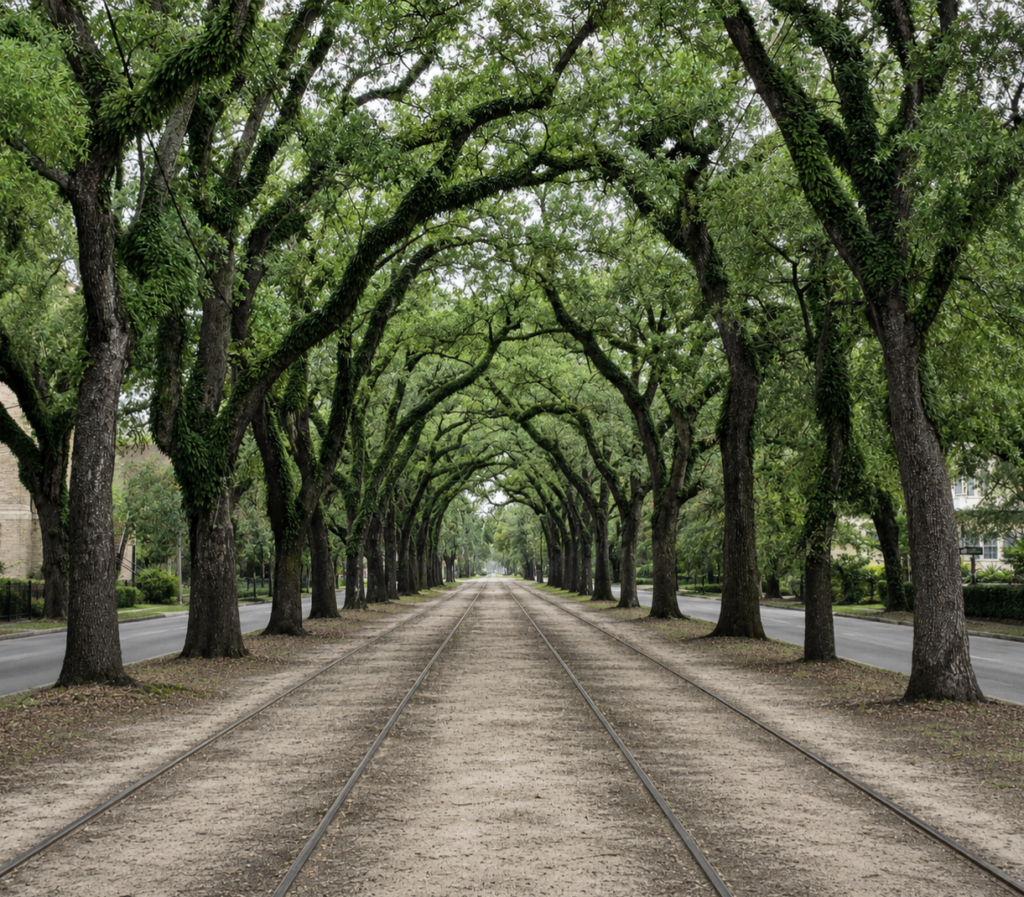
In this section, the live oaks grow directly in the median where the streetcar tracks run, creating a tunnel-like canopy over the tracks. The combination of the green streetcars, hanging moss, and enormous oak trees made for some of our favorite photos in New Orleans.
For photographers planning to visit:
- Morning light provides softer shadows and fewer harsh highlights.
- Late afternoon creates beautiful, warm light that filters through the trees.
- A telephoto lens works well for compressing the scene and isolating the streetcars beneath the canopy.
- Be patient. Part of the fun is waiting for the perfect streetcar to emerge through the trees.
One challenge in photographing the streetcars was waiting for breaks in traffic since cars frequently crossed or blocked the tracks.
Photography Gear We Used
Interested in the gear we used to photograph the New Orleans streetcars? Here’s the equipment that traveled with us during our visit.
Capturing the historic New Orleans streetcars beneath the live oak canopy was one of the highlights of our visit. For these photos, we relied on gear that gave us the flexibility to photograph everything from wide scenic views to tight shots of the streetcars emerging through the trees.
Our favorite photography gear for this trip included:
- Nikon Z6II camera system
- Nikon Z50 camera system
- Nikon Z 28-400mm lens f/4-8
- Delkin Devices Power memory cards
- Extra camera batteries
- Lens cleaning supplies
- Portable power bank for charging devices on the go
The 28-400mm lens was especially useful near Walnut Street, allowing us to compress the scene and isolate the streetcars beneath the beautiful live oak canopy while staying a comfortable distance from the tracks.
Canal Street Line to the Cemeteries
Another day, we rode the Canal Street line toward the famous cemeteries. Unfortunately, by the time we arrived, the cemeteries had already closed for the day. Even so, seeing the elaborate above-ground tombs and historic gates from outside still gave us a glimpse into one of the most unique aspects of New Orleans culture.



The cemeteries in New Orleans are unlike anywhere else in the country. Because much of the city sits below sea level, traditional burials were impractical, leading to the construction of the iconic above-ground tombs for which the city is known today.
Although we missed going inside this time, the trip was still worth it just for the experience of riding the streetcar and exploring another part of the city.
Using the Le Pass App
We found riding the streetcars very easy using the Le Pass app. We purchased daily passes directly through the app for only $3 each, which gave us unlimited rides for the day.
The app made boarding simple and eliminated the need to carry cash or figure out exact change. If you plan to ride multiple times during the day, the daily pass is definitely the way to go.
Tips for Riding the New Orleans Streetcars
If you visit New Orleans, riding the streetcars should absolutely be on your list. They’re inexpensive, easy to use, and provide a relaxing way to see the city while taking in the scenery.
A few things we learned during our rides:
- Download the Le Pass app before your trip to make purchasing tickets quick and easy.
- Daily passes cost only $3 and include unlimited rides.
- Try to sit near an open window for the best views and photos.
- Sitting near the front gives you a great view of the operator working the controls.
- The St. Charles line is especially beautiful in the early morning or late afternoon light.
- Afternoon rides can become crowded with standing room only.
- Since the historic streetcars are open-air, summer afternoons can get warm.
- Check cemetery hours before heading out, since many close earlier than expected.
- Bring a camera because the streetcars themselves make fantastic photography subjects.
Next time, we will start our cemetery visit earlier in the day to allow more time for exploring before closing.
Things to See Along the Routes
Some popular spots along the streetcar routes include:
- National World War II Museum
- Lafayette Cemetery No. 1
- Commander’s Palace
- Audubon Park
- City Park
- Metairie Cemetery

Even if you are not heading to a specific destination, simply riding the streetcars is an experience all by itself.
New Orleans Streetcar FAQ
Can you ride the New Orleans streetcars all day with one ticket?
Yes. We purchased $3 daily passes through the Le Pass app, which allowed us to ride the streetcars as many times as we wanted throughout the day.
Which New Orleans streetcar line is best?
The St. Charles line was our favorite because of the historic green streetcars, Garden District mansions, and beautiful live oak trees along the route.
Where is the best place to photograph the St. Charles streetcars?
We found Walnut Street to be one of the best places to photograph the St. Charles streetcars. The live oak trees grow directly in the track median, creating a beautiful canopy over the streetcar tracks.
Are the New Orleans streetcars worth riding?
Absolutely. The streetcars are inexpensive, historic, and one of the best ways to experience New Orleans at a slower pace while seeing different parts of the city.
Do the New Orleans streetcars get crowded?
Yes, they can. During our visit, the afternoon rides were the busiest, and a couple of our trips were standing room only.
Can you use the Le Pass app for New Orleans streetcars?
Yes. We used the Le Pass app to purchase our daily streetcar tickets. It was easy to use and meant we didn’t have to worry about carrying exact change.
Which streetcar line goes to the Garden District?
The St. Charles streetcar line is the line to take for the Garden District. It travels along St. Charles Avenue past historic homes, live oak trees, and classic New Orleans scenery.
Which streetcar line goes to the New Orleans cemeteries?
We rode the Canal Street line toward the cemeteries. Just be sure to check cemetery hours before you go, because many close earlier than visitors expect.
Final Thoughts
For us, the New Orleans streetcars became more than transportation — they became part of the adventure itself. Between the historic cars, beautiful neighborhoods, towering live oaks, and unique atmosphere, riding the streetcars was one of our favorite experiences in New Orleans.
Riding the streetcars also gave us a chance to slow down and experience New Orleans at a completely different pace than simply walking or driving through the city.
Whether you’re interested in history, photography, architecture, or simply experiencing New Orleans like a local, the historic streetcars are well worth your time.
Have you ridden the New Orleans streetcars? Share your favorite route or memory in the comments below—we’d love to hear about your experience!
Other Things To Do In New Orleans
Our Other Louisiana Posts
If you’re planning a trip to New Orleans, be sure to explore our other New Orleans travel guides for more tips, attractions, and photography locations from our visit.








What interesting places can you recommend?
We’re always on the lookout for unique, out-of-the-way experiences to add to our list.
Thanks for taking the time to read our article!
If you have any questions or comments, we’d love to hear from you in the section below.







So fun. My son got married in New Orleans at the city park. It was beautiful.
Hi Mary, Thank you for your comments. New Orleans is a really fun city. We’re going back for Mardi Gras 2027! Can’t wait.